


In the annals of modern football, few tactical philosophies have generated as much simultaneous admiration and anxiety as Hansi Flick’s Barcelona. The German’s revolutionary approach has transformed the Catalan giants into one of Europe’s most thrilling spectacles, yet beneath the statistical brilliance lies a fundamental question that will be answered definitively when they face Real Madrid in El Clasico: can a team built on controlled chaos truly conquer football’s biggest stages?

Since taking the reins at Camp Nou, Flick has orchestrated a tactical symphony that reads like a statistical fever dream. His Barcelona have become the most prolific attacking force across Europe’s elite leagues, yet their defensive vulnerabilities remain as glaring as their offensive brilliance is breathtaking.
Barcelona Under Flick: Brilliance and Vulnerability Collide
The numbers surrounding Flick’s Barcelona paint a picture of unprecedented dominance tempered by concerning exposure. No team from Europe’s top five leagues has found the net more frequently than Barcelona’s 207 goals since the start of last season. This goal-scoring rampage sits alongside their 158.5 non-penalty expected goals, trailing only Paris Saint-Germain’s 167.5 in terms of pure chance creation.
| Statistical Category | Barcelona Performance | European Ranking |
|---|---|---|
| Goals Scored (Since Last Season) | 207 | 1st in Top 5 Leagues |
| Non-Penalty xG | 158.5 | 2nd (Behind PSG – 167.5) |
| Win Percentage | 73.6% | 1st in Europe |
| Total Goals in Flick’s 72 Games | 293 (207 for, 86 against) | 22+ more than any other team |
Yet these offensive fireworks come with a defensive cost that threatens to undermine their ambitions. Barcelona have surrendered 24 big chances in La Liga this season – situations where opponents would typically be expected to score. Among Europe’s 96 teams across the top five leagues, only 10 have been more generous in providing such golden opportunities.
The High-Wire Act: Risk, Reward, and Real Madrid
Flick’s tactical philosophy operates on a knife’s edge between genius and madness. His ambitious counter-press and astronomically high defensive line create moments of breathtaking coordination that can suffocate opponents, yet they equally generate heart-stopping sequences where Barcelona players find themselves chasing shadows as opponents race through acres of undefended space.
This tactical tightrope walk embodies the essence of Flick’s Barcelona. The German coach appears entirely comfortable with this high-stakes gamble, betting that his team’s moments of brilliance will consistently outweigh their lapses in concentration. It’s a philosophy that demands unwavering belief in both the system and the players executing it.
The upcoming El Clasico represents the ultimate examination of this risk-reward equation. When Barcelona’s high line meets Real Madrid’s devastating counter-attacking arsenal at the Santiago Bernabéu, the outcome will provide definitive answers about the sustainability of Flick’s approach against elite opposition.
Injury Crisis Disrupts the Machinery
The current Barcelona finds itself navigating uncharted waters without several key components that made last season’s system so devastating. The absence of crucial players has exposed the delicate nature of Flick’s tactical architecture, revealing how dependent the system is on specific personnel and their understanding of intricate positional relationships.
Key Injury Impact Analysis
| Player | Games Missed | Tactical Impact | System Consequence |
|---|---|---|---|
| Raphinha | 4 games | Pressing coordination lost | High turnovers dropped from 10.1 to 8.1 per 90 |
| Lamine Yamal | 4 league games | Creative outlet reduced | Width and directness compromised |
| Fermín López | Nearly 1 month | Central creativity missing | Before returning with Champions League hat-trick |
| Gavi | Until new year | Midfield energy absent | Long-term positional stability affected |
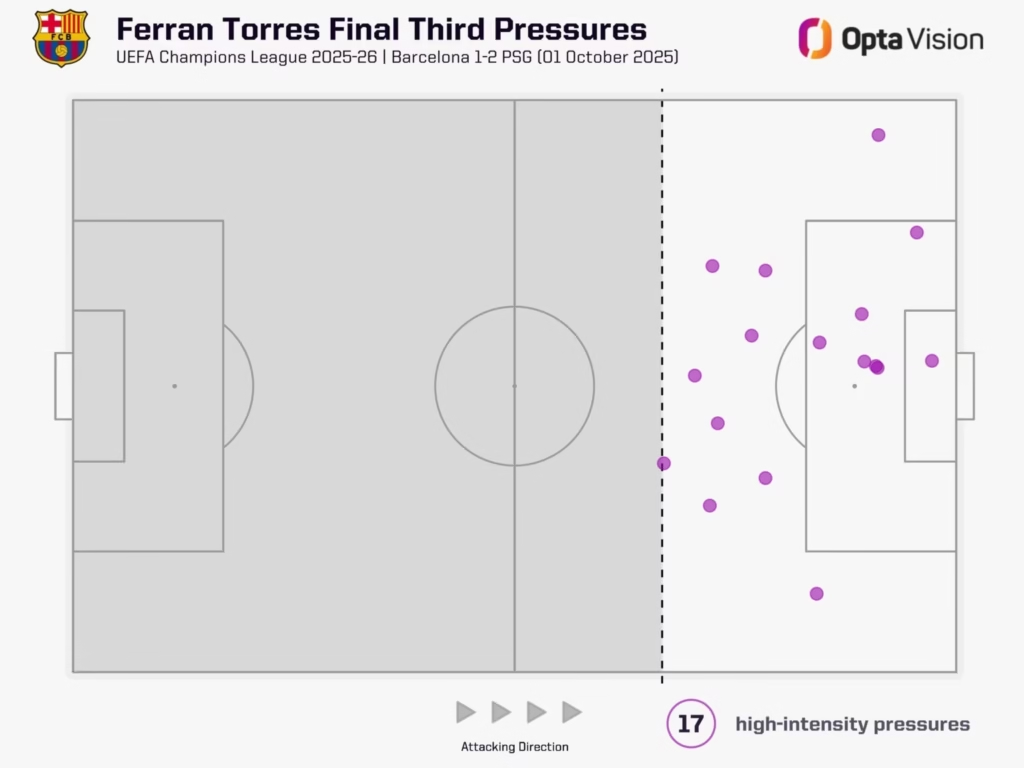
Raphinha’s absence particularly highlights the fragility of Flick’s system. The Brazilian winger wasn’t merely a goal threat with his three goals and two assists in 384 La Liga minutes before injury; he served as the tactical conductor of Barcelona’s pressing orchestra. His innate understanding of when to trigger the press and when to hold position was irreplaceable, and his absence has visibly disrupted the team’s defensive coordination.
“I miss Raphinha. He was really important last season. He’s fantastic,” Flick admitted, his words carrying the weight of tactical frustration. The coach’s candid assessment reveals the depth of Raphinha’s importance beyond mere statistics.
The Pressing Puzzle: Positioning Over Passion
Barcelona’s pressing game under Flick operates on surgical precision rather than wild enthusiasm. The German’s recent observations about positioning reveal the intellectual demands of his system: “It’s all about positioning, to be well placed. If the distances are too big, you’ve lost because you have to run more and you give more time to the opponent and that kills you defensively. That is something we have to change.“
This tactical complexity becomes evident in Barcelona’s current struggles. The sight of frustrated Barcelona players throwing their arms skyward after failed pressing attempts has become increasingly common. These moments of visible exasperation highlight a critical distinction: Barcelona’s pressing failures aren’t born from lack of desire or fitness, but from positional discord that leaves gaps for opponents to exploit.
Tactical Vulnerability Patterns
The season’s most challenging matches have revealed troubling patterns in Barcelona’s play. In their three most difficult encounters – draws with Rayo Vallecano and defeats to PSG and Sevilla – Barcelona recorded fewer than 10 sequences of 10+ passes. In every other game, they’ve managed at least 15 such sequences, illustrating how quickly their structured possession can crumble under intense pressure.
| Opposition Response Strategy | Barcelona Struggle Indicators | Result Pattern |
|---|---|---|
| High pressing + compact shape | <10 sequences of 10+ passes | Structural collapse |
| Aggressive counter-attacking | Defensive gaps exposed | Goals conceded |
| Physical intensity | Pressing coordination lost | Possession disrupted |
Sevilla manager Matías Almeyda’s pre-match assessment proved prophetic: “I’ve studied Barcelona for years. Every team that sits back and waits ends up losing; 98% of them. You have to look for other ways to beat them.” His team’s subsequent 4-1 victory provided the blueprint for dismantling Flick’s system.
The Raphinha Factor in El Clasico Context
Raphinha’s potential availability for El Clasico could fundamentally alter the tactical equation. His presence doesn’t merely add an attacking dimension; it provides Barcelona with what Flick terms the “out-ball over the top.” This vertical option serves as a pressure release valve that allows Barcelona to maintain their high line with greater confidence.
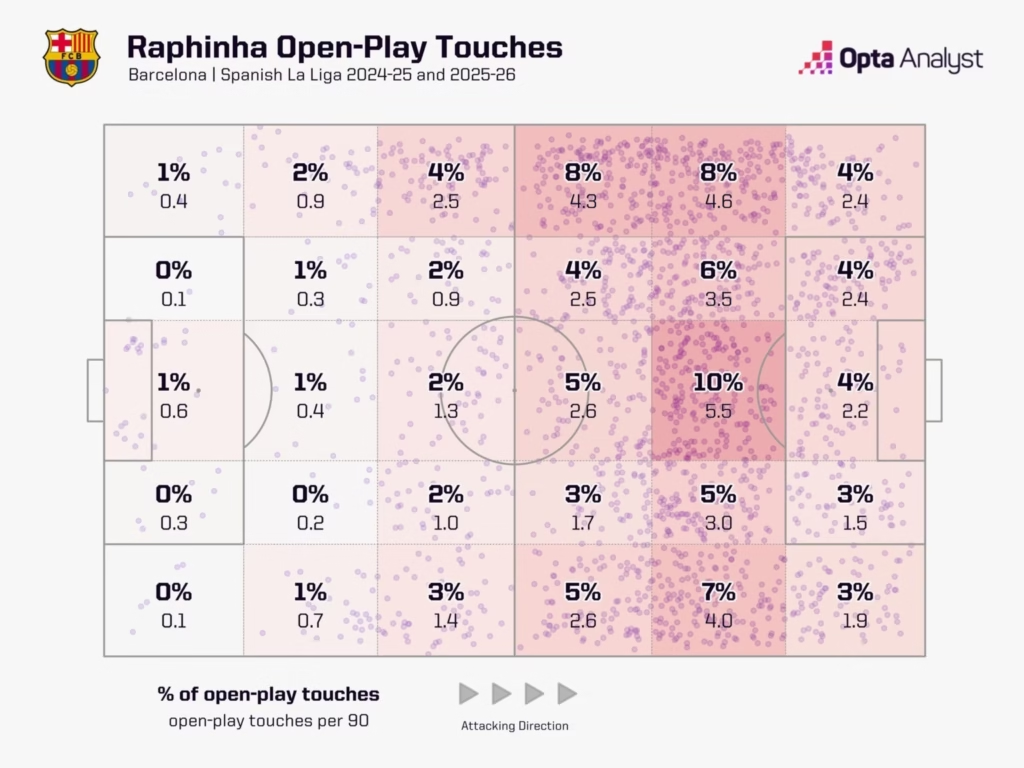
Historical data supports Raphinha’s El Clasico significance. His five goals and two assists across four matches against Madrid last season demonstrate his capacity to influence football’s biggest stage. More crucially, his tactical intelligence in pressing situations could prove decisive in a match where positional discipline will determine the outcome.
Marcus Rashford: The Adaptation Challenge
The English forward’s integration into Flick’s system illustrates the complexity of Barcelona’s tactical demands. Despite recording nine goal involvements this season (five goals, four assists), Rashford’s adaptation hasn’t reached the seamless level required for Flick’s intricate system.
“He’s a good option as the number nine, but he can also play as the 11. When we were thinking about him, we knew he was versatile and he has improved a lot in the last couple of weeks,” Flick explained, revealing Rashford’s role as a tactical Swiss Army knife rather than a specialized weapon.
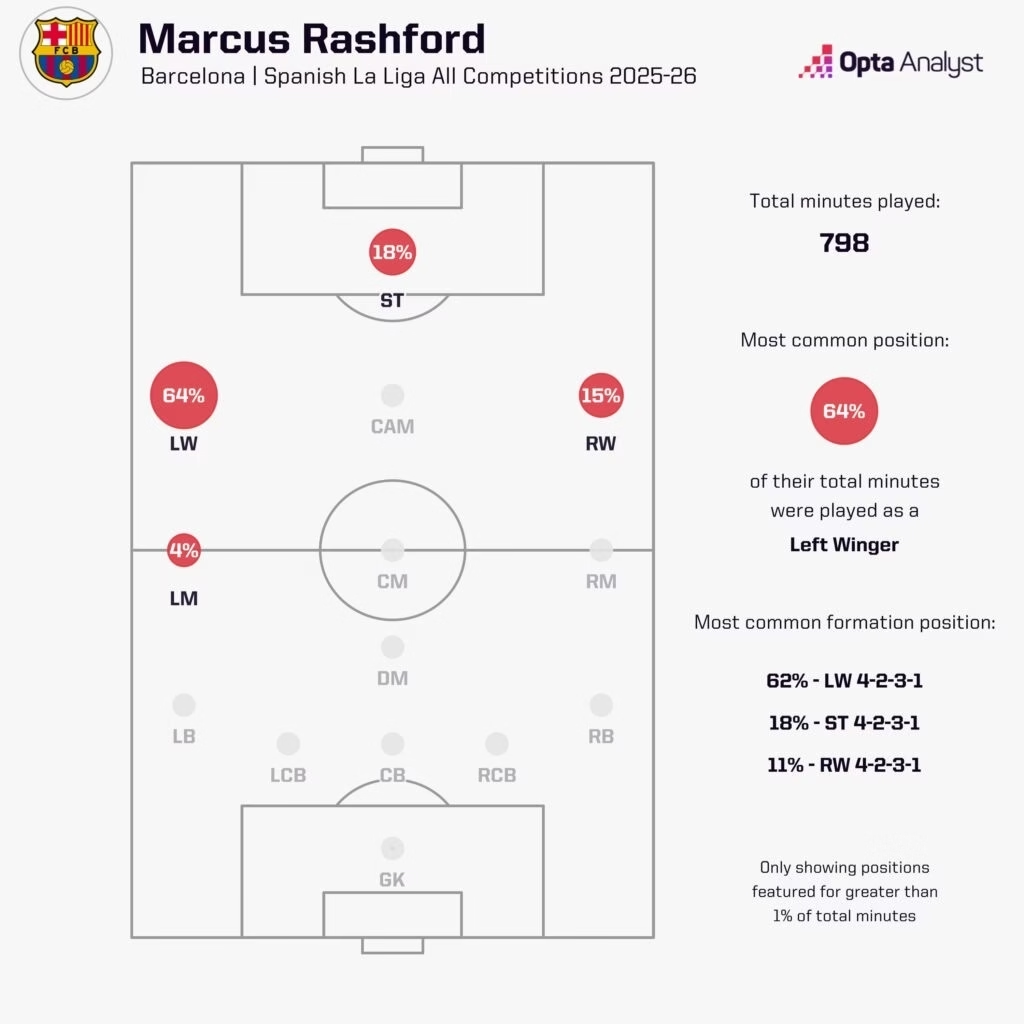
Rashford’s 798 minutes across various positions demonstrate his utility, yet his performances haven’t reached the transcendent level that elevates Flick’s system from very good to extraordinary. This gap between individual quality and systemic perfection exemplifies the challenges facing Barcelona’s injury-depleted squad.
Goalkeeping Transition: Fine Margins Matter
Even Barcelona’s goalkeeping situation reveals the micro-margins that can determine tactical success. Joan García’s injury forced the introduction of Wojciech Szczesny, whose different playing style has subtly altered Barcelona’s defensive rhythm.
| Goalkeeper | Unsuccessful Passes per 90 | Sweeper Keeper Actions | Impact on System |
|---|---|---|---|
| Joan García | 2.7 | 2.1 | Faster distribution, higher line support |
| Wojciech Szczesny | 6.0 | 1.2 | More conservative, reduced aggressive positioning |
These statistical differences might appear marginal, but in Flick’s precision-engineered system, such variations can cascade into larger tactical disruptions. García’s superior distribution accuracy and more aggressive positioning better complemented Barcelona’s high defensive line, while Szczesny’s more conservative approach has required subtle tactical adjustments.
Real Madrid’s Strategic Dilemma: Alonso’s Tactical Crossroads
Xabi Alonso faces a fascinating tactical puzzle as he prepares Real Madrid for El Clasico. The strategies that proved successful for Sevilla and PSG against Barcelona don’t automatically translate to Madrid’s personnel and playing philosophy. Alonso must balance his team’s natural attacking instincts with the disciplined approach required to exploit Barcelona’s vulnerabilities.
Historical El Clasico Context
Last season’s four El Clasico encounters provide sobering reading for Real Madrid supporters. Barcelona’s dominance was comprehensive, winning all four matches while outscoring Madrid 15-7. The tactical statistics reveal the depth of Barcelona’s superiority:
| Tactical Metric | Barcelona | Real Madrid | Tactical Significance |
|---|---|---|---|
| High Turnovers | 38 | 18 | Pressing dominance |
| 10+ Pass Sequences Allowed | 19 | 54 | Defensive structure |
| Goals Scored | 15 | 7 | Clinical finishing |
| Press Resistance | High | Poor | Structural integrity |
These numbers illustrate Madrid’s struggles against Barcelona’s systematic approach. Their press was “barely functional,” allowing Barcelona to dictate the tempo and territorial advantage that proved decisive across all four encounters.
Alonso’s Tactical Evolution
The new Real Madrid coach has instilled greater coordination and responsibility in his team’s pressing game. While he hasn’t transformed superstars into defensive workhorses overnight, Alonso has created clearer structural understanding and better distributed defensive responsibilities.
Jude Bellingham’s role exemplifies this evolution. Last season’s tendency to attempt individual solutions to every defensive problem has been replaced by more disciplined positional play within Alonso’s structured system. This tactical maturation could prove crucial against Barcelona’s movement-based attacking patterns.
The Strategic Binary: Attack or Absorb
Alonso faces a fundamental choice between two distinct approaches against Barcelona. He can commit to an aggressive, possession-based strategy that mirrors Barcelona’s intensity while accepting the inherent risks, or he can adopt a defensive approach focused on absorption and counter-attacking.
Recent evidence suggests caution might not be viable against this Barcelona side. The team’s recent 5-2 derby defeat to Atlético Madrid demonstrates the dangers of passive approaches against elite opposition. Yet committing to aggressive tactics against Barcelona’s proven system carries equally significant risks.
The tactical decision ultimately revolves around risk tolerance and philosophical commitment. Half-measures against Flick’s Barcelona have consistently proven futile, as evidenced by the systematic dismantling of tentative opponents throughout the season.
Systemic Perfection vs. Individual Brilliance
Barcelona’s current situation embodies the eternal tension between tactical perfection and individual adaptation. Flick’s system demands absolute precision and understanding from every participant, yet injuries and personnel changes have disrupted the automatisms that made last season’s version so devastating.
The missing continuity has manifested in moments of tactical confusion where Barcelona players appear uncertain about their responsibilities within pressing sequences. These lapses create the “blur of bodies chasing back” that characterizes Barcelona’s defensive breakdowns – moments when coordination dissolves into individual scrambling.
The El Clasico Verdict
Sunday’s encounter at the Santiago Bernabéu represents more than a single match; it serves as a referendum on Flick’s tactical philosophy against elite opposition. The outcome will provide crucial data about Barcelona’s readiness for the season’s most demanding challenges, including Champions League knockout stages and the final stretch of La Liga competition.
Barcelona’s attacking statistics suggest they possess the firepower to trouble any opponent, but their defensive vulnerabilities remain genuine concerns against teams capable of clinical finishing. Real Madrid’s pace and counter-attacking prowess represent the perfect storm for exploiting Barcelona’s high-line gambles.
The tactical chess match between Flick’s calculated risks and Alonso’s strategic adaptations will likely determine which team emerges with bragging rights and momentum for the remainder of the season. Barcelona’s statistical dominance provides confidence, but football’s greatest stages demand more than numbers – they require tactical perfection under ultimate pressure.
As both teams prepare for this season’s first El Clasico, the fundamental question remains: will Barcelona’s moments of brilliance outweigh their lapses in focus when facing football’s most unforgiving stage? The answer will resonate far beyond the Santiago Bernabéu, shaping narratives and expectations for the remainder of this compelling campaign.
FAQs
What makes Hansi Flick’s Barcelona system so effective yet vulnerable?
Flick’s high-pressing system creates dominant attacks but leaves Barcelona exposed to counter-attacks, conceding 24 big chances in La Liga this season.
How have injuries affected Barcelona’s performance under Flick?
Key injuries to Raphinha, Yamal, and Gavi disrupted positional understanding, dropping their high turnovers from 10.1 to 8.1 per 90 minutes.
Why is Raphinha crucial to Barcelona’s tactical system?
Raphinha orchestrates Barcelona’s pressing and provides the vital “out-ball over the top” that allows their high defensive line to function effectively.
What approach works best against Barcelona in El Clasico?
Aggressive, coordinated pressing rather than passive defending. Teams that “sit back and wait” lose 98% of the time against Barcelona.
How did Barcelona perform against Real Madrid last season?
Barcelona dominated all four El Clasico matches, winning each game and outscoring Madrid 15-7 with superior pressing and possession control.

