

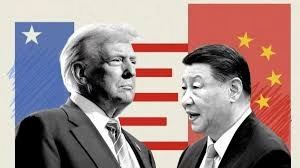

In a dramatic escalation of the US-China trade war, President Donald Trump announced on October 10, 2025, that the United States would impose an additional 100% tariff on all imports from China, on top of existing tariffs, starting November 1. The move comes in response to Chinese leader Xi Jinping’s new export restrictions that upended months of trade negotiations. This sudden policy shift has sent shockwaves through global markets and threatens to reignite one of the most contentious economic disputes in recent history.
Donald Trump Tariff Breakdown at a Glance
| Detail | Information |
|---|---|
| Additional Tariff Rate | 100% (on top of existing tariffs) |
| Current Base Tariff | 30% (on most Chinese goods) |
| Combined Tariff Rate | Up to 130% total |
| Effective Date | November 1, 2025 (or sooner) |
| Export Controls | All “critical software” banned |
| Market Impact | Stock sell-off triggered |
What Triggered This Escalation?
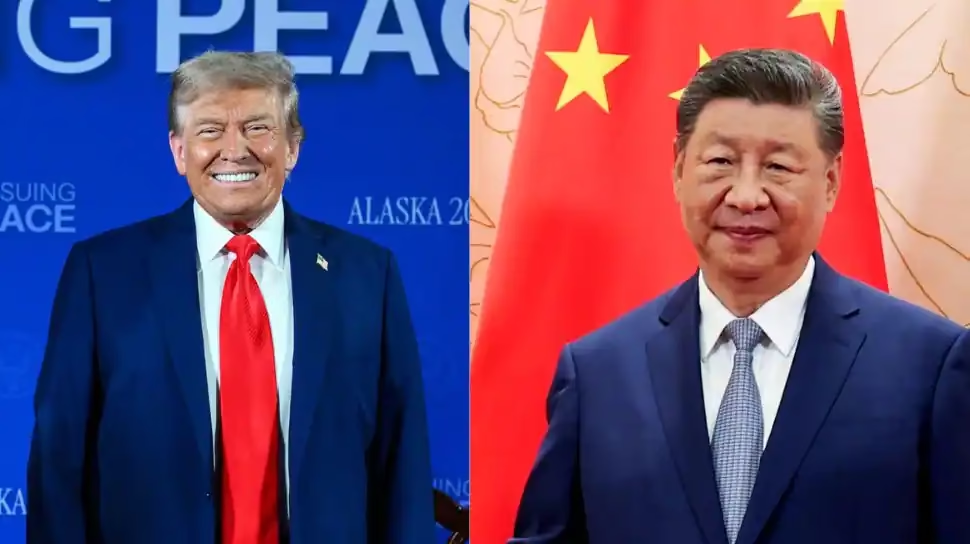
Trump announced the tariffs in response to what he called “aggressive” moves by China regarding export controls. The heated dispute centers on rare earths and critical materials. China recently imposed its own export restrictions on rare earth minerals—essential for electronics, military equipment, and renewable energy technology—effectively weaponizing its dominance in this critical supply chain.
Timeline of Events:
- Months Prior: Trade negotiations between US and China showed progress
- Early October: China announces new rare earth export controls
- October 10: Trump threatens to cancel Xi meeting
- Same Day: Trump announces 100% additional tariffs via Truth Social
This tit-for-tat escalation represents a breakdown in diplomatic efforts that had been building toward détente.
Understanding the Math: 130% Total Tariffs
The additional 100% tariff will be imposed on top of the 30% tariffs already in effect, creating a combined tariff burden of up to 130% on Chinese goods. This means a Chinese product valued at $100 could effectively cost American importers $230 after tariffs—making many Chinese goods economically unviable for US markets.
Real-World Impact Examples:
- Electronics and smartphones could see massive price increases
- Consumer goods from clothing to furniture affected
- Manufacturing supply chains disrupted
- American businesses dependent on Chinese components face crisis
For analysis of how trade policies impact technology prices, visit our economics coverage on Technosports.
The Rare Earth Dispute
China controls approximately 70% of global rare earth production and over 90% of processing capacity. These materials are critical for:
- Smartphones and computers
- Electric vehicle batteries
- Military defense systems
- Wind turbines and solar panels
- Advanced medical equipment
By restricting rare earth exports, China leveraged one of its strongest economic weapons, prompting Trump’s aggressive response.
Export Control Countermeasures
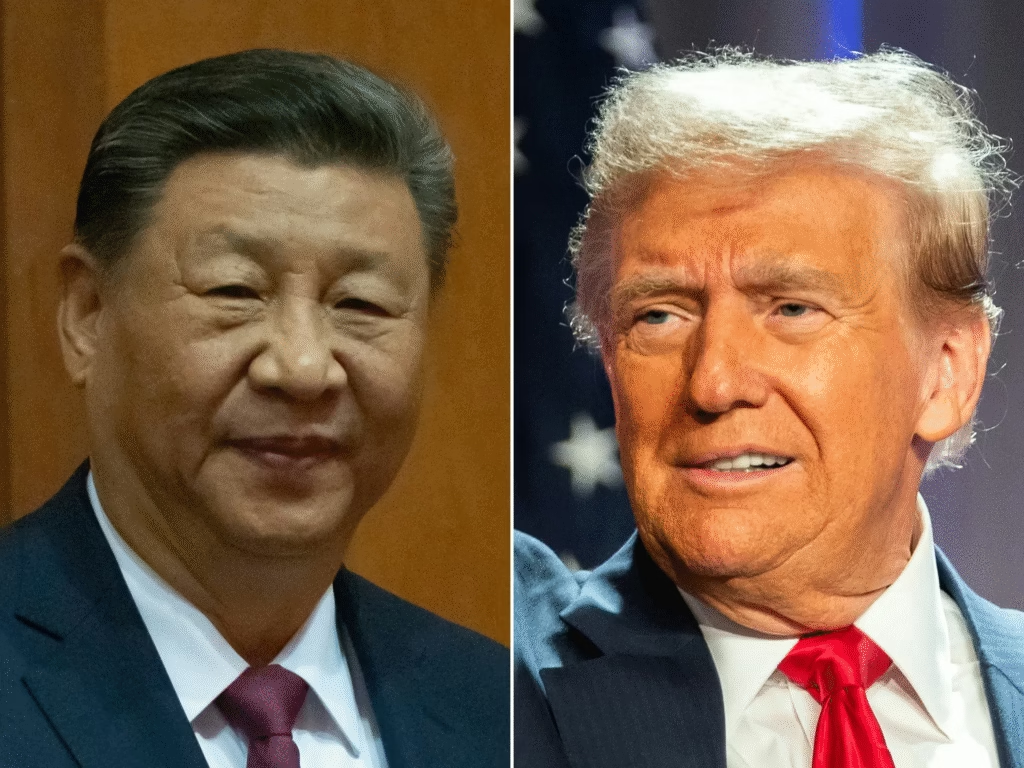
Trump also announced export controls on “any and all critical software” beginning November 1. This represents America’s counter-weapon—restricting China’s access to advanced technology, artificial intelligence systems, and strategic software platforms essential for China’s technological advancement.
Market Reaction and Economic Fallout
The announcement triggered a stock market sell-off as investors feared the return of trade war volatility that characterized Trump’s first presidency. The combined effects of 130% tariffs could:
- Increase consumer prices across multiple sectors
- Disrupt global supply chains
- Reduce corporate profit margins
- Slow economic growth in both nations
- Create ripple effects throughout allied economies
According to recent analysis, the tariffs could amount to an average tax increase of nearly $1,300 per US household in 2025.
The Xi Meeting Cancellation
Hours before announcing the tariffs, Trump threatened to cancel an upcoming meeting with Chinese leader Xi Jinping. This diplomatic breakdown suggests the trade dispute has reached a critical impasse, with both leaders unwilling to compromise on core strategic interests.
For global political analysis and international relations coverage, explore Technosports world affairs section.
What Happens Next?
Short-term (November 2025):
- Tariffs take effect unless China reverses export controls
- Businesses scramble to adjust supply chains
- Consumer prices begin rising
- Stock market volatility continues
Medium-term (2026):
- Potential for negotiated settlement
- Alternative supply chains develop
- Economic impact becomes measurable
- Political pressure mounts on both leaders
Long-term Implications:
- Accelerated US-China economic decoupling
- Reshoring of critical manufacturing
- Strengthened alliances with alternative suppliers
- Permanent shift in global trade patterns
Global Perspective
This trade war affects more than just US and China. Allied nations must choose sides, supply chains spanning multiple countries face disruption, and the global economic order undergoes fundamental restructuring.
For official US trade policy updates, monitor the Office of the United States Trade Representative.
For official US trade policy information, visit USTR.gov. Stay informed about global economic developments at Technosports.
Frequently Asked Questions
Q: Will the 100% additional tariffs make Chinese products completely disappear from US stores?
A: Not completely, but many products will become economically unviable. Some essential items without alternative sources may still be imported despite high costs, with prices passed to consumers. However, businesses will aggressively seek suppliers from Vietnam, India, Mexico, and other countries to avoid the 130% combined tariff burden. Expect gradual disappearance of Chinese goods over 6-12 months as alternative supply chains establish. Products deeply integrated into Chinese manufacturing (like certain electronics) will remain available but at significantly higher prices until domestic or alternative production scales up.
Q: Can Trump legally impose these tariffs without Congressional approval?
A: Yes, under the International Emergency Economic Powers Act (IEEPA) and Section 232 of the Trade Expansion Act of 1962, the President has broad authority to impose tariffs for national security reasons without Congressional approval. Trump previously used these powers during his first presidency for tariffs on steel, aluminum, and Chinese goods. However, Congress could theoretically override these actions through legislation, though such bills would require veto-proof majorities. Legal challenges are possible but historically unsuccessful as courts defer to executive authority on national security trade matters. The tariffs remain legally enforceable unless Congress acts or future administrations reverse them.

