

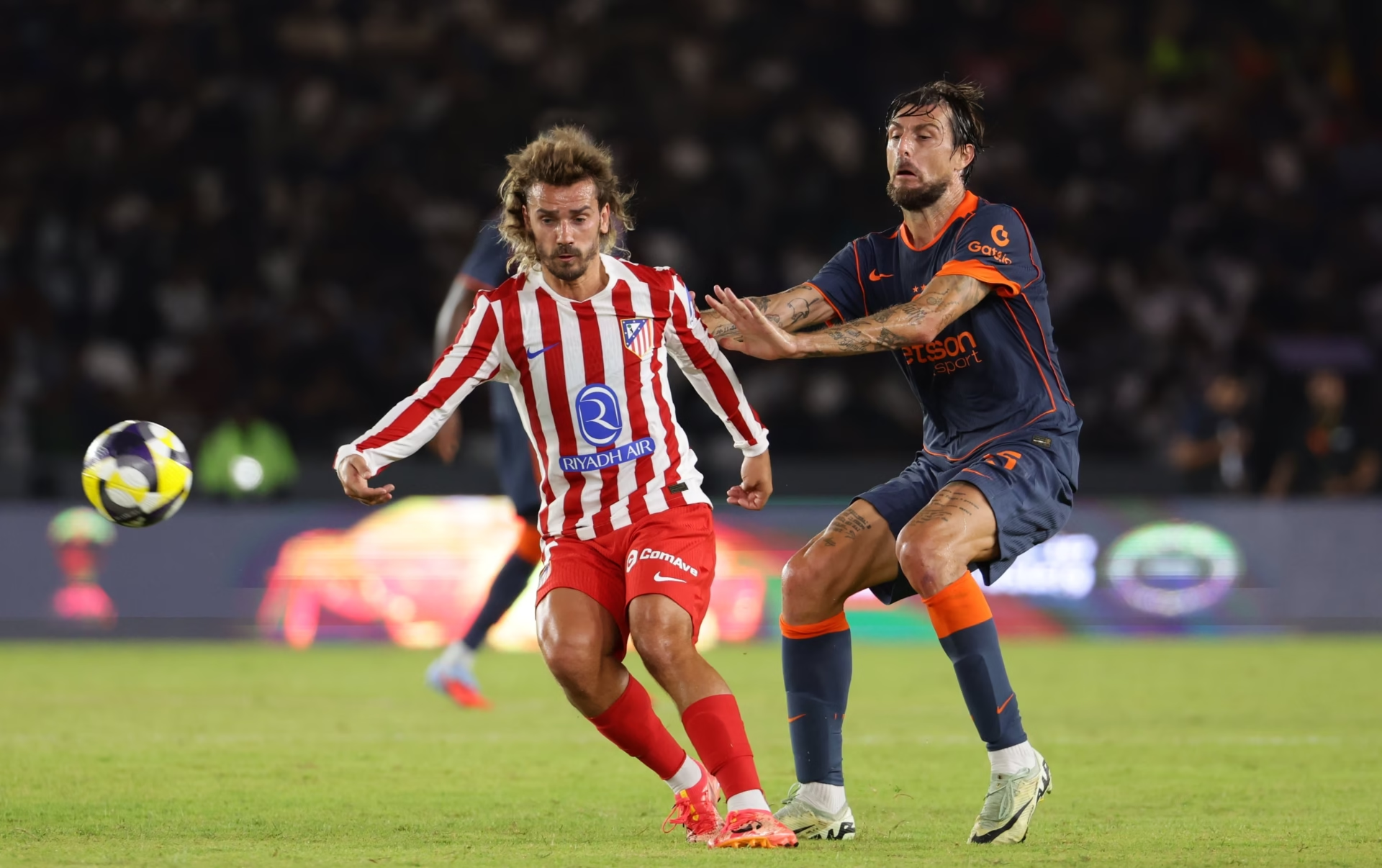

While Europe’s top players represent their countries during the international break, Atletico Madrid and Inter Milan are embarking on an unusual journey to Benghazi, Libya, for a lucrative friendly match that Barcelona turned down due to security concerns. The Reconstruction Cup-FDRL trophy encounter, featuring stars like Antoine Griezmann and Henrikh Mkhitaryan, highlights the complex intersection of football, politics, and commercial opportunities in a country still recovering from years of civil conflict.
The €3.5 Million Question: Why Libya?
International breaks typically offer players a chance to rest and recharge, but Atletico Madrid and Inter Milan have chosen a different path. The two European giants will face each other at the recently renovated 42,000-capacity Benghazi International Stadium on Friday night, participating in what has become one of football’s most controversial friendly matches.
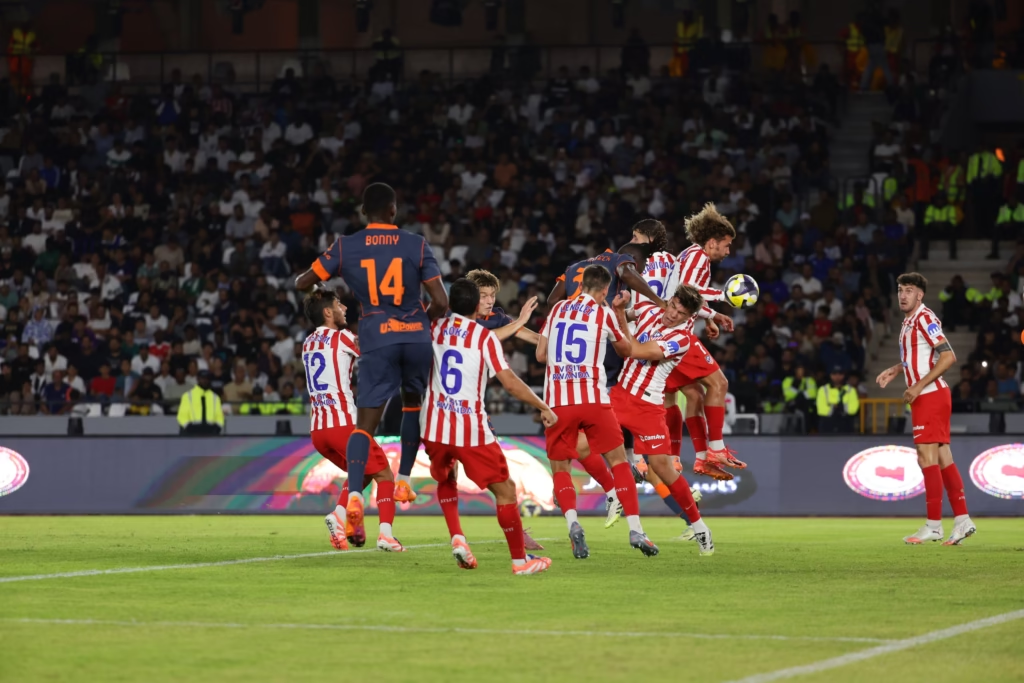
The invitation came from the Libya Development and Reconstruction Fund (FDRL), whose director general is Belgasem Haftar, son of Khalifa Haftar—the military strongman controlling eastern Libya. According to reports, Atletico will pocket approximately €3.5 million for their participation, though Inter’s exact compensation remains undisclosed.
| Club | Reported Fee | Original Invite | Decision | Reason |
|---|---|---|---|---|
| Barcelona | €5 million | Yes | Declined | Security concerns |
| Atletico Madrid | €3.5 million | Yes (replacement) | Accepted | Commercial opportunity |
| Inter Milan | Undisclosed | Yes | Accepted | Financial/training value |
This isn’t Atletico’s first foray into mid-season exhibition matches. La Liga’s champions have previously played commercial friendlies in Singapore, Azerbaijan, and Turkey during international windows, viewing such games as valuable for both training purposes and financial gain.
Barcelona’s Withdrawal: Security Takes Priority
Barcelona was originally scheduled to participate in the Reconstruction Cup-FDRL, having already received approximately €5 million to feature in the match. However, the Catalan club ultimately made the difficult decision to withdraw and return the money to organizers, citing security concerns in a region where international governments advise against travel.
The decision wasn’t purely about safety. Barcelona faced a logistical complication: with 10 senior players away on international duty, the club would have needed to include youth team players to fill out the traveling squad. Their reserve team, Barca Atletic, was scheduled to host Reus FC Reddis in Spain’s fourth division less than 24 hours after the Libya match would conclude—making the trip practically impossible.
Barcelona’s Withdrawal Factors:
- Security risks: U.S. and Spanish governments warn against traveling to Benghazi
- Squad availability: 10 senior players on international duty
- Scheduling conflict: Reserve team match within 24 hours
- Ethical considerations: Playing in politically sensitive territory
Barcelona’s withdrawal opened the door for Atletico Madrid to step in as replacements, accepting both the opportunity and the substantial financial compensation that came with it.
The Benghazi Stadium: A Symbol of Reconstruction
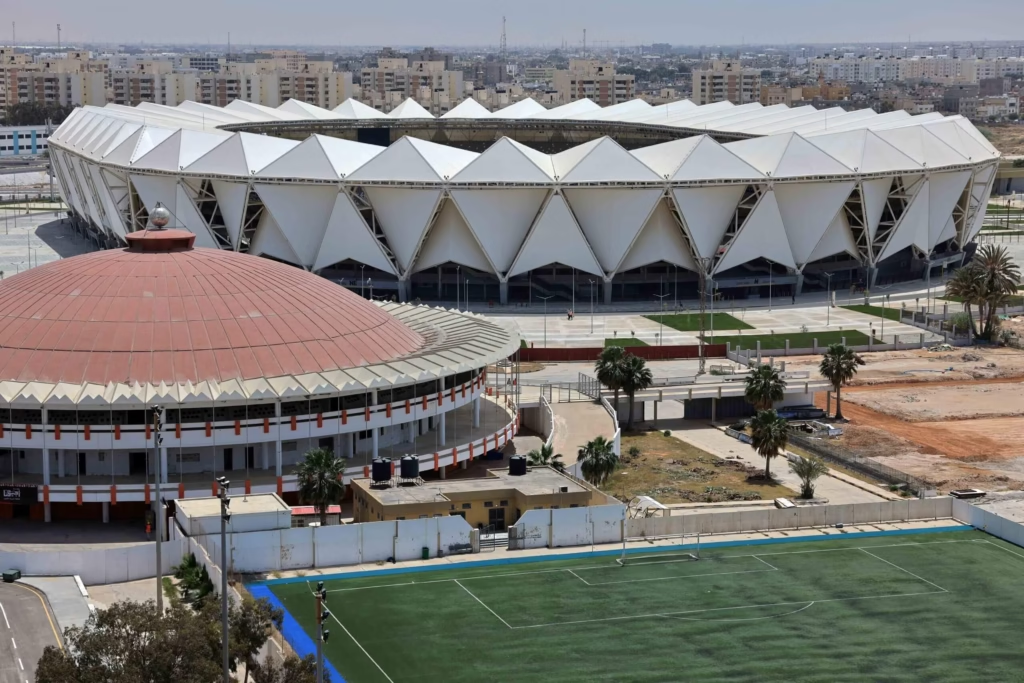
The venue for this controversial friendly carries significant political symbolism. The Benghazi International Stadium underwent extensive remodeling as one of the FDRL’s signature projects—a renovation stalled for years during Libya’s civil conflict but completed early in 2025.
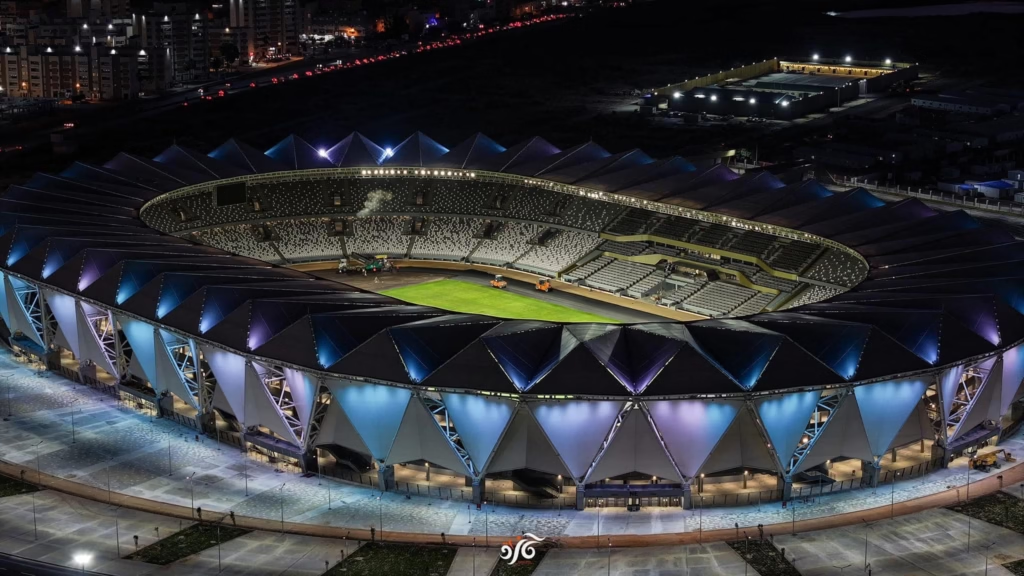
Remarkably, the Turkish construction firm Limak, which handled the Benghazi stadium renovation, is also currently rebuilding Barcelona’s iconic Camp Nou. In June, Italian delegations visited the Benghazi venue during a Libyan-Italian forum focused on development and reconstruction, signaling international recognition of the project’s completion.
The stadium represents more than just a sports facility. It stands as a testament to efforts at rebuilding infrastructure in a nation torn apart by over a decade of conflict, serving as a showcase for the FDRL’s broader reconstruction initiatives including roads, bridges, schools, and hospitals.
Libya’s Complex Football History
Football remains Libya’s most popular sport among its 7.5 million citizens, despite the national team never qualifying for a World Cup. Their best international performance came when hosting the 1982 Africa Cup of Nations, where they reached the final before losing to Ghana on penalties.
The relationship between Libyan politics and European football runs deep. During Muammar Gaddafi’s dictatorship, these connections were particularly prominent:
| Year | Event | Significance |
|---|---|---|
| 2002 | Supercoppa Italiana held in Tripoli | Major Italian football event in Libya |
| 2002-2007 | Tamoil sponsors Juventus | Libyan state oil company backs Italian giants |
| 2002 | LAFICO buys Juventus shares | Libyan investment in Italy’s biggest club |
| 2003-2006 | Saadi Gaddafi plays in Italy | Dictator’s son joins Perugia, Udinese, Sampdoria |
Since Gaddafi’s overthrow and death in 2011, Libya’s domestic football has mirrored its political division. One competition operates in the east under Khalifa Haftar’s military control, while another runs in the west under a transitional government recognized internationally. National champions are determined through finals competitions that have been held in Italy for the past two years because conditions in Libya are deemed too unsafe.
Benghazi’s Al Nasr, owned by Saddam Haftar (another of Khalifa’s sons), won the championship in Rome at the end of the 2023-24 season, while Al Ahly of Tripoli are current title holders.
The Security Concerns: A Divided Nation
The decision to play football in Libya during 2025 raises legitimate safety questions. After years of civil war following Gaddafi’s fall, the country remains fractured between two rival administrations: a UN-recognized Government of National Unity in Tripoli controlling the west, and Khalifa Haftar’s regime governing the oil-rich eastern region from Benghazi.
International Travel Warnings:
| Country | Warning Level | Cited Risks |
|---|---|---|
| United States | Do Not Travel | Crime, terrorism, land mines, civil unrest, kidnapping, armed conflict |
| Spain | Do Not Travel | Armed conflict, terrorism, criminality |
| Italy | Not Recommended | Travel only for essential work/business with security measures |
Libyans have endured a severe humanitarian crisis in recent years, with thousands killed and many more displaced by ongoing conflict. The economy, heavily dependent on oil exports, has suffered immensely. Migrants and refugees transiting through Libya while attempting to reach Europe have faced particularly dire conditions.
Both Atletico and Inter are expected to minimize ground time in Libya, restricting their visit to the airport, hotel, and stadium—a controlled environment designed to mitigate security risks.
Atletico’s Confidence: Precedent and Preparation
Despite international warnings, Atletico Madrid expressed no concerns about security during their visit. The Spanish club pointed to a February exhibition match at the same Benghazi stadium featuring football legends including Samuel Eto’o, John Terry, Michael Owen, William Gallas, and Dimitar Berbatov—an event that proceeded without incident.
This precedent provides some reassurance, suggesting that with proper security protocols and limited exposure outside controlled environments, high-profile football events can occur safely in Benghazi. The FDRL has demonstrated capability in organizing such matches while protecting participants.
Star Players Expected to Feature:
- Atletico Madrid: Antoine Griezmann, Koke, various first-team regulars
- Inter Milan: Henrikh Mkhitaryan, Yann Sommer, squad members not on international duty
The match also serves as a preview of sorts. Atletico and Inter most recently met competitively in the 2023-24 Champions League round of 16, with the Spanish side progressing via penalty shootout. They’re scheduled to face each other again in the Champions League league phase on November 26 at Madrid’s Metropolitano Stadium, making this friendly an interesting tactical precursor.
The Broader Context: Football’s Uncomfortable Compromises
This Libya friendly exemplifies football’s ongoing tension between sporting principles and commercial realities. Major clubs face constant pressure to maximize revenue streams, particularly during periods without competitive fixtures. Mid-season friendlies in emerging markets offer substantial financial rewards with minimal competitive risk.
Yet these opportunities often come with ethical complexities. Playing in regions with questionable human rights records, unstable political situations, or ongoing conflicts raises uncomfortable questions about football’s values and responsibilities.
Similar Controversial Friendlies:
- European clubs playing in authoritarian states
- Pre-season tours in countries with poor human rights records
- Exhibition matches in politically sensitive regions
- Friendlies organized by regimes seeking legitimacy through sport
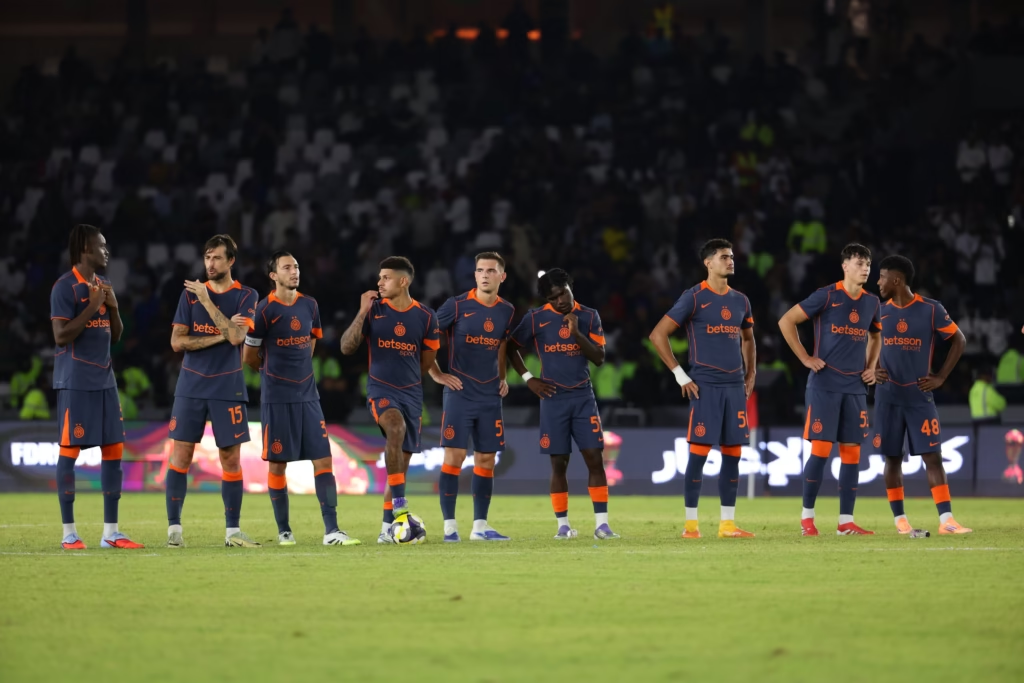
German Bundesliga side Schalke will play a friendly in Dublin against Bohemian FC this same weekend—a far less controversial arrangement. Manchester United recently explored playing a mid-season friendly in Saudi Arabia given their lack of European football this season, highlighting how clubs constantly seek these commercial opportunities.
What This Match Represents
For the FDRL and eastern Libya’s administration, hosting Atletico Madrid versus Inter Milan represents a significant soft power achievement. International sporting events convey legitimacy, showcase reconstruction progress, and project normalcy to global audiences—valuable assets for any regime seeking recognition.
For Atletico and Inter, the match offers financial compensation, training opportunities during an otherwise inactive period, and the chance to prepare for their upcoming Champions League encounter. The clubs likely view security risks as manageable given proper precautions and the precedent of previous successful events.
For football observers, the match raises questions about where clubs should draw ethical lines. Should financial opportunities in politically complex regions be pursued, or do the potential risks and uncomfortable associations outweigh commercial benefits?
Barcelona’s decision to withdraw despite already receiving payment demonstrates that some clubs prioritize security and ethical considerations over financial gain. Atletico’s willingness to step in as replacements shows that others calculate the risk-reward equation differently.
The Path Forward: Reconstruction Through Sport?
The FDRL’s Facebook page showcases various reconstruction projects it funds, including infrastructure improvements alongside football facilities. Representatives from the United States, United Kingdom, Egypt, Turkey, and Greece have met with FDRL officials including Belgasem and Saddam Haftar, suggesting some level of international engagement with the organization.
Whether football can genuinely contribute to Libya’s reconstruction and reconciliation remains uncertain. Sport has historically served as a diplomatic tool, building bridges and fostering dialogue in divided societies. Yet it can also be exploited for propaganda purposes or to whitewash problematic regimes through “sportswashing.”
The Atletico-Inter friendly won’t resolve Libya’s deep political divisions or humanitarian crisis. What it will do is generate global attention, provide revenue to participating clubs, and showcase a renovated stadium in a city that has endured tremendous suffering. Whether that represents progress or exploitation depends largely on one’s perspective and priorities.
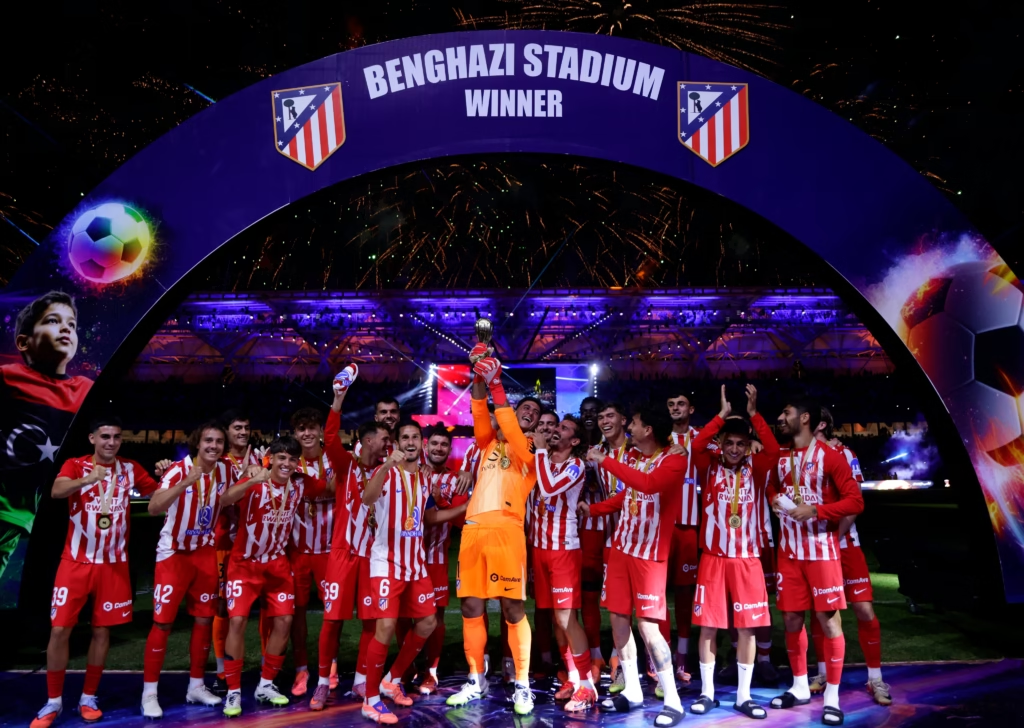
As the two European giants prepare to take the field in Benghazi on Friday night, they’ll be participating in far more than just another international break friendly. They’ll be navigating the complex intersection of sport, politics, money, and morality—a junction that has always existed in football but grows more visible with each passing year.
Read More: Joan Laporta Confirms Barcelona Will Abandon Super League and Return to UEFA
FAQs
Why are Atletico Madrid and Inter playing in Libya?
Both clubs were invited by the Libya Development and Reconstruction Fund (FDRL) to play a friendly during the international break, with Atletico reportedly receiving €3.5 million for participating.
Why did Barcelona withdraw from the Libya match?
Barcelona withdrew due to security concerns in Benghazi, where international governments advise against travel, and returned approximately €5 million they had already received from organizers.
Is it safe for football teams to travel to Libya?
The U.S., Spain, and Italy all warn against travel to Libya due to terrorism, armed conflict, and crime. Both clubs will minimize time on the ground, visiting only the airport, hotel, and stadium.
When did Atletico and Inter last play each other?
The clubs last met in the 2023-24 Champions League round of 16, with Atletico progressing via penalty shootout. They face each other again on November 26, 2025 in Madrid.
What is the Benghazi International Stadium’s significance?
The 42,000-capacity stadium was recently renovated by Turkish firm Limak as a signature reconstruction project, symbolizing rebuilding efforts in eastern Libya under the FDRL.

