

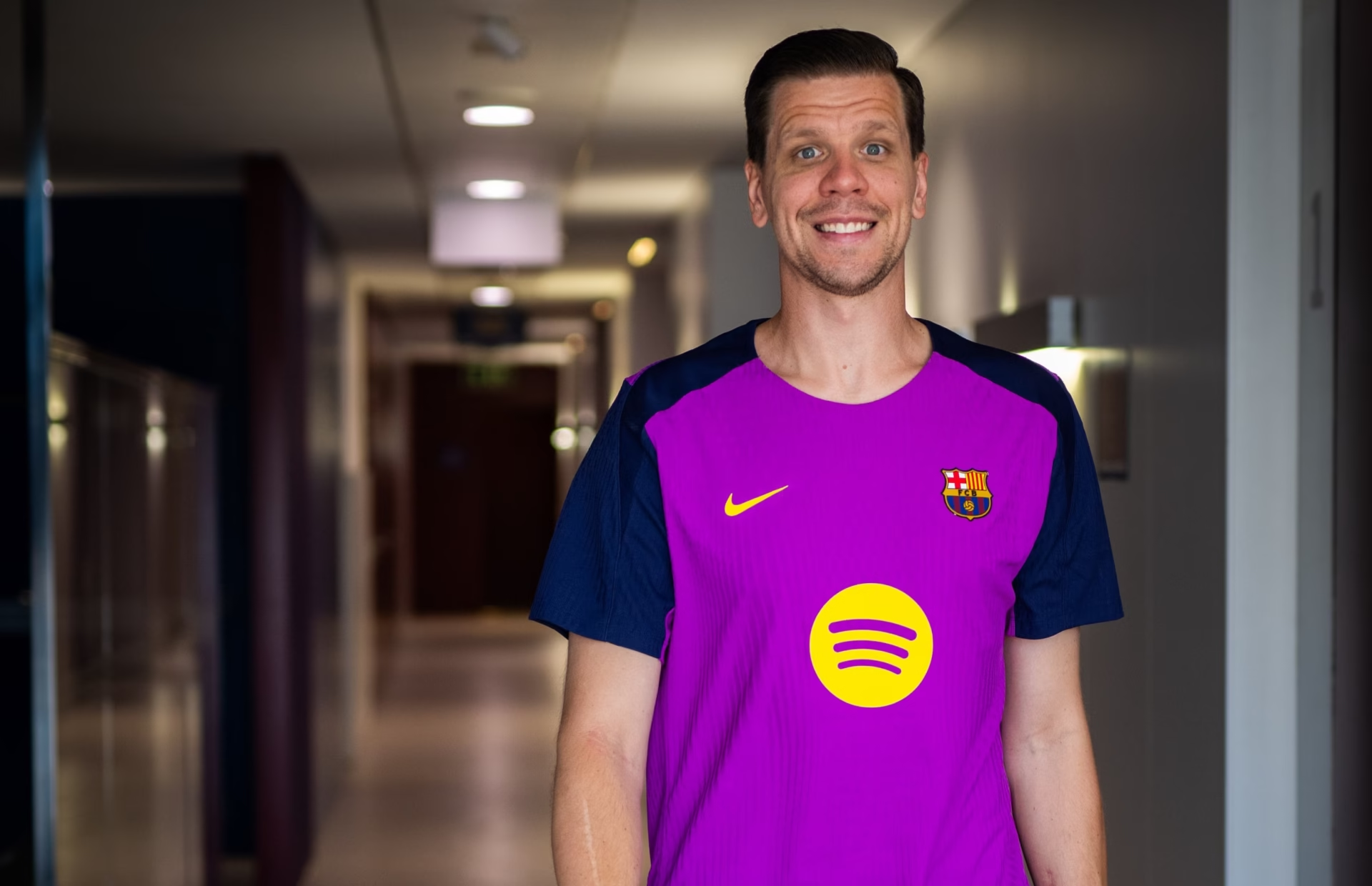

In an extraordinary display of professional humility, Wojciech Szczęsny has made headlines across the football world with comments that have left Barcelona supporters both surprised and deeply moved. The 35-year-old Polish international, speaking candidly to media outlets in his homeland, revealed he actively hopes not to feature in the upcoming El Clásico against Real Madrid, scheduled for October 26 at the Santiago Bernabéu.
The Veteran’s Unexpected Declaration
Szczęsny openly stated his preference for Joan García to recover in time for the monumental fixture, expressing genuine concern for his younger teammate’s wellbeing over personal glory. “I wish him a quick recovery. I don’t plan to play the Clásico,” the Polish goalkeeper told Sport, a statement that immediately sparked conversations about team dynamics and leadership in modern football.
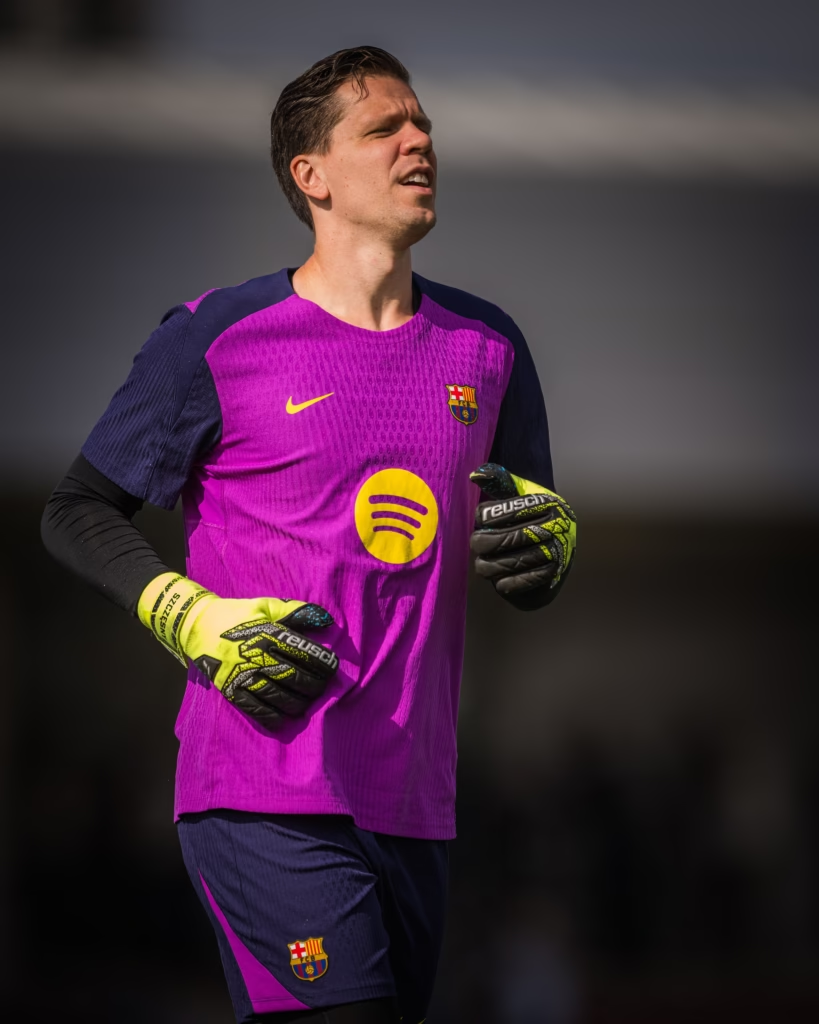
This isn’t merely diplomatic posturing from a backup player. Szczęsny has been unequivocal in his assessment of García’s potential, stating he believes the young Spaniard is destined to become the best goalkeeper in the world. Coming from a goalkeeper who has defended the nets of Arsenal, Roma, and Juventus across a distinguished career, such praise carries considerable weight.
Understanding the Goalkeeper Situation at Barcelona
Joan García’s Injury Timeline
| Aspect | Details |
|---|---|
| Injury Type | Torn medial meniscus in left knee |
| Surgery Date | Late September 2025 |
| Recovery Period | 4-6 weeks |
| El Clásico Date | October 26, 2025 |
| Matches Missed | Minimum 5-7 games |
| Return Status | Uncertain for El Clásico |
García underwent arthroscopic surgery performed by Dr. Joan Carles Monllau, with the procedure described as “clean and straightforward” with no collateral damage. The medical team at Barcelona has set the El Clásico as a primary target for his return, though this remains optimistic rather than guaranteed.
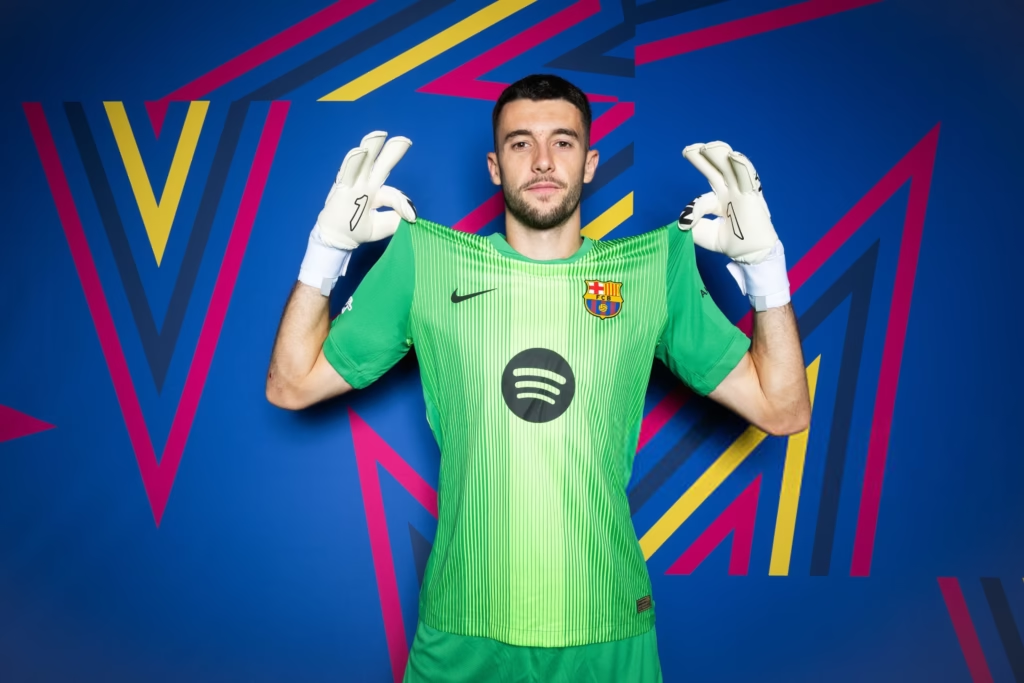
The injury occurred during a match against Oviedo, forcing the €25 million summer signing from Espanyol to undergo immediate surgical intervention. Before his injury, García had established himself as Barcelona’s undisputed number one under manager Hansi Flick, featuring in seven matches and conceding just five goals.
Szczęsny’s Role as Mentor and Guardian
The relationship between Szczęsny and Joan García represents one of the most compelling narratives at Barcelona this season. Rather than viewing the younger goalkeeper as competition, the Polish veteran has embraced a mentorship role that transcends typical squad dynamics.
“I saw Joan García when he played for Espanyol, and I was immediately impressed,” Szczęsny confessed, adding that he knows exactly what his role is at the club and has no doubts about who should be Barcelona’s number one.
The Mentor’s Perspective
| Szczęsny’s Assessment of García | His Own Role Definition |
|---|---|
| Has “practically everything” physically | Prepare García for matches |
| Already among world’s best physically | Support development process |
| Smart and calm mentality | Be available when needed |
| Will handle 60-game season pressure | No competition for starting spot |
Szczęsny elaborated on García’s potential, noting that while physical attributes are already world-class, the mental aspect of maintaining focus every three days across 60 games at the highest level represents a new challenge. However, he expressed complete confidence in the young Spaniard’s ability to master this demanding schedule.
The Polish international has been remarkably transparent about his objectives. “My greatest success will be that Joan García has a great and successful season,” he stated, emphasizing that his role satisfaction comes from contributing to his colleague’s growth rather than personal achievements.
Historical Context: Szczęsny’s El Clásico Record
Despite his reluctance to feature in the upcoming match, Szczęsny’s track record against Real Madrid is nothing short of remarkable. The veteran goalkeeper maintains a perfect record in El Clásico encounters from last season, having participated in three separate victories against Los Blancos.
Szczęsny vs Real Madrid
| Competition | Result | Notes |
|---|---|---|
| La Liga | Barcelona Victory | Clean tactical performance |
| Copa del Rey Final | Barcelona Victory | Crucial saves secured trophy |
| Spanish Super Cup Final | Barcelona Victory | Received red card but team prevailed |
These performances demonstrate that Szczęsny’s comments stem not from fear or lack of confidence, but from a genuine commitment to what he perceives as best for Barcelona’s long-term interests. His successful history against Real Madrid only amplifies the selflessness of his current stance.
The Broader Implications for Barcelona
Manager Hansi Flick finds himself navigating a delicate situation. While having an experienced, willing backup like Szczęsny provides security, the injury crisis affecting Barcelona extends beyond just the goalkeeper position.
The club is currently managing multiple injury concerns, including long-term absences for players like Gavi, who underwent meniscus surgery that will keep him sidelined for an extended period. In this context, Szczęsny’s professionalism and readiness become even more valuable assets.
The Polish goalkeeper’s approach also sets a powerful example within the squad. In an era where ego and personal statistics often dominate headlines, his commitment to team success through supporting a younger player’s development offers a refreshing alternative narrative.
What This Means for El Clásico
Barcelona’s medical staff continues to work toward getting García match-ready for the Santiago Bernabéu clash. The club’s doctors have expressed confidence that if recovery progresses smoothly, García could return in time for the crucial fixture. However, several factors complicate this optimistic timeline.
Key Considerations
Even if García achieves medical clearance four weeks post-surgery, he would return just days before El Clásico. This scenario raises questions about match sharpness, confidence, and risk management. A goalkeeper making his first appearance after surgery in arguably the world’s biggest club fixture represents a significant gamble.
Barcelona’s medical team and Flick are expected to take a cautious approach, recognizing that risking a relapse in such a high-intensity match could have long-term consequences. This conservative strategy would favor Szczęsny starting despite his stated preference to remain on the bench.
The Character Behind the Comments
What makes Szczęsny’s declarations particularly noteworthy is their authenticity. Professional athletes rarely express genuine preference for reduced playing time, especially in matches of El Clásico’s magnitude. His comments reflect several admirable qualities:
Professional Maturity: Understanding his role within the squad structure and accepting it without resentment demonstrates remarkable emotional intelligence.
Long-term Thinking: Prioritizing García’s development and Barcelona’s future over immediate personal satisfaction shows strategic perspective beyond individual ambition.
Leadership Through Example: By publicly supporting García, Szczęsny establishes team culture standards that younger players can emulate.
The Polish goalkeeper has become not just a backup goalkeeper but an essential figure in Barcelona’s dressing room, forming part of a Polish presence alongside Robert Lewandowski that supports younger and newer players.
Looking Ahead: The Decision Approaches
As October 26 draws nearer, Barcelona must make crucial decisions about their goalkeeper situation. The factors influencing this choice include:
- Medical Clearance: Will García receive full approval from doctors?
- Match Fitness: Can García regain sufficient sharpness in time?
- Risk Assessment: Does the potential reward justify possible setback risks?
- Performance Factors: Has Szczęsny’s recent form influenced considerations?
Regardless of who ultimately stands between the posts at the Bernabéu, one truth has emerged clearly: Barcelona possesses two exceptional goalkeepers whose mutual respect and professionalism strengthen the entire squad. Szczęsny’s willingness to prioritize team success and a young colleague’s career over personal glory exemplifies the values that define truly great professionals.
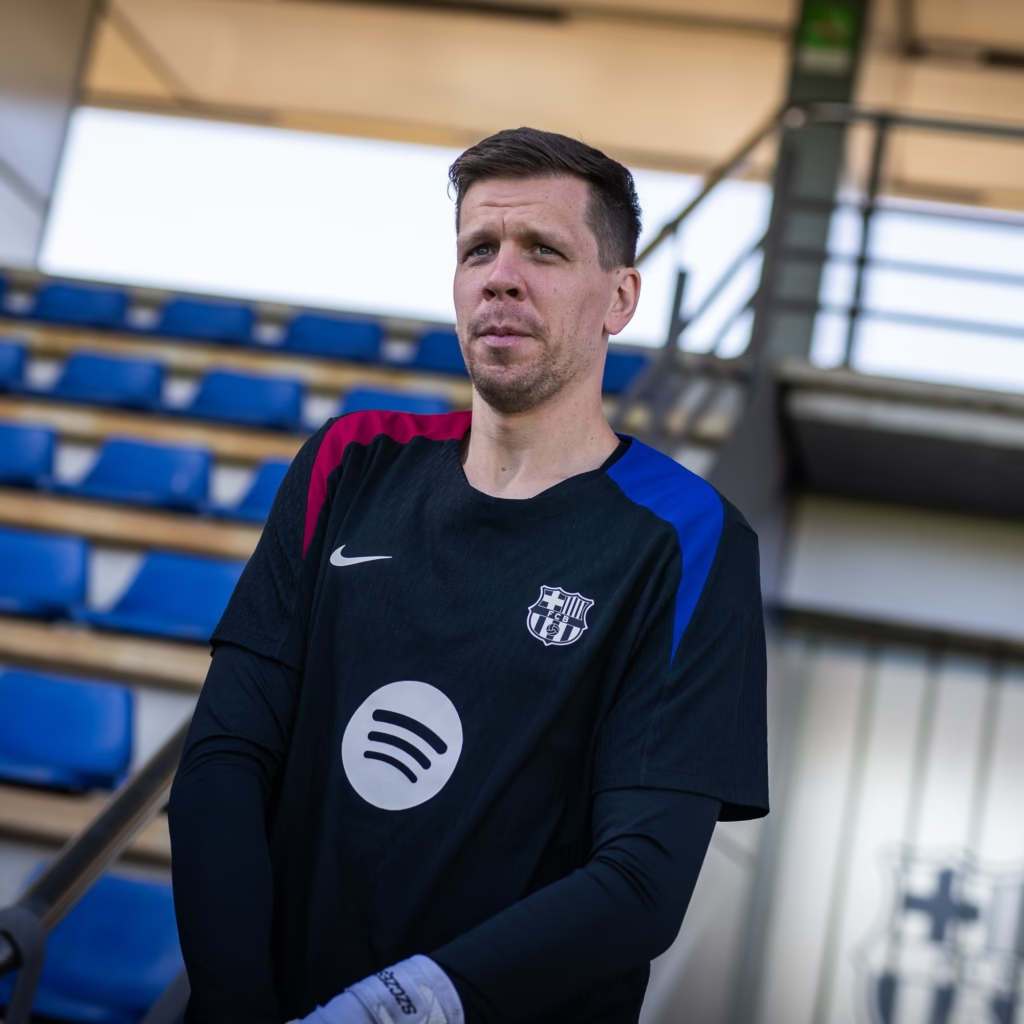
The upcoming El Clásico will answer whether García recovers in time or whether Szczęsny must set aside his wishes to defend Barcelona’s goal against their fiercest rivals. Either way, the Polish veteran has already demonstrated something more valuable than shot-stopping ability—the character that makes champions.
Read More: Frenkie de Jong Blasts “Unfair” Decision to Play Villarreal-Barcelona in Miami
FAQs
Why doesn’t Szczęsny want to play in El Clásico?
Szczęsny wants Joan García to be fit and play instead, as he sees García as Barcelona’s future and wants to support his development. His stance reflects professional mentorship rather than fear or lack of confidence.
What injury does Joan García have?
A: García suffered a torn medial meniscus in his left knee during a match against Oviedo. He underwent arthroscopic surgery in late September 2025 with a projected 4-6 week recovery timeline.
Will Joan García be ready for El Clásico?
Barcelona hopes García will recover in time for the October 26 match, but his participation remains uncertain. Medical staff are targeting this date, though a cautious approach may see Szczęsny start instead.
What is Szczęsny’s record against Real Madrid?
Szczęsny has a perfect record against Real Madrid, having won all three encounters last season across La Liga, Copa del Rey, and Spanish Super Cup competitions, though he received a red card in the latter.
How much did Barcelona pay for Joan García?
Barcelona signed Joan García from city rivals Espanyol for €25 million during the summer transfer window, quickly establishing him as their first-choice goalkeeper before his injury.

