



JEDEC (Joint Electron Device Engineering Council) has finalized the UFS 5.0 storage standard, bringing massive performance improvements to smartphones, AI systems, and edge computing devices. This next-generation flash storage nearly doubles the sequential performance of its predecessor, setting the stage for faster, more efficient mobile experiences.
UFS 5.0 Announced: Key Performance Upgrades
UFS 5.0 offers 10.8 GB/s bandwidth, almost double the 5.8 GB/s available in UFS 4.0 and 4.1 standards. This significant leap enables faster app loading, seamless 8K video recording, and improved AI processing on mobile devices.
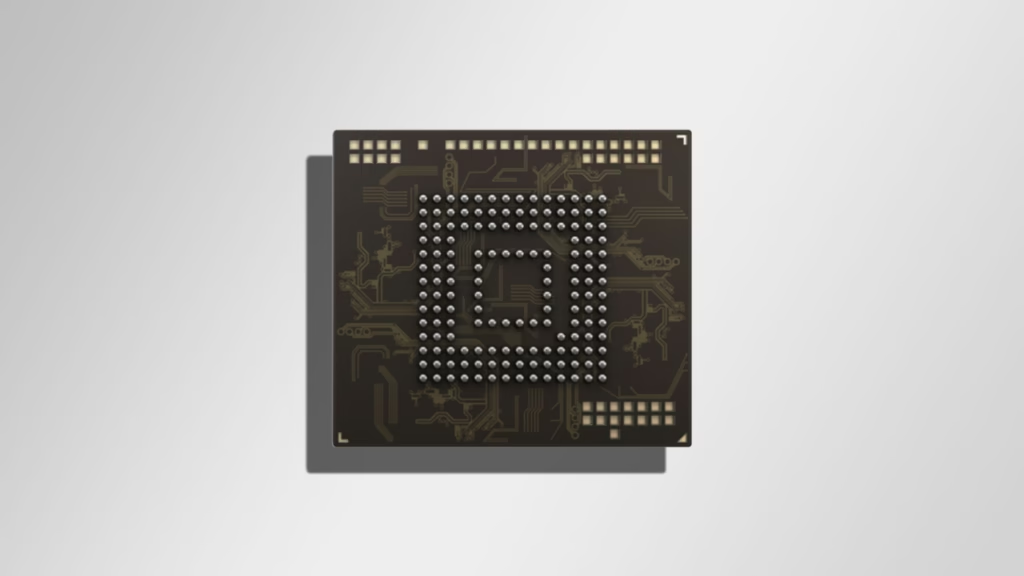
UFS Evolution: Complete Version History
| Version | Year | Speed per Lane | Total Bandwidth | Key Features |
|---|---|---|---|---|
| UFS 1.0 | 2011 | 300 MB/s | 300 MB/s | Command queue, baseline power |
| UFS 2.0 | 2013 | 600 MB/s | 1,200 MB/s | Full duplex, lower latency |
| UFS 3.0 | 2018 | 1,450 MB/s | 2,900 MB/s | Better thermals, enhanced efficiency |
| UFS 3.1 | 2020 | 1,450 MB/s | 2,900 MB/s | WriteBooster, Deep Sleep mode |
| UFS 4.0 | 2022 | 2,900 MB/s | 5,800 MB/s | Multi-host, 46% faster than 3.1 |
| UFS 4.1 | 2024 | 2,900 MB/s | 5,800 MB/s | Zoned storage, pro enhancements |
| UFS 5.0 | 2025 | ~6,400 MB/s | 10,800 MB/s | PAM4, inline hashing, isolated power |
Enhanced Reliability and Efficiency
Beyond raw speed, UFS 5.0 introduces link equalization for better signal stability and a dedicated power rail that isolates noise between physical and memory layers. These improvements ensure consistent performance even under heavy workloads.
The new inline hashing feature protects user data, adding an extra security layer for sensitive information stored on devices. This makes UFS 5.0 particularly suitable for AI applications and enterprise mobile solutions.

Backward Compatibility Confirmed
UFS 5.0 storage will be backwards compatible with hardware initially designed for UFS 4.x, allowing manufacturers to adopt the new standard without completely redesigning their platforms. This compatibility ensures a smoother transition for the industry.
Release Timeline
JEDEC hasn’t given a clear release timeline, so manufacturers will need to announce when production starts. Based on previous UFS rollouts, expect flagship smartphones to feature UFS 5.0 storage in late 2025 or early 2026.
For more storage and mobile tech updates, visit Tech2Sports and check the official JEDEC website for technical specifications.
FAQs
When will UFS 5.0 storage arrive in smartphones?
No official timeline yet, but expect flagship devices in late 2025 or early 2026.
How much faster is UFS 5.0 compared to UFS 4.0?
UFS 5.0 offers 10.8 GB/s bandwidth—nearly double the 5.8 GB/s of UFS 4.0.

