



In a significant shift reflecting evolving global talent mobility trends, Tata Consultancy Services (TCS), India’s IT giant, is strategically reducing its reliance on the H-1B visa program for hiring in the United States. This move comes as the US government emphasizes increasing local employment and prioritizing high-skilled immigration, reshaping hiring strategies for global companies operating in the US.
Understanding the H-1B Visa and Its Role in IT Hiring
The H-1B visa is a non-immigrant visa allowing US companies to employ foreign workers in specialty occupations, especially IT roles. For decades, Indian IT firms like TCS heavily utilized the program to deploy skilled workers to the US for client projects.
However, with rising scrutiny of H-1B visa policies and increasing policy shifts to promote American workers and skill-heavy immigration, companies are recalibrating hiring strategies.
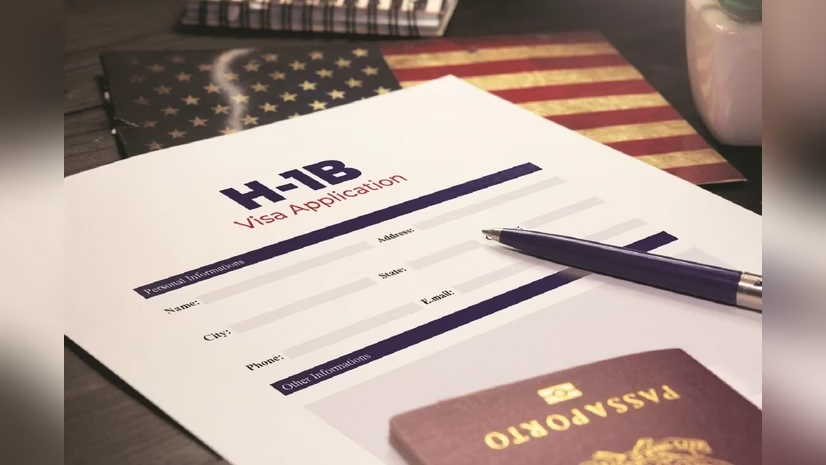
TCS’s Strategic Shift in H-1B Usage
According to recent reports, TCS has reduced its H-1B visa petition count by nearly half compared to previous years, aligning with US policy directives favoring local hiring and high-skilled workers. This intentional move means fewer Indian-origin IT employees will be required to move on H-1B visas, and more emphasis is placed on:
- Hiring US-based talent directly.
- Recruiting higher-skilled foreign professionals who meet tightened visa requirements.
- Increasing employee training programs to upskill its workforce globally.
This strategy not only complies with evolving US immigration policy but also enhances TCS’s competitiveness by diversifying its talent sourcing ecosystem.

| Aspect | Previous Practice | New Direction |
|---|---|---|
| H-1B Visa Usage | High reliance on H-1B workers | Nearly 50% reduction planned |
| Talent Hiring Focus | Importing skilled workers on visas | More US-based hiring, upskilling |
| Compliance with US Policies | Reactive adjustments | Proactive alignment |
| Training & Development | Standard programs | Enhanced global upskilling |
| Business Impact | Strong US workforce presence | Balanced global-local staffing |
Why This Matters for the IT Industry and Employees
This development signals a broader industry response to changing immigration and labor market conditions. US technology companies and clients increasingly demand local presence and compliance with stricter visa regulations. For Indian IT professionals, this means:
- Increased competition for high-skilled visas.
- More opportunities for US-based employment without relocation visa processes.
- Greater focus on continual skill development.
For TCS, it is a step to future-proof their US operations and maintain trust with local clients amid growing calls for domestic employment.
FAQs
Why is TCS reducing its H-1B visa usage in the US?
TCS is cutting back its H-1B visa usage by nearly half to comply with US government policies emphasizing local hiring and high-skilled immigration. This shift helps TCS align with legal requirements and market expectations while enhancing its operational flexibility.
How will this change affect Indian IT professionals seeking jobs in the US?
The reduction in H-1B visa usage means Indian IT professionals may face tougher competition for US roles requiring H-1B sponsorship. However, it also opens up increased direct hiring within the US for high-skilled candidates and stresses the importance of upskilling to meet evolving market demands.

