

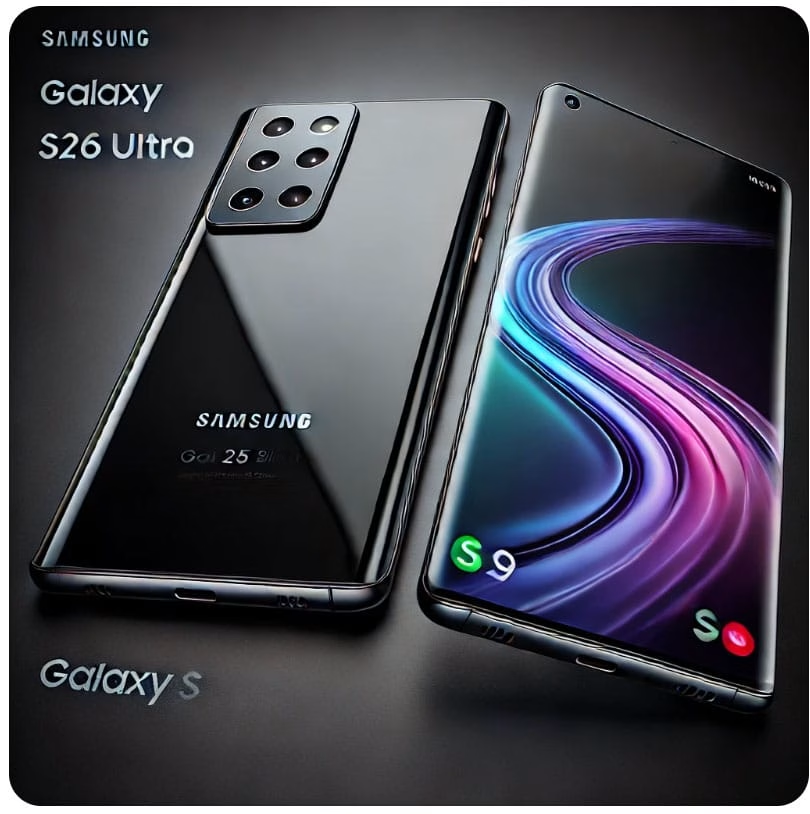

In the ever-evolving world of smartphones, battery life remains a top concern for users. But what if your phone could last days on a single charge? Samsung might be on the brink of making this a reality with its upcoming Galaxy S26 series. The tech giant is reportedly set to integrate silicon-carbon batteries, a move that could redefine our expectations of smartphone power. Let’s dive into this exciting development and explore how it might change the game for mobile devices.
What’s the Buzz About Silicon-Carbon Batteries?
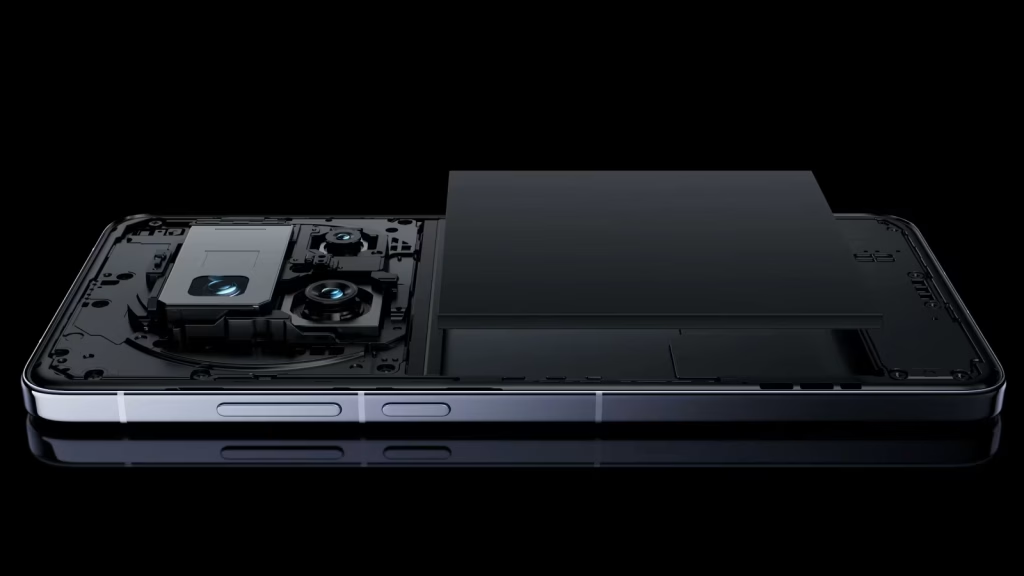
Before we get into the nitty-gritty, let’s break down what silicon-carbon batteries are all about. Traditional lithium-ion batteries, the kind you’ll find in most smartphones today, use graphite anodes. These have served us well, but they’re reaching their limits in terms of energy density – that’s the amount of power they can pack into a given space.
Enter silicon-carbon batteries. These next-gen power sources swap out graphite for silicon in the anode, and it’s not just a small upgrade – we’re talking about a potential game-changer. Silicon can theoretically hold up to ten times more energy than graphite. Imagine having a battery that’s the same size as your current one but can store way more power. That’s the promise of silicon-carbon technology.
But hold on, there’s a catch. Silicon tends to expand and contract as it charges and discharges, which can lead to the battery breaking down faster. This is where the carbon comes in, acting like a stabilizer to keep everything in check. It’s a bit like adding a shock absorber to a car suspension – it smooths out the ride and keeps things running smoothly for longer.
Samsung S26: Pioneering the Future of Mobile Battery Technology
Now, let’s talk about what this could mean for the Samsung Galaxy S26. If the reports are true, we might be looking at a significant leap in battery performance. Here’s what users might expect:
- Marathon Battery Life: With the potential for up to 40% more capacity, the S26 could sport a whopping 7,000mAh battery. To put that into perspective, you might go from charging your phone every night to every couple of days, even with heavy use.
- Supercharged Charging: Silicon-carbon batteries aren’t just about capacity; they can also handle faster charging. We could see charging speeds increase by 30-40% compared to current models. Imagine topping up your phone in the time it takes to grab a coffee.
- Slimmer, Lighter Design: Since these batteries can store more energy in the same space, Samsung might be able to slim down the S26 without sacrificing battery life. It’s a win-win for those who love powerful yet pocket-friendly phones.
- Cool Under Pressure: Silicon-carbon technology is more efficient, which means less energy lost as heat. This could lead to cooler-running phones and potentially better performance during resource-intensive tasks like gaming or video editing.
How Smartphone Battery Technology is Evolving with Silicon-Carbon
The potential shift to silicon-carbon batteries in the Samsung S26 isn’t just about one phone – it’s a glimpse into the future of smartphone battery technology as a whole. This move could spark a new era in mobile power management, pushing other manufacturers to innovate and adopt similar technologies.
Let’s look at some real-world examples of where this technology is heading. The Honor X9c, for instance, already boasts a 6,600mAh battery with 66W fast charging, allowing for a full charge in about an hour. Now, imagine combining this capacity with the efficiency of silicon-carbon technology – we could be looking at phones that not only last longer but also charge in a fraction of the time we’re used to.
Companies like Group14 are already pushing the boundaries with their SCC55™ Technology, a silicon-carbon composite material that promises five times the capacity of graphite anodes. This isn’t just about longer-lasting phones; it’s about enabling new features and capabilities that current battery tech simply can’t support.
The Future of Mobile Batteries: Silicon-Carbon’s Role in Powering Next-Gen Devices
As we look to the future of mobile batteries, silicon-carbon technology stands out as a key player. But what does this mean for the average smartphone user? Here are some exciting possibilities:
- AI-Powered Devices: With more battery capacity, phones could run more complex AI algorithms locally, improving features like voice assistants, camera processing, and predictive text.
- Extended Reality (XR) Experiences: Longer-lasting batteries could make augmented and virtual reality applications more viable on mobile devices, opening up new possibilities for gaming, education, and professional use.
- IoT Hub: Your smartphone could become a more effective hub for your smart home devices, managing and powering a network of connected gadgets without constantly needing to be plugged in.
However, it’s not all smooth sailing. There are challenges to overcome:
- Production Costs: Currently, silicon-carbon batteries are more expensive to produce than traditional lithium-ion batteries. This could impact the final price of devices using this technology.
- Scaling Up: While the technology shows promise in labs and small-scale production, ramping up to meet the demands of the global smartphone market is a significant challenge.
- Long-Term Durability: As with any new battery technology, real-world testing is crucial to ensure these batteries can withstand years of daily use and charging cycles.
Environmental Impact and Sustainability
One often overlooked aspect of battery technology is its environmental impact. Silicon-carbon batteries could offer some significant benefits in this area:
- Resource Availability: Silicon is one of the most abundant elements on Earth, potentially making these batteries more sustainable to produce than those relying heavily on rarer materials.
- Energy Efficiency: The improved efficiency of silicon-carbon batteries could lead to less energy waste, both in production and in daily use.
- Longevity: If these batteries indeed last longer and degrade more slowly, it could reduce electronic waste by extending the lifespan of our devices.
As consumers become more environmentally conscious, the sustainability angle of silicon-carbon batteries could be a significant selling point for Samsung and other manufacturers adopting this technology.
What This Means for You
As we wrap up our deep dive into silicon-carbon battery technology, you might be wondering what this all means for you, the smartphone user. Here’s the bottom line:
- Longer-Lasting Devices: If Samsung successfully implements this technology in the S26, you could be looking at a phone that keeps up with your busy life without constantly searching for a charger.
- Faster Charging: Those days of leaving your phone plugged in for hours might become a thing of the past.
- More Powerful Features: With better battery technology, smartphone makers can push the boundaries of what our devices can do, potentially leading to exciting new features and capabilities.
- Eco-Friendly Choice: By choosing a device with more sustainable battery technology, you could be making a choice that’s better for the environment.
While we’re still in the early stages, and the Samsung Galaxy S26 with silicon-carbon battery technology remains on the horizon, it’s clear that the future of smartphone batteries is bright. As this technology develops, we can look forward to devices that not only last longer but also open up new possibilities for how we use our smartphones in our daily lives.
The silicon-carbon battery technology promises to revolutionize smartphone power management, and Samsung’s S26 could be at the forefront of this exciting change. As smartphone battery technology advances, silicon-carbon batteries are poised to become the new standard, potentially reshaping our expectations of mobile device performance and capabilities.
So, keep an eye out for news about the Samsung Galaxy S26 and silicon-carbon batteries. The next time you upgrade your phone, you might find yourself holding a device that’s not just a little better, but fundamentally changed by this leap in battery technology. The future of mobile batteries lies in innovations like silicon-carbon technology, offering unprecedented power and efficiency – and it might be in your pocket sooner than you think.
Read More: Fallout TV Show Benefited from No Game Release, Says Spence
FAQ
How fast will the Galaxy S26 charge with a silicon-carbon battery?
Silicon-carbon batteries support faster charging, potentially boosting speeds by 30-40% compared to traditional lithium-ion batteries. This could mean reaching a full charge in less than an hour.
Are other brands working on silicon-carbon batteries?
Yes, companies like Honor (with the X9c’s 6,600mAh battery) and Group14 (developing SCC55™ silicon-carbon anodes) are also exploring this technology to improve smartphone battery life and performance.

