



Samsung has landed its first 2nm GAA chip orders from Chinese cryptocurrency mining giants MicroBT and Canaan, marking a strategic expansion beyond traditional clients. This move diversifies Samsung’s customer base as the chipmaker positions its next-generation process technology against rival TSMC.
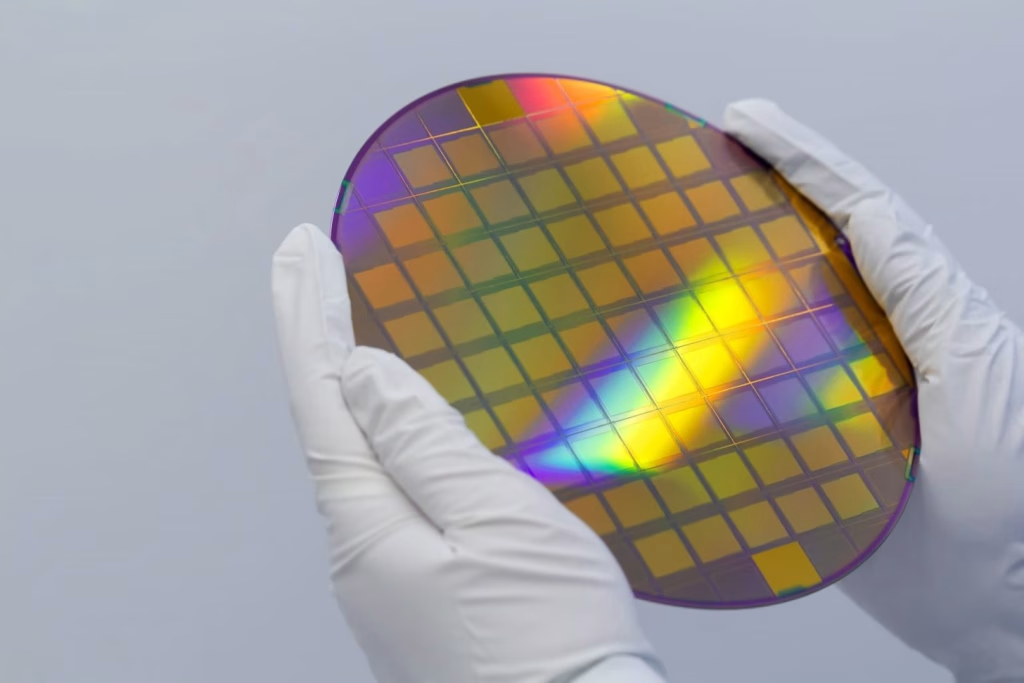
Samsung 2nm GAA Customer Portfolio
| Company | Market Position | Production Status |
|---|---|---|
| MicroBT | World’s 2nd largest miner | Already in production |
| Canaan | World’s 3rd largest miner | Early 2026 launch |
| Bitmain | World’s largest miner | Remains with TSMC |
Why Mining Companies Choose Samsung
MicroBT’s production has already commenced at Samsung’s S3 facility in Hwaseong, while Canaan plans to start manufacturing in early 2026. These mining ASICs serve as ideal test cases for advanced nodes due to their simpler architecture and repeating logic structures.
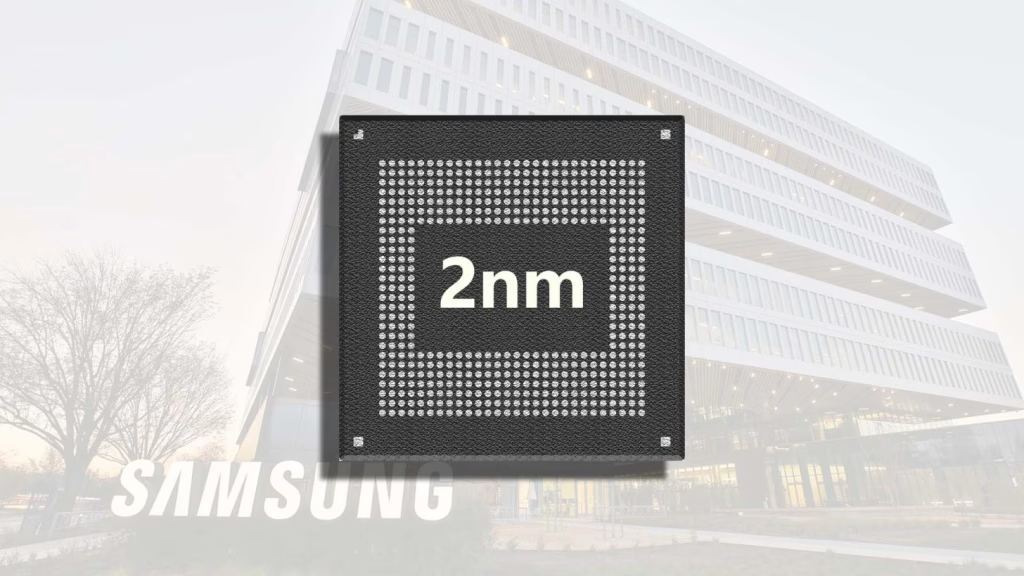
The 2nm GAA technology offers substantial improvements—45% lower power consumption, 23% performance boost, and 16% size reduction compared to 5nm chips. For energy-intensive cryptocurrency mining operations, these efficiency gains translate directly to profitability.
However, challenges remain. Industry leader Bitmain continues using TSMC, citing timely delivery, cutting-edge technology access, and proven yield performance—obstacles Samsung must still overcome.
Samsung’s 2nm Expansion Plans
Samsung is aggressively scaling its 2nm capabilities beyond cryptocurrency applications. The company has sent Snapdragon 8 Elite Gen 5 samples to Qualcomm for evaluation, though dual-sourcing with Samsung may only materialize with the Gen 6 launching in late 2026.
Production is expanding globally. Samsung’s Taylor, Texas facility is being equipped with ASML’s EUV lithography systems, targeting over 15,000 wafers monthly through 2027. The company has also completed basic design work on its second-generation 2nm process (SF2P+) to maintain competitiveness.
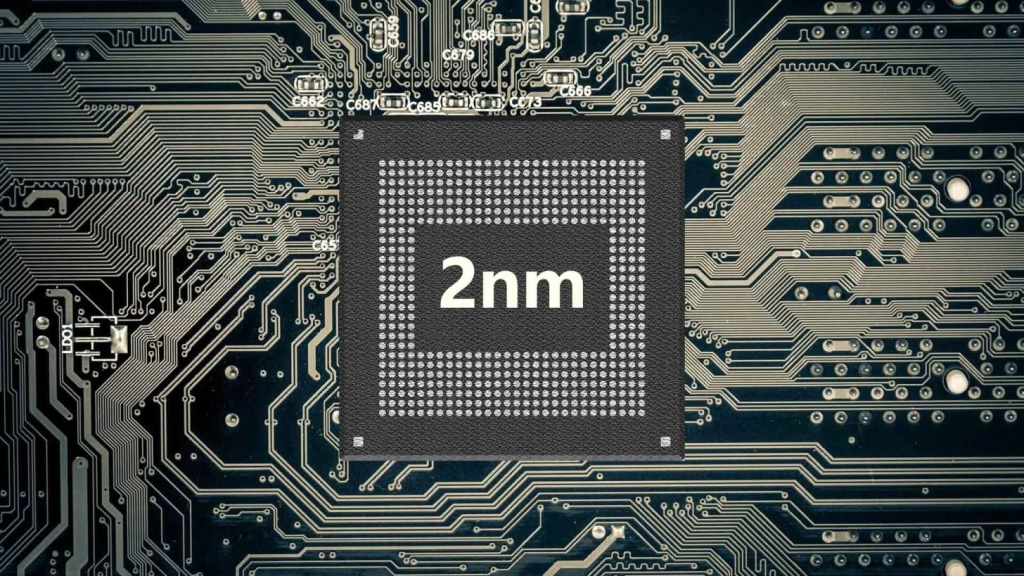
For technical specifications on Samsung’s GAA technology, visit Samsung Foundry’s official page.
Stay updated on semiconductor developments at Tech2Sports.
FAQs
What makes Samsung’s 2nm GAA different from TSMC’s technology?
GAA uses nanosheets contacting channels from all sides, enabling better performance and efficiency than traditional FinFET.
When will Samsung’s 2nm chips reach smartphones?
Qualcomm evaluation is underway, with potential commercial adoption in Snapdragon 8 Elite Gen 6 by late 2026.

