


Intel has reportedly approached Samsung Electronics to form a strategic “foundry alliance” aimed at challenging TSMC’s overwhelming market dominance. This potential collaboration could reshape the global semiconductor manufacturing landscape.
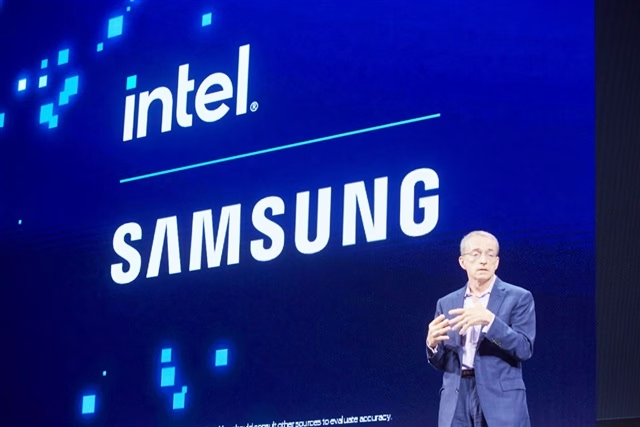
Strategic Alliance Against TSMC
Recent reports from South Korean media reveal that Intel initiated high-level discussions with Samsung executives to explore foundry cooperation. Both companies are struggling with their foundry operations and see collaboration as essential to compete against TSMC’s 60%+ market share.
Potential Collaboration Areas
| Partnership Aspect | Details |
|---|---|
| Process Technology | Shared advanced node development |
| Production Facilities | Resource sharing & capacity optimization |
| R&D Efforts | Joint research and development programs |
| Equipment Sharing | Reduced capital expenditure through sharing |
| Market Strategy | Combined approach against TSMC |
| Technology Exchange | Cross-licensing of foundry innovations |
| Timeline | Discussions ongoing, uncertain outcome |
Market Reality Check
Despite the promising collaboration potential, industry analysts suggest Samsung is unlikely to agree to this partnership despite promised benefits. Samsung’s foundry business has its own strategic priorities and competitive concerns about sharing technology with Intel.
Current Foundry Struggles
Intel’s foundry business isn’t performing well, prompting the company to seek industry partnerships. Similarly, Samsung has faced challenges in securing major foundry clients, making both companies natural allies against TSMC’s dominance.
Collaboration Benefits
If the alliance materializes, the companies could collaborate on process technology exchanges, shared production equipment, and joint R&D efforts. This would allow both firms to reduce development costs while accelerating innovation timelines.
Strategic Implications
Intel’s move to discuss Samsung cooperation suggests Intel lacks confidence in gaining process technology leadership independently. The partnership would combine Intel’s advanced packaging expertise with Samsung’s mature foundry infrastructure.
Industry Impact
The alliance could fundamentally alter semiconductor manufacturing dynamics, potentially creating a formidable competitor to TSMC’s market leadership. However, consumers shouldn’t expect Intel-designed, Samsung-manufactured CPUs in gaming PCs anytime soon.
Regulatory Considerations
Any Intel-Samsung partnership would face scrutiny from government regulators globally, particularly given the strategic importance of semiconductor manufacturing to national security interests.
The foundry alliance represents both companies’ recognition that standalone competition against TSMC may be insufficient in today’s rapidly evolving semiconductor landscape.
For comprehensive semiconductor industry analysis and hardware coverage, visit our technology section at Tech2Sports.
FAQs
Will Samsung actually agree to partner with Intel?
Industry analysts suggest Samsung is unlikely to accept despite potential benefits.
What would an Intel-Samsung alliance mean for TSMC?
It could create the first serious competitive threat to TSMC’s market dominance.

