

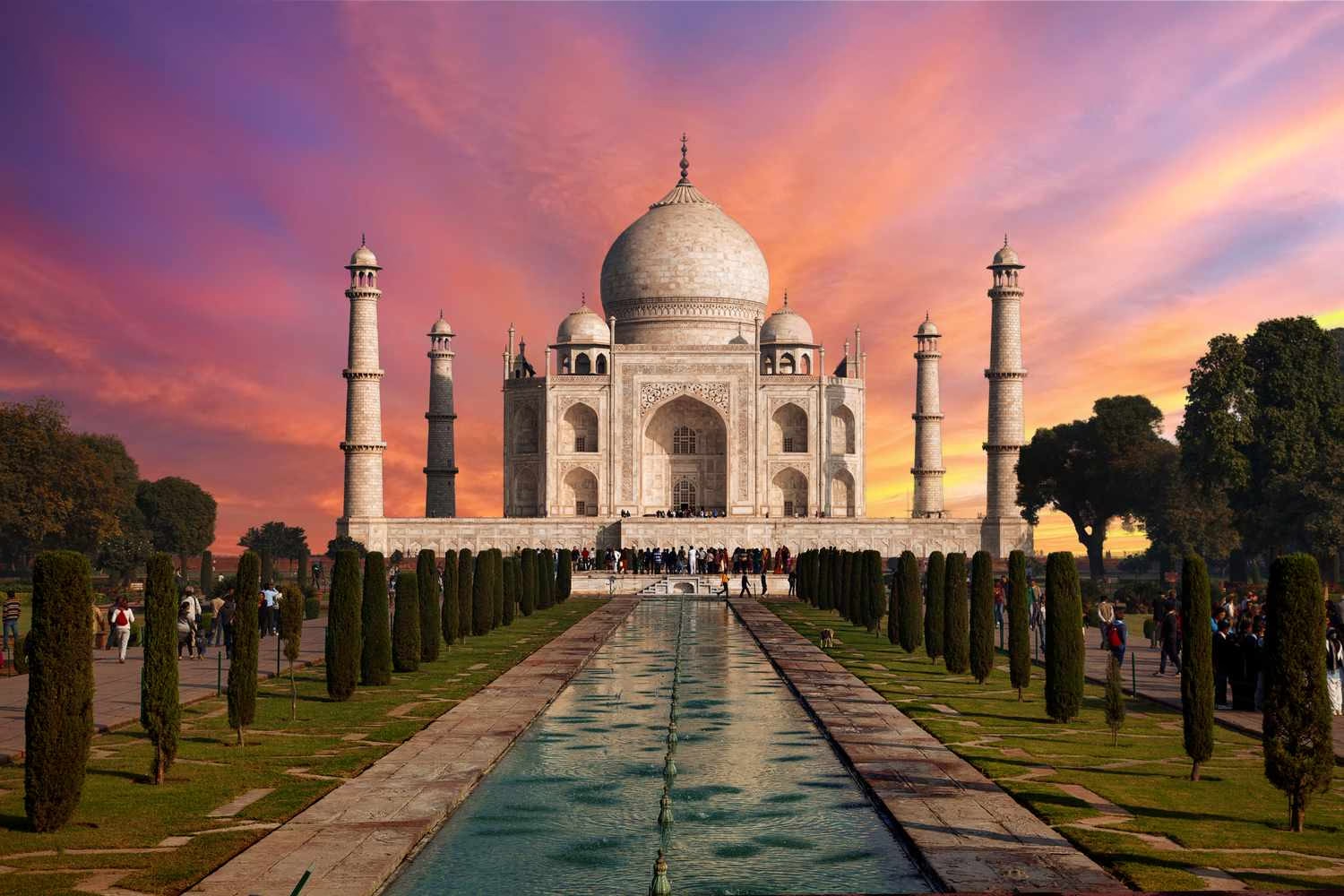

The teaser for the controversial film “The Taj Story” dropped on Thursday, October 9, 2025, igniting fierce debate across social media and reigniting long-standing questions about the Taj Mahal’s origins. Starring veteran actor Paresh Rawal, the film promises to challenge conventional historical narratives about one of the world’s most iconic monuments, asking a provocative question that has divided audiences even before its theatrical release on October 31, 2025.
The Provocative Teaser: What Paresh Rawal Asks
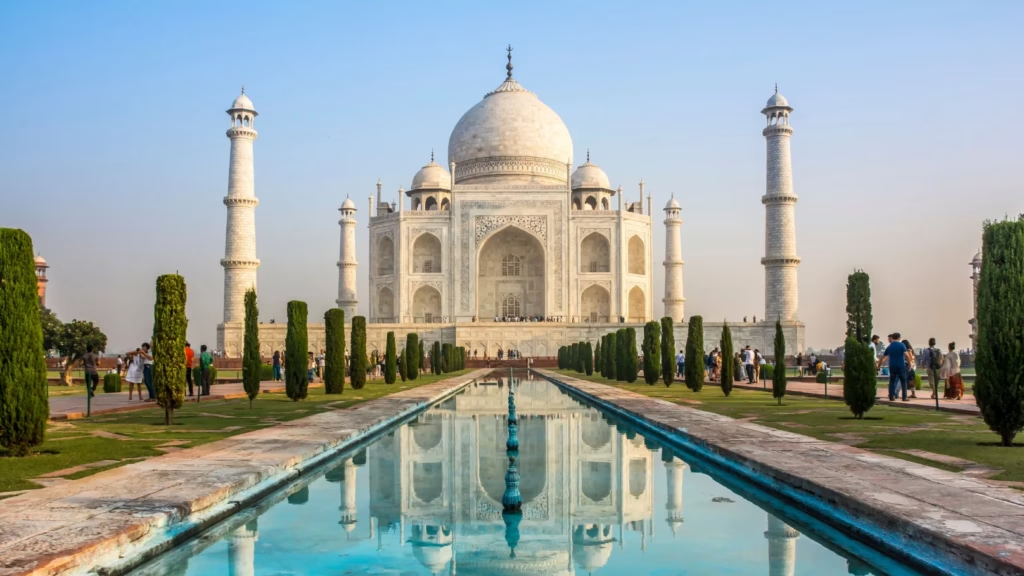
The teaser opens with a striking visual—Paresh Rawal seated on a bench opposite the magnificent Taj Mahal, his presence as commanding as the monument looming behind him. In a powerful monologue that sets the tone for the entire film, Rawal declares: “Taj Mahal is one of the greatest monuments of the world, a fine example of architectural prowess.”
Then comes the central question that has sparked controversy: “For some, it is a tomb… and for some, it is a temple.” The background score alternates between the Islamic call to prayer (azaan) and Hindu temple bells and damru (drum), symbolically representing the religious divide the film explores.
Rawal concludes by turning the question to viewers: “What do you think is its story?” This direct engagement with the audience transforms passive viewers into active participants in a historical debate that has raged for decades.
The Taj Story: Film Details at a Glance
| Aspect | Details |
|---|---|
| Lead Actor | Paresh Rawal |
| Supporting Cast | Zakir Hussain, Amruta Khanvilkar, Sneha Wagh, Namit Das |
| Director | Tushar Amrish Goel |
| Producer | CA Suresh Jha (Swarnim Global Services Pvt Ltd) |
| Release Date | October 31, 2025 |
| Genre | Courtroom drama / Historical controversy |
| Central Question | Is the Taj Mahal a tomb or temple? |
The Tejo Mahalaya Theory: Historical Background
To understand the controversy surrounding “The Taj Story,” one must examine the origins of the claim that the Taj Mahal might have been a Hindu temple. This theory primarily stems from historian P.N. Oak’s 1989 book Taj Mahal: The True Story, in which he made several controversial assertions.
Oak claimed that the Taj Mahal was originally built in 1155 AD as a Shiva temple called “Tejo Mahalay”—arguing that “Taj Mahal” was merely a corrupted Sanskrit term. According to Oak’s theory, Mughal Emperor Shah Jahan did not commission the monument as a mausoleum for his beloved wife Mumtaz Mahal in the 17th century, but rather seized an existing Hindu temple and converted it.
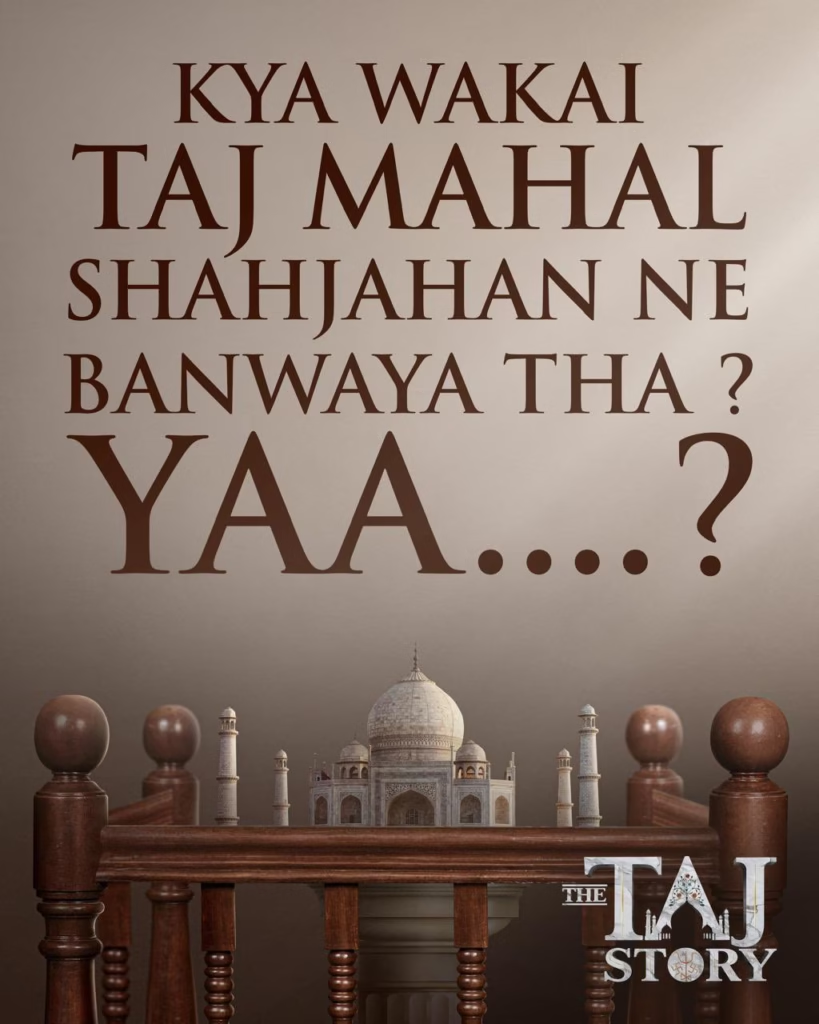
The historian further claimed that 22 sealed rooms within the Taj Mahal contained evidence of its Hindu origins, including idols and temple artifacts that were deliberately hidden to suppress the truth. Oak even petitioned India’s Supreme Court in 2000 to declare the Taj Mahal a Hindu temple, but the court dismissed his petition, with judges commenting that he had a “bee in his bonnet.”
Timeline of Taj Mahal Controversy
| Year | Event |
|---|---|
| 1989 | P.N. Oak publishes Taj Mahal: The True Story, claiming Hindu temple origins |
| 2000 | Supreme Court dismisses Oak’s petition calling for temple declaration |
| 2014-2017 | Various BJP leaders raise questions about Taj Mahal’s origins |
| 2015 | Six lawyers petition Agra district court demanding basement investigation |
| 2022 | Petitions filed seeking to open sealed rooms for evidence |
| 2025 | “The Taj Story” film brings controversy back to mainstream discourse |
The Archaeological Survey of India’s Official Position
The Archaeological Survey of India (ASI), the government body responsible for archaeological research and protection of cultural heritage, has consistently maintained that there is absolutely no evidence supporting the temple theory. According to the ASI, the Taj Mahal is definitively a Mughal-era mausoleum commissioned by Emperor Shah Jahan between 1632 and 1653.
The organization has testified in various court cases that exhaustive archaeological studies, architectural analysis, and historical documentation all confirm the monument’s origins as described in mainstream historical accounts. The ASI points to:
- Contemporary Mughal records detailing the construction process
- Architectural style consistent with Mughal design principles
- Historical documentation from both Indian and foreign sources
- Material evidence from construction techniques and materials used
Despite these official positions, petitions continue to be filed in courts seeking permission to open the sealed rooms and investigate the monument’s foundations for alleged Hindu artifacts.
The Controversial Poster That Sparked Outrage
Before the teaser’s release, “The Taj Story” already courted controversy through a motion poster released on September 29, 2025. The image showed Paresh Rawal lifting the dome off a miniature Taj Mahal to reveal a Shiva idol inside—a visual metaphor suggesting the monument conceals Hindu origins beneath its Islamic exterior.
The poster immediately triggered widespread backlash on social media, with critics accusing the filmmakers of promoting propaganda based on debunked conspiracy theories. Users branded the poster as an attempt to fuel communal tensions and rewrite history for political purposes.
The criticism became so intense that Paresh Rawal deleted the post from his social media accounts. Subsequently, the production company Swarnim Global Services Pvt Ltd issued a clarification statement attempting to distance the film from religious controversy.
The Makers’ Defense: “Historical Facts, Not Religious Claims”
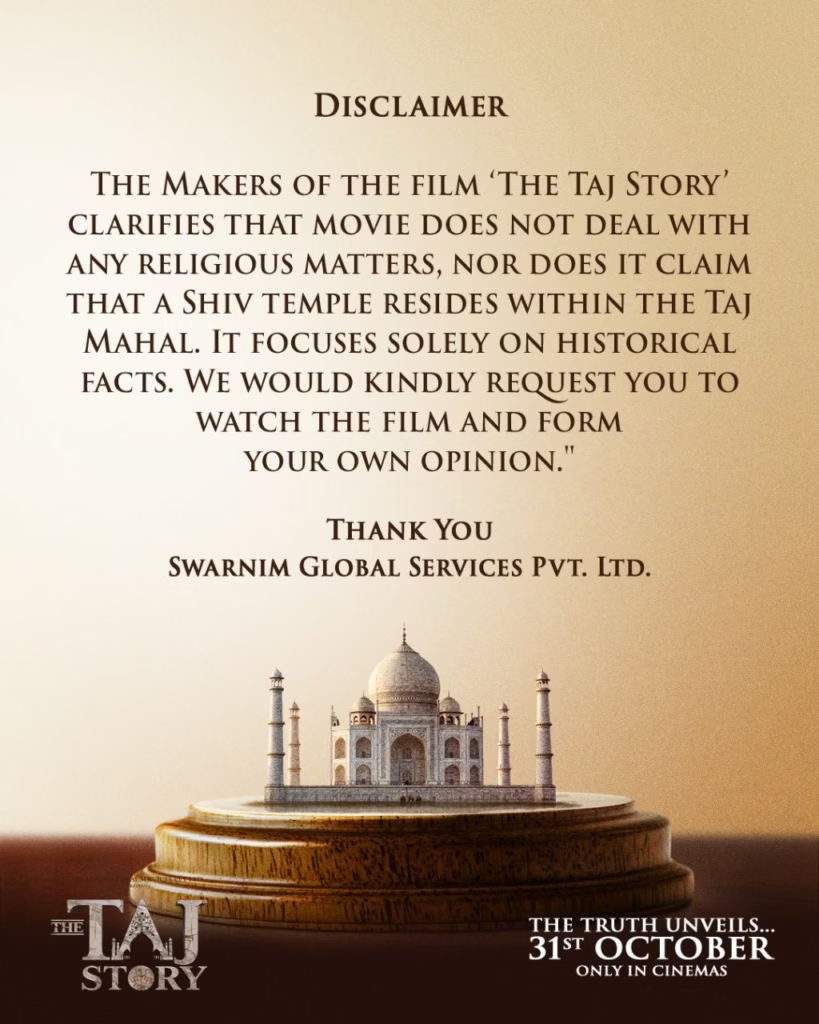
Following the poster controversy, the production team released a carefully worded statement: “The makers of the film The Taj Story clarify that the movie does not deal with any religious matters, nor does it claim that a Shiv temple resides within the Taj Mahal. It focuses solely on historical facts. We would kindly request you to watch the film and form your own opinion.”
This disclaimer represents a delicate balancing act—the filmmakers want to explore controversial questions while avoiding accusations of religious propaganda. However, critics argue that the very framing of the Taj Mahal as potentially being a temple rather than a tomb inherently makes religious claims, regardless of official disclaimers.
Paresh Rawal himself responded to questions on social media platform X, revealing that the film draws from P.N. Oak’s book along with other unspecified sources. This admission immediately raised concerns among historians and critics, given that Oak’s theories have been academically discredited and legally rejected.
Internet Divided: Social Media Reactions
The teaser’s release on October 9, 2025, caused #TheTajStory to trend on X (formerly Twitter), with deeply polarized reactions reflecting India’s broader cultural and political divisions.
Supporters of the film argued:
- “Incredible! The Taj Mahal has always held secrets, and a hidden chamber sounds mysterious. Counting the days till 31st October to uncover it with #TheTajStory”
- Claims that the film represents “bold storytelling” willing to question accepted narratives
- Assertions that audiences should watch before judging
Critics of the film countered:
- “Another propaganda movie built on a conspiracy theory that’s been debunked countless times”
- “They divide us with fiction to blind us from reality”
- “The attempt to rewrite history and claim all of India’s heritage is shameful. It erases the real mix of cultures that built this land”
One viral tweet highlighted what many saw as hypocrisy: “Speechless 😶 In 2017, @SirPareshRawal said making controversies around the #TajMahal is stupid and pathetic. In 2025, the same Paresh Rawal is promoting a film that makes the Taj Mahal controversial. What a shameful U-turn just for money and politics.”
The Censor Board’s Extended Review
The film underwent an unusually extensive review process by India’s Central Board of Film Certification (CBFC), with clearance taking several months rather than the standard timeline. The board required director Tushar Amrish Goel and producer C.A. Suresh Jha to submit detailed historical documents and references supporting the film’s claims about the monument’s origins.
Industry observers noted that this level of scrutiny was uncommon and reflected institutional caution about potentially inflaming religious or communal sensitivities in a politically charged environment. The extended review process suggests authorities recognized the film’s potential to spark controversy and wanted to ensure it met legal and ethical standards before theatrical release.
Political Dimensions: BJP Connections
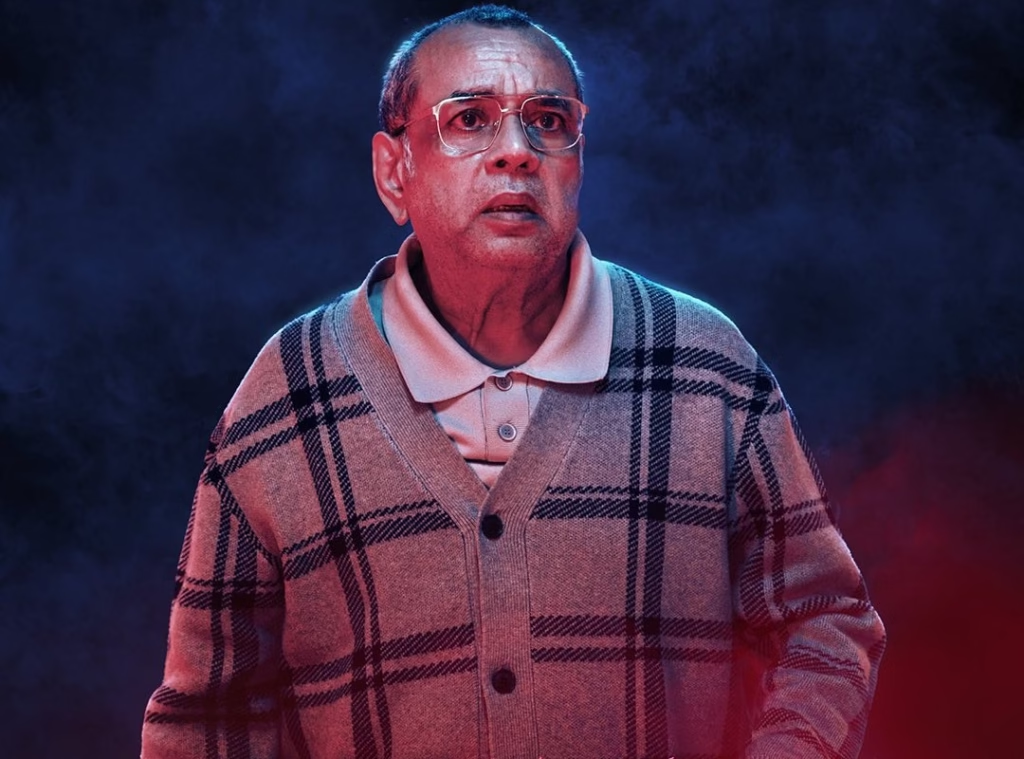
The controversy surrounding “The Taj Story” exists within a broader political context. Paresh Rawal has long-standing associations with the Bharatiya Janata Party (BJP), having been nominated as a Rajya Sabha member by the party. Producer Suresh Jha also reportedly has BJP connections.
Over the past decade, various BJP leaders and affiliated activists have raised questions about the Taj Mahal’s origins:
- 2014: BJP leader Laxmikant Bajpai raised the issue when the Taj Mahal was proposed as Waqf property
- 2017: Vinay Katiyar, BJP politician and Bajrang Dal founder, claimed water dripping from the roof proved it once housed a Shivling
- 2022: BJP spokesperson Rajneesh Singh demanded investigation into the monument’s 22 sealed rooms
- 2022: BJP MP Diya Kumari, Princess of Jaipur, claimed her family once owned the land
- February 2025: An All-India Hindu Mahasabha activist secretly performed Hindu rituals inside the Taj Mahal
These incidents have led critics to view “The Taj Story” not merely as historical inquiry but as part of a broader political project to reinterpret Indian history through a Hindu nationalist lens.
Special Screenings and Pre-Release Strategy
Before its commercial theatrical release, “The Taj Story” received special preview screenings in select venues. The film was shown to Anil Agarwal, chairman of the Vedanta Group, suggesting support from prominent business figures.
More significantly, the filmmakers held screenings at the House of Commons in London in April 2025—a move designed to lend international legitimacy to the project and position it as serious historical inquiry rather than domestic political controversy. By screening the film in Britain’s parliament, the makers attempted to frame their narrative as worthy of global attention and debate.
The Broader Debate: Historical Revisionism in India
“The Taj Story” emerges amid intensifying debates about historical revisionism in contemporary India. Critics worry about a pattern of reinterpreting well-established historical facts about Mughal-era monuments and Islamic contributions to Indian culture.
Those concerned about historical revisionism point to several troubling trends:
- Attempts to rename cities and monuments with Hindu-sounding names
- Textbook changes minimizing Mughal contributions to Indian civilization
- Archaeological Survey investigations pressured to find Hindu origins for Islamic monuments
- Court petitions seeking to “reclaim” mosques as former temples
Defenders of questioning established narratives argue that colonial-era historians may have suppressed indigenous perspectives and that legitimate historical questions deserve investigation regardless of political sensitivity.
What the Film Promises to Explore
According to promotional materials and the teaser, “The Taj Story” frames itself as a courtroom drama where competing historical claims about the Taj Mahal will be examined. The film apparently features Paresh Rawal’s character arguing against what he terms “intellectual terrorism”—suggesting that questioning accepted historical narratives represents intellectual freedom rather than revisionism.
The teaser’s dramatic question—”After 79 years of Independence, are we still a slave of intellectual terrorism?”—positions the film’s inquiry as an act of postcolonial reclamation, freeing India from supposedly British-imposed historical interpretations.
Whether the film presents genuinely new evidence or simply dramatizes debunked theories remains to be seen when it releases on October 31, 2025.
Read More: Friday OTT Releases: Mirai, Mutton Soup Lead October 10 Entertainment Lineup
FAQs
What is the Tejo Mahalaya theory about the Taj Mahal?
The Tejo Mahalaya theory, proposed by historian P.N. Oak in 1989, claims the Taj Mahal was originally a 12th-century Shiva temple called “Tejo Mahalay” that was seized and converted by Mughal Emperor Shah Jahan. However, the Archaeological Survey of India and India’s Supreme Court have rejected this theory, with no credible evidence supporting it.
What does Paresh Rawal ask in The Taj Story teaser?
In the teaser, Paresh Rawal states: “Taj Mahal is one of the greatest monuments of the world. For some, it is a tomb… and for some, it is a temple,” before asking viewers “What do you think is its story?” This central question forms the basis of the film’s controversial premise.
When is The Taj Story releasing in theaters?
“The Taj Story” is scheduled for theatrical release on October 31, 2025. The film stars Paresh Rawal, Zakir Hussain, Amruta Khanvilkar, Sneha Wagh, and Namit Das, directed by Tushar Amrish Goel and produced by CA Suresh Jha.
What is the Archaeological Survey of India’s position on the Taj Mahal?
The ASI consistently maintains that the Taj Mahal is definitively a Mughal-era mausoleum built by Emperor Shah Jahan between 1632-1653 for his wife Mumtaz Mahal. The organization has testified in multiple court cases that no evidence supports claims of Hindu temple origins.
Why did Paresh Rawal delete the original movie poster?
The original poster showed Rawal lifting the Taj Mahal’s dome to reveal a Shiva idol inside, which sparked massive backlash on social media. Critics accused the filmmakers of promoting propaganda and fueling communal tensions, leading Rawal to delete the post and the production company to issue a clarification statement.

