

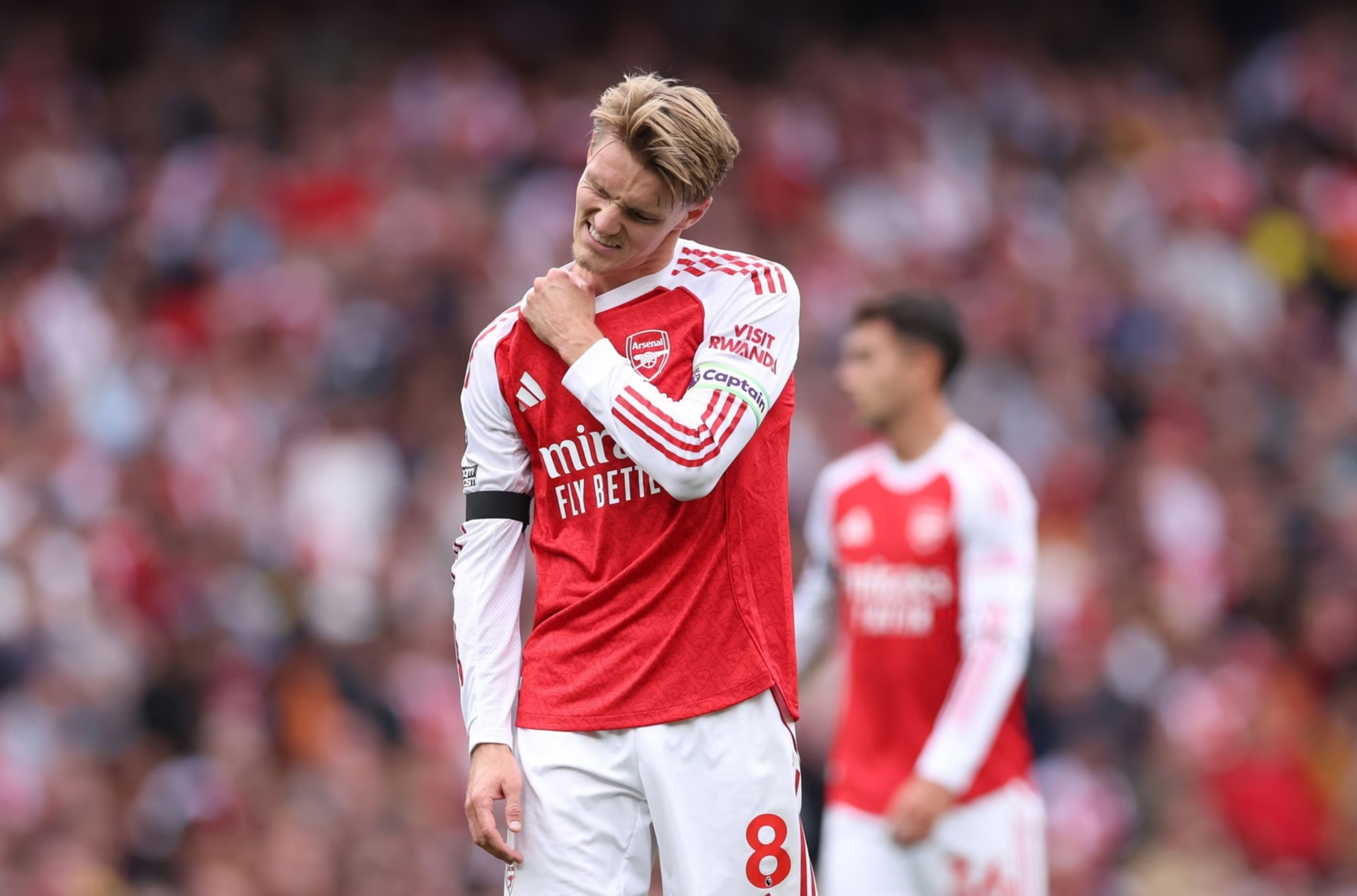

The Norwegian playmaker will miss at least nine crucial fixtures for club and country after suffering a medial collateral ligament injury during Arsenal’s victory over West Ham United on October 4. The setback represents another blow to the 26-year-old midfielder’s season, which has already been disrupted by multiple shoulder injuries that have limited his influence on the Gunners’ campaign.
The Injury That Changed Arsenal’s October Plans
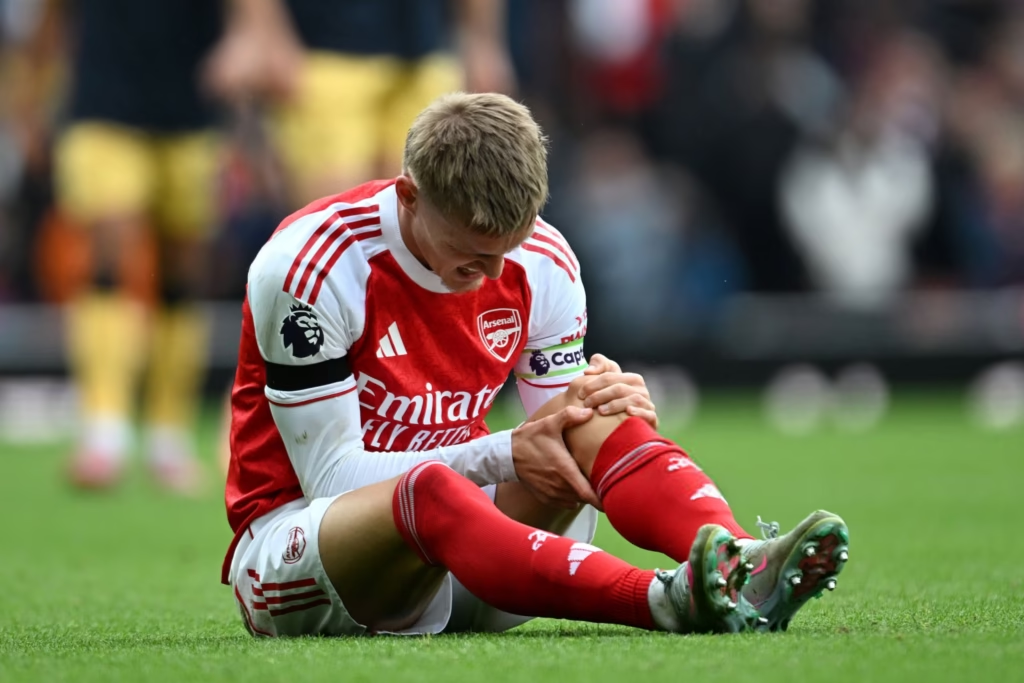
Arsenal’s captain sustained the knee injury following a clash with West Ham winger Crysencio Summerville midway through the first half at the Emirates Stadium. Despite attempting to continue playing on two separate occasions, the midfielder ultimately signaled to the bench that he could no longer carry on, falling to the floor and holding his head in his hands as the severity of the situation became apparent.
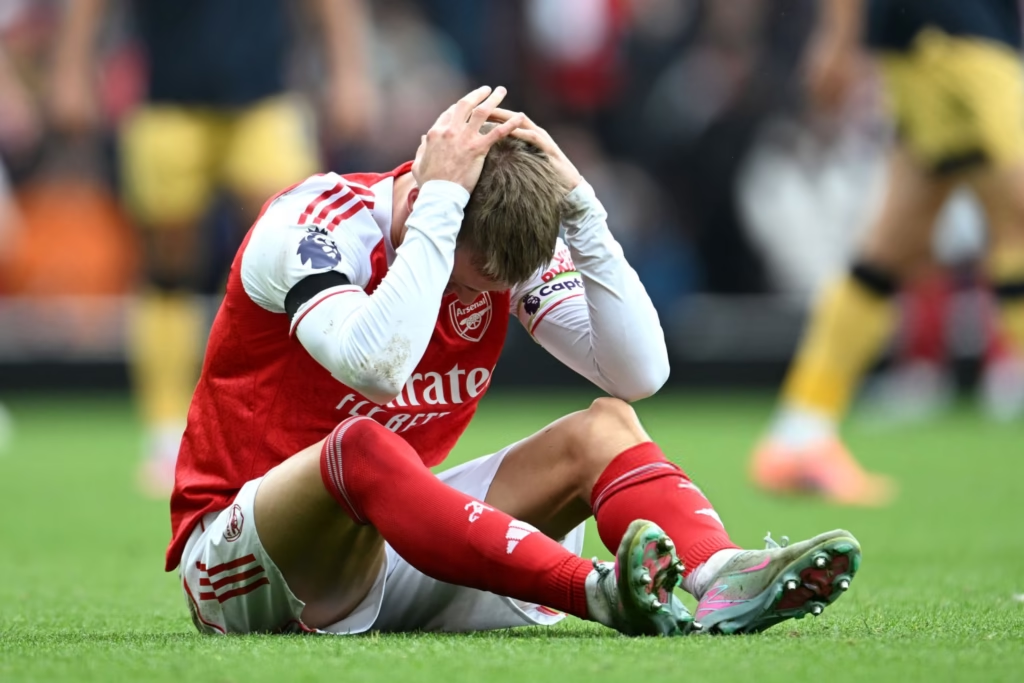
The Norwegian international was forced off after just 30 minutes, with Martin Zubimendi coming on as his replacement. This unfortunate substitution created an unwanted piece of Premier League history, as the captain became the first player ever to be taken off in the first half of three consecutive starts in England’s top flight.
Odegaard’s Injury Timeline 2025-26 Season
| Date | Injury Type | Match | Minutes Played |
|---|---|---|---|
| August 23, 2025 | Shoulder injury | vs Leeds (5-0 W) | 38 minutes |
| September 13, 2025 | Shoulder injury | vs Nottingham Forest (3-0 W) | 18 minutes |
| October 4, 2025 | MCL knee injury | vs West Ham (2-0 W) | 30 minutes |
Manager Mikel Arteta confirmed after the match that the situation didn’t look promising, revealing that his captain was wearing a knee brace. The club released an official statement the following day confirming the medial collateral ligament injury to his left knee and announcing his withdrawal from Norway’s international fixtures against Israel and New Zealand.
Extended Absence Confirmed: Out Until Late November
Initial hopes for a relatively quick recovery have been dashed following medical assessments that revealed the recovery period would extend well into November. Reports from the BBC’s Sami Mokbel indicate that the midfielder is not expected to return until after the November international break, with late November representing the earliest possible comeback date.
This extended timeline means there’s no guarantee the captain will be available when the Gunners return from the international break to face Tottenham Hotspur in the north London derby on November 23. The club has deliberately avoided setting a specific return date, preferring to take a cautious approach to avoid aggravating the injury ahead of the season’s busiest period.
Complete List of Matches Odegaard Will Miss
| Date | Competition | Opponent | Venue |
|---|---|---|---|
| October 18 | Premier League | Fulham | Away |
| October 21 | Champions League | Atletico Madrid | Home |
| October 26 | Premier League | Crystal Palace | Home |
| October 30 | League Cup R16 | Brighton | Home |
| November 1 | Premier League | Burnley | Away |
| November 4 | Champions League | Slavia Prague | Away |
| November 8 | Premier League | Sunderland | Away |
| November 14 | World Cup Qualifying | Estonia (Norway) | Away |
| November 18 | World Cup Qualifying | Italy (Norway) | Away |
The absence encompasses critical fixtures across multiple competitions, including the high-profile Champions League clash with Atletico Madrid at the Emirates Stadium and vital Premier League encounters that could define the Gunners’ title aspirations.
Impact on Arsenal’s Title Challenge
The Norwegian’s absence comes at a particularly challenging time for the north London club, which is attempting to balance domestic and European ambitions while maintaining pressure on the Premier League leaders. His leadership qualities and technical precision have been central to the team’s attacking fluency, making his prolonged absence a significant tactical challenge for Arteta.
Since taking over the captaincy ahead of the 2022-23 season following the departures of Pierre-Emerick Aubameyang and Alexandre Lacazette, the midfielder has become the heartbeat of the team’s creative play. His ability to orchestrate attacks from midfield, deliver precise through balls, and create goalscoring opportunities has made him indispensable to Arsenal’s tactical system.
Odegaard’s Arsenal Career Statistics
| Category | Statistics |
|---|---|
| Total Appearances | 199 (approaching 200) |
| Premier League Apps | 153 |
| Goals Scored | 41 |
| Assists Provided | 34 |
| Win Percentage as Captain | 60% |
| Matches Played (since debut) | 86% of all possible games |
| Market Value | €85 million |
Last season, he ended the campaign as the player with the most chances created from open play in the Premier League, recording 88 key passes. His creative output has been consistently exceptional, with his ability to find teammates in dangerous positions representing one of the league’s most valuable attributes.
Arteta’s Tactical Dilemma: Who Replaces the Captain?
The Spanish manager faces a complex decision regarding how to compensate for his captain’s absence during this crucial period. Several options exist within the squad, each with distinct strengths and limitations that will test Arsenal’s depth and tactical flexibility.
Mikel Merino represents the most experienced replacement option, having been trusted in the role during previous absences. However, the former Real Sociedad midfielder lacks his teammate’s natural creativity and struggled to impact games significantly when filling in earlier in the season. His profile suits a more defensive-minded midfield role rather than the advanced playmaking position.
Eberechi Eze has emerged as a promising alternative after showing glimpses of his capabilities in a central role against Newcastle United. The England international possesses the technical quality and creative vision to operate in advanced midfield positions, and his inclusion would maintain Arsenal’s attacking threat from the middle of the park. Playing alongside Martin Zubimendi and Declan Rice in a midfield three, Eze could provide the balance between defensive stability and creative output.
Perhaps the most intriguing option involves 18-year-old Ethan Nwaneri, who recently delivered an impressive performance for England’s Under-21 team with a pair of assists. The teenager represents one of Arsenal’s most exciting young talents, and the manager has expressed intentions to use him centrally rather than in wider positions. This extended absence could accelerate Nwaneri’s integration into the first-team setup, providing valuable experience during a challenging period.
Norway’s World Cup Qualification Hopes
While recuperating at Arsenal’s Sobha Realty Training Centre, the captain remains closely connected to his national team’s fortunes. Norway took a significant stride toward qualifying for the 2026 World Cup with a comprehensive 5-0 victory over Israel on Saturday, a match the midfielder attended as a spectator at Oslo’s Ullevaal Stadion.
Erling Haaland’s hat-trick in that victory propelled Norway to the brink of their first major international tournament appearance since Euro 2000. Manager Stale Solbakken’s team requires just one point from their final two qualifying matches against Estonia and Italy in November to secure their place at next summer’s tournament.
However, the captain will miss both crucial fixtures as he continues his rehabilitation in London. His absence represents a significant blow to Norway’s midfield creativity and leadership, though the team’s dominant form suggests they possess sufficient quality to secure qualification without him.
Should Norway successfully qualify, it would mark a historic achievement for a generation of talented players who have never experienced a major tournament. The captain would be eager to lead them onto that stage once fully recovered, adding extra motivation to his rehabilitation process.
A Season Disrupted by Physical Setbacks
The current knee injury represents the latest in a frustrating series of physical problems that have disrupted the midfielder’s 2025-26 campaign. Even before this latest setback, he had already missed six matches for club and country due to the recurring shoulder injuries suffered in fixtures against Leeds United and Nottingham Forest.
These frequent absences contrast sharply with his remarkable availability record during previous seasons. Since his debut in January 2021, he has featured in 86% of all Arsenal’s matches, sitting out just 17 league fixtures over more than four years. Only Gabriel has accumulated more minutes than the Norwegian midfielder during this period.
Last season, he missed 15 games for club and country, primarily due to an ankle sprain that sidelined him for two months. The current season’s injury problems suggest a concerning pattern of physical vulnerability that Arsenal’s medical staff will need to address carefully to prevent long-term complications.
Arsenal’s Squad Depth Tested
The extended absence tests the quality and resilience of Arsenal’s squad following their impressive summer transfer activity. The club invested significantly in strengthening their roster, anticipating the physical demands of competing across multiple competitions while challenging for major honors.
Currently, Noni Madueke, Kai Havertz, and Gabriel Jesus (all suffering knee injuries) are also sidelined alongside the captain, placing additional strain on available personnel. Deadline Day signing Piero Hincapie has been recovering from a groin problem picked up in training, though Arteta expressed hope he would be available following the international break.
The manager’s confidence in his squad’s ability to cope reflects the deliberate planning undertaken during the summer window. Unlike previous seasons where injuries to key players created genuine panic, Arsenal now possess multiple capable alternatives in most positions. The test lies not in finding replacements but in maintaining the tactical cohesion and attacking rhythm that has defined their best performances.
Critical November Fixtures on the Horizon
Should the captain successfully return after the November international break, he would be immediately thrust into an exceptionally demanding schedule. Arsenal face Tottenham Hotspur at home on November 23, followed by crucial encounters with Bayern Munich and Chelsea within an eight-day span.
This punishing sequence represents exactly the type of period where the midfielder’s leadership, experience, and quality prove most valuable. The north London derby carries obvious emotional and sporting significance, while the Bayern Munich fixture could determine Arsenal’s Champions League aspirations. The Chelsea match represents another direct confrontation with a title rival, making it essential that all key players are available and sharp.
Arteta will be keenly aware that rushing his captain back prematurely could risk further injury and prolonged absence. However, the quality of opposition and importance of those fixtures creates genuine pressure to ensure his availability. The medical staff’s assessment and the player’s response to rehabilitation will ultimately determine whether he features in these critical matches.
Patience Required During Crucial Period
The medial collateral ligament injury to the Norwegian captain represents a significant challenge for Arsenal’s ambitions across all competitions. His absence removes one of the Premier League’s most creative midfielders from the team during a period featuring crucial fixtures against Atletico Madrid, Crystal Palace, and Sunderland, among others.
Manager Mikel Arteta must now demonstrate his tactical versatility by successfully integrating alternative options into the midfield structure. Whether he opts for experienced heads like Mikel Merino and Eberechi Eze or embraces youth by giving Ethan Nwaneri increased opportunities, the decisions made during this period could significantly influence Arsenal’s season trajectory.
For the player himself, the focus shifts to comprehensive rehabilitation at Sobha Realty Training Centre, working closely with Arsenal’s medical team to ensure a full recovery. The club’s cautious approach, avoiding specific return dates and prioritizing long-term health over short-term availability, suggests they understand the importance of patience during this recovery period.
The coming weeks will reveal both Arsenal’s squad depth and their ability to maintain competitive standards without their talismanic captain. If they emerge from this challenging period with their title aspirations intact and their Champions League campaign progressing positively, it would demonstrate the resilience and quality Arteta has built within his squad.
Read More: Champions League Unveils Exclusive Opening Night Showcase Starting 2027
FAQs
What injury does Odegaard have and how long will he be out?
The Arsenal captain suffered a medial collateral ligament (MCL) injury to his left knee during the match against West Ham on October 4, 2025, and is expected to miss matches until after the November international break, potentially returning in late November.
Will Odegaard miss the Atletico Madrid Champions League match?
Yes, he will miss the Champions League fixture against Atletico Madrid at the Emirates Stadium on October 21, along with at least eight other matches for club and country.
How many matches has Odegaard missed this season due to injury?
He has already been unavailable for six matches earlier this season due to shoulder injuries and will now miss at least nine more fixtures due to the knee injury, bringing his total absences to 15+ matches.
Who will replace Odegaard in Arsenal’s midfield?
Mikel Arteta has several options including Mikel Merino, Eberechi Eze, and 18-year-old Ethan Nwaneri, with Eze and Nwaneri likely to receive increased opportunities in the advanced midfield role.
What is Odegaard’s importance to Arsenal’s team?
As Arsenal’s captain since 2022-23, he has contributed 41 goals and 34 assists in 199 appearances, led the Premier League in chances created from open play last season (88), and orchestrates the team’s attacking play with his creative passing and technical quality.

