

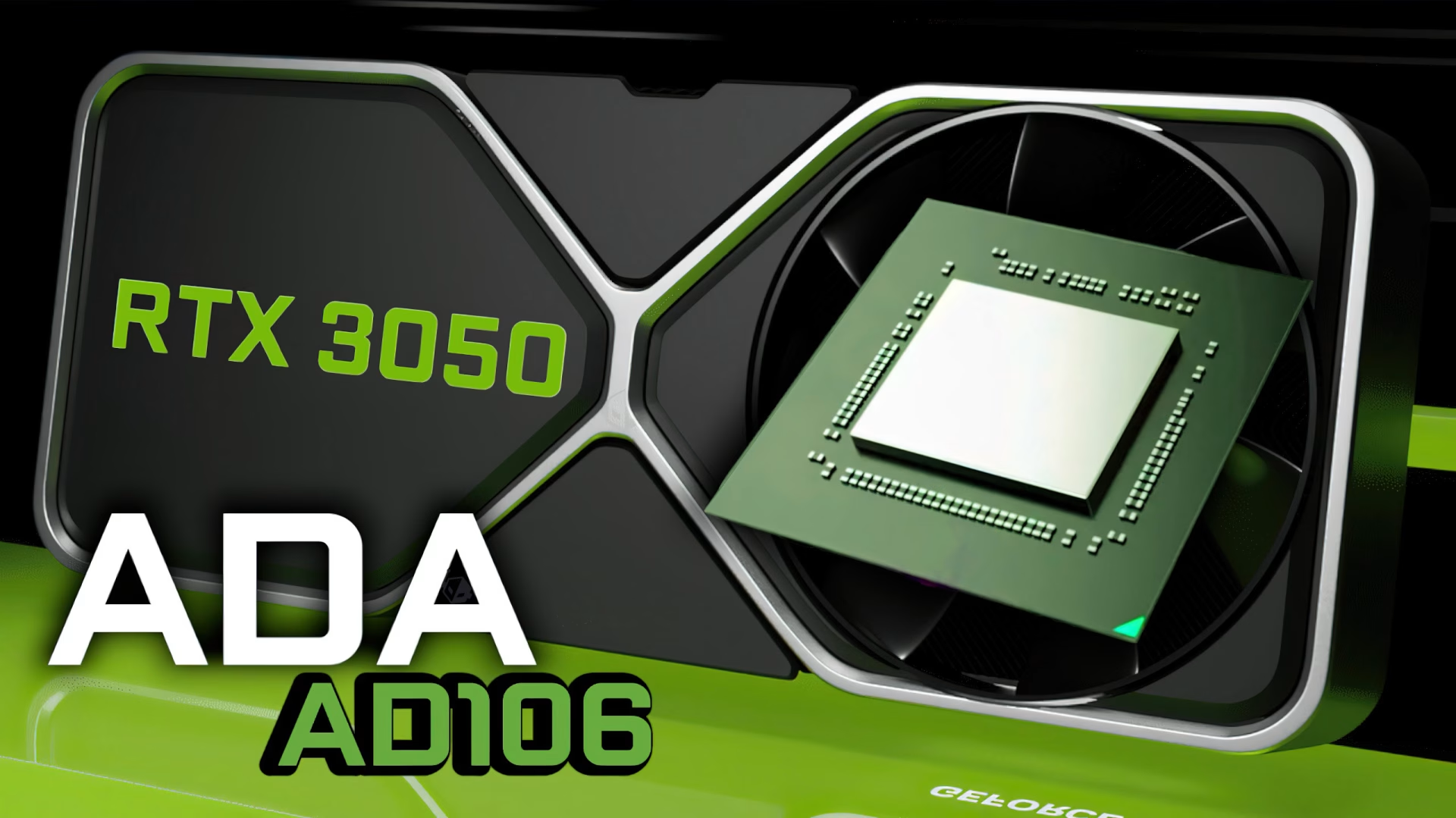

Unexpected GPU refresh incoming! NVIDIA is preparing a new GeForce RTX 3050 variant featuring the newer Ada Lovelace architecture instead of Ampere. GPU-Z version 2.67.0 adds support for an “RTX 3050 A” with AD106 die, suggesting both laptop and desktop variants are in development.
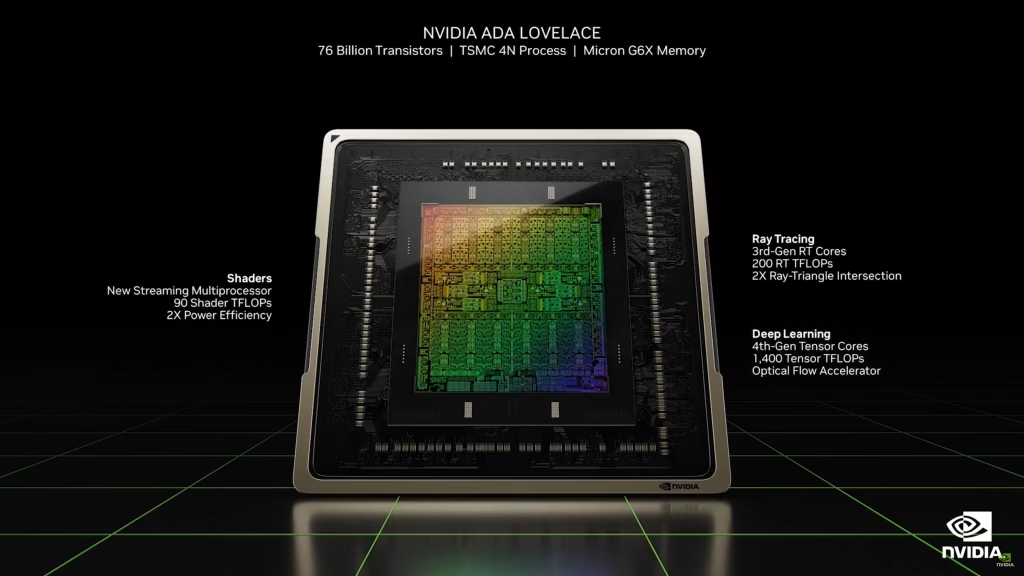
RTX 3050 A: Architecture Upgrade Details
The refreshed RTX 3050 represents an unusual move by NVIDIA, bringing newer silicon to an established entry-level GPU lineup years after initial release.
| RTX 3050 Comparison | Original (Ampere) | RTX 3050 A (Ada) |
|---|---|---|
| Architecture | Ampere (GA106/GA107) | Ada Lovelace (AD106) |
| CUDA Cores | 2048 (laptop) | 1792 (cut-down) |
| Memory | 8GB GDDR6 | 8GB GDDR6 (expected) |
| Memory Bus | 128-bit | 128-bit (expected) |
| TDP Range | 100-150W | 100-150W (expected) |
| Launch Years | 2021-2022 | 2025 (expected) |
GPU-Z Software Reveals Desktop Potential
TechPowerUp’s latest GPU-Z release notes mention “RTX 3050 A” without the “mobile” designation, suggesting NVIDIA may launch both laptop and desktop variants. Previously, the company confirmed only mobile RTX 3050 A GPUs last year.
This desktop indication represents significant news for entry-level gaming enthusiasts seeking modern architecture benefits without premium pricing.
Performance Expectations and Trade-offs
Despite the newer Ada Lovelace architecture, performance gains will be minimal due to significantly reduced CUDA core count. The 1792 cores represent a substantial decrease from the original’s 2048 cores, designed to match Ampere-based RTX 3050 performance levels.
Expected Benefits:
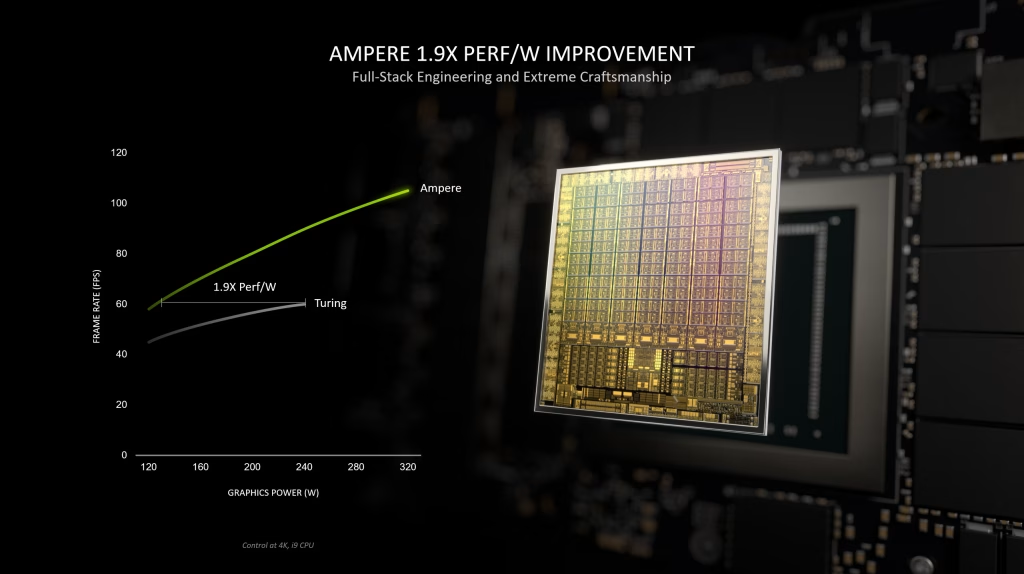
- Improved power efficiency from newer architecture
- Better driver optimization and longevity
- Enhanced raytracing capabilities
- Potential slight synthetic benchmark improvements
However, users shouldn’t expect dramatic gaming performance increases, as NVIDIA appears focused on maintaining performance parity while utilizing leftover Ada silicon inventory.
Strategic Silicon Utilization
This refresh likely represents NVIDIA’s strategy to utilize remaining AD106 dies efficiently. Rather than discarding excess Ada Lovelace silicon, the company can repurpose it for entry-level markets while maintaining competitive positioning.
The move also allows NVIDIA to extend the RTX 3050 product line lifecycle without developing entirely new GPUs, reducing development costs while offering consumers updated architecture benefits.
Market Impact and Consumer Benefits
The “A” designation helps consumers distinguish between Ampere and Ada variants, preventing confusion during purchasing decisions. This transparency ensures buyers understand exactly which architecture they’re purchasing.
For budget gaming enthusiasts, the RTX 3050 A could offer improved long-term software support and driver optimization compared to older Ampere variants.
The refresh also demonstrates NVIDIA’s commitment to the entry-level segment, ensuring affordable raytracing-capable GPUs remain available as gaming demands evolve.
FAQs
Will the RTX 3050 A offer better gaming performance?
Minimal performance gains expected due to reduced CUDA cores, despite newer Ada architecture.
How can consumers identify RTX 3050 A from original RTX 3050?
The “A” designation clearly differentiates Ada Lovelace from Ampere-based variants.

