

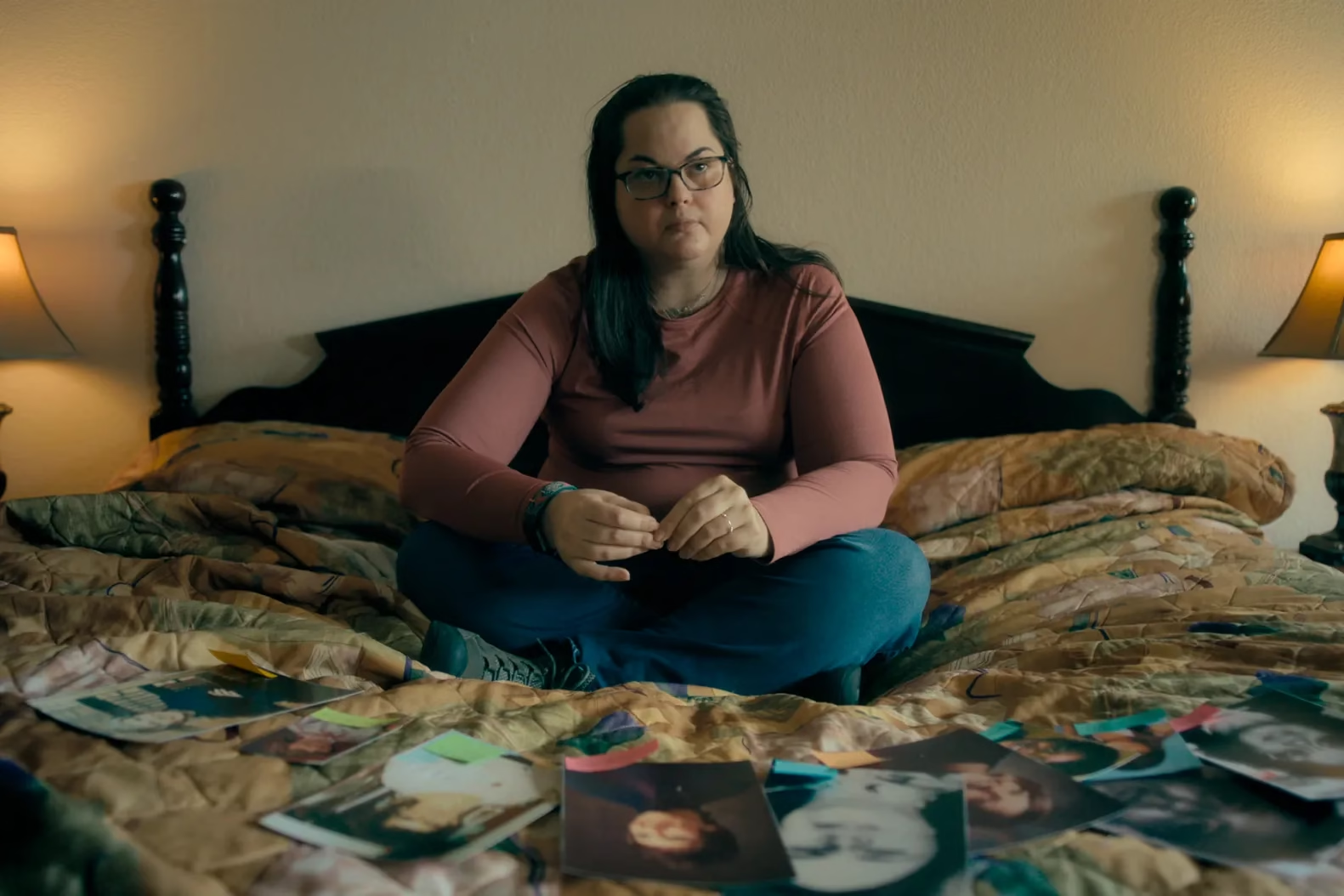

Netflix’s latest true crime documentary My Father, the BTK Killer drops viewers into one of America’s most disturbing serial killer cases through an unprecedented perspective—the daughter’s story. Released on October 10, 2025, director Skye Borgman explores how Kerri Rawson discovered her father, Dennis Rader, was the notorious BTK Killer who terrorized Wichita, Kansas, for over three decades.
The BTK Killer Case: Essential Facts
| Case Details | Information |
|---|---|
| Killer’s Name | Dennis Rader |
| Alias | BTK (Bind, Torture, Kill) |
| Active Years | 1974-1991 |
| Confirmed Victims | 10 people (mostly women) |
| Location | Wichita, Kansas |
| Arrest Date | February 2005 |
| Current Status | Life imprisonment at El Dorado Correctional Facility |
| Sentence | 10 consecutive life terms without parole |
How the BTK Killer Evaded Capture for 31 Years
Dennis Rader led what appeared to be an ordinary life as a church leader, husband, and father while secretly committing horrific murders. His first known attack occurred in January 1974 when he killed four members of the Otero family, launching a killing spree that would haunt Kansas for decades.
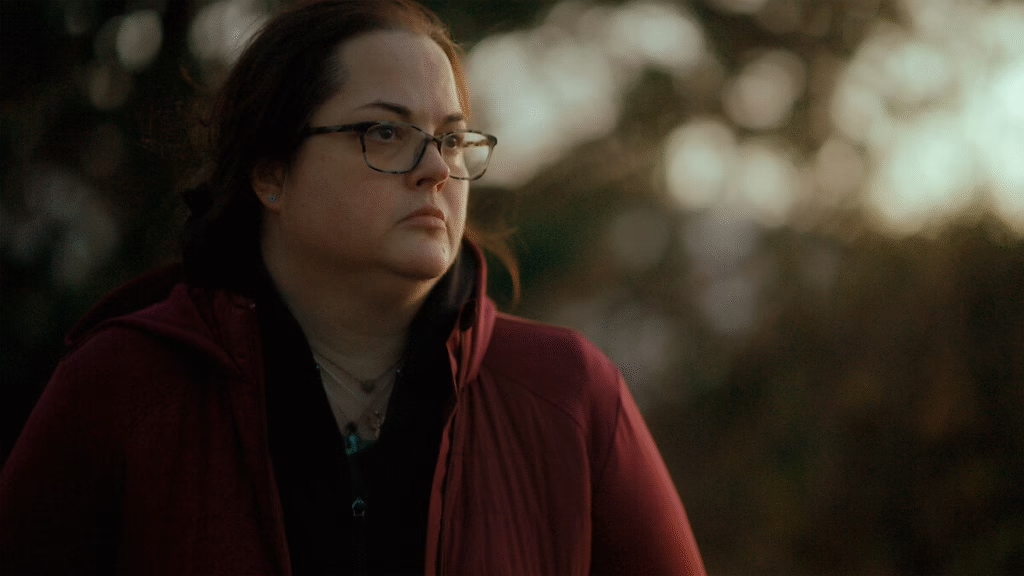
His Method: Rader strangled victims and took disturbing trophies—clothing items and photographs. His calculated approach and seemingly normal public persona created the perfect cover for his double life.
The Taunting Letters: Throughout the 1970s and 1980s, BTK sent cryptic letters to law enforcement and media outlets, craving recognition and attention. These communications contained murder details and personal messages designed to taunt investigators. When the letters stopped after 1991, authorities believed the killing spree had ended and eventually closed the case due to insufficient leads.
The Breakthrough That Solved the Case
The investigation reignited in 2004 when BTK sent a letter to a local news station containing photos of his latest victim. This communication triggered the series of events that would finally expose his identity.
The Fatal Mistake: Rader sent a floppy disk to a television station, believing investigators couldn’t trace it. Forensic analysis revealed metadata linking the disk to his church computer.
DNA Evidence: Authorities obtained DNA from Kerri Rawson’s medical records, which matched DNA found at crime scenes. This conclusive evidence led to Rader’s arrest in February 2005.
The community—and especially his family—was stunned. Kerri Rawson learned her father was a serial killer, shattering everything she believed about her life.
For more true crime case analyses and documentary reviews, explore our crime documentary coverage at TechnoSports.
Kerri Rawson’s Journey: From Daughter to Advocate
Director Skye Borgman told Netflix’s Tudum: “I came [into the project] understanding Kerri as the daughter of a serial killer. Over time, I came to understand her as a woman trying to build a life out of fractured pieces—someone strong, but also profoundly human.”
The documentary centers on Kerri’s emotional journey dealing with her father’s horrific crimes. She has cooperated with law enforcement investigating potential additional victims connected to Rader, demonstrating remarkable courage and commitment to justice.

The Prison Visit: In 2023, Kerri visited her father for the first time in 18 years. The encounter resulted in a heated argument about his possible involvement in other unsolved crimes. Since then, she’s maintained distance and established firm boundaries.
Borgman explained: “Since that visit, she’s kept the relationship at a distance. She has chosen not to maintain contact… That in itself has reinforced the boundaries that Kerri has set.”
Where Is Dennis Rader Now?
The BTK Killer currently serves his sentence at El Dorado Correctional Facility in Kansas. Despite his restricted prison life, he’s allowed certain privileges including television access and drawing materials.
Rader pleaded guilty to ten first-degree murders in 2005, receiving ten consecutive life sentences without possibility of parole. He will spend the remainder of his life behind bars.
Investigators continue exploring whether Rader committed additional murders beyond the confirmed ten victims. However, he has not provided definitive confessions about other potential crimes.
The Documentary’s Impact
My Father, the BTK Killer offers a unique perspective rarely explored in true crime documentaries—the family member’s experience. Rather than focusing solely on the killer or victims, Borgman highlights Kerri’s resilience and healing journey while honoring the victims’ memories.
According to Netflix’s official documentary collection, true crime content continues resonating with global audiences seeking to understand criminal psychology and justice system processes.
Discover more documentary recommendations and streaming guides at TechnoSports, your source for entertainment insights.
Why This Documentary Matters
The film transcends typical true crime sensationalism by examining generational trauma and the lasting impact violent crimes have on families. Kerri’s story represents countless family members who must reconcile loving someone with the horrific actions they’ve committed.
Her willingness to share her experience provides valuable perspectives for trauma survivors while contributing to ongoing investigations that may bring closure to additional families.
Frequently Asked Questions
Q: How was the BTK Killer finally caught after 31 years?
Dennis Rader was caught in 2005 after sending a floppy disk to a television station, which investigators traced to his church computer through metadata analysis. Authorities then obtained DNA from his daughter Kerri Rawson’s medical records, which matched DNA evidence from the crime scenes, providing conclusive proof for his arrest.
Q: Is Dennis Rader still alive and where is he imprisoned?
Yes, Dennis Rader is still alive and currently serving ten consecutive life sentences without parole at El Dorado Correctional Facility in Kansas. He was convicted in 2005 for murdering ten victims between 1974 and 1991, and will spend the remainder of his life in prison with no possibility of release.

