


The Biggest Money Moves: IPL’s Most Expensive Trade Deals Ever
The Indian Premier League has redefined cricket’s economic landscape, with trade deals reaching astronomical figures that would make even football transfers look modest. As teams strategize for upcoming seasons, these record-breaking player exchanges continue to shape the tournament’s competitive dynamics.
With IPL 2025 concluded and speculation already brewing for the 2026 season, franchises are evaluating their rosters. Chennai Super Kings reportedly considering major changes, including potential releases of Ravichandran Ashwin and Rachin Ravindra, reminds us how fluid team compositions can be in this lucrative league.
Let’s examine the five most expensive trade deals that have left cricket fans and analysts stunned with their sheer magnitude.
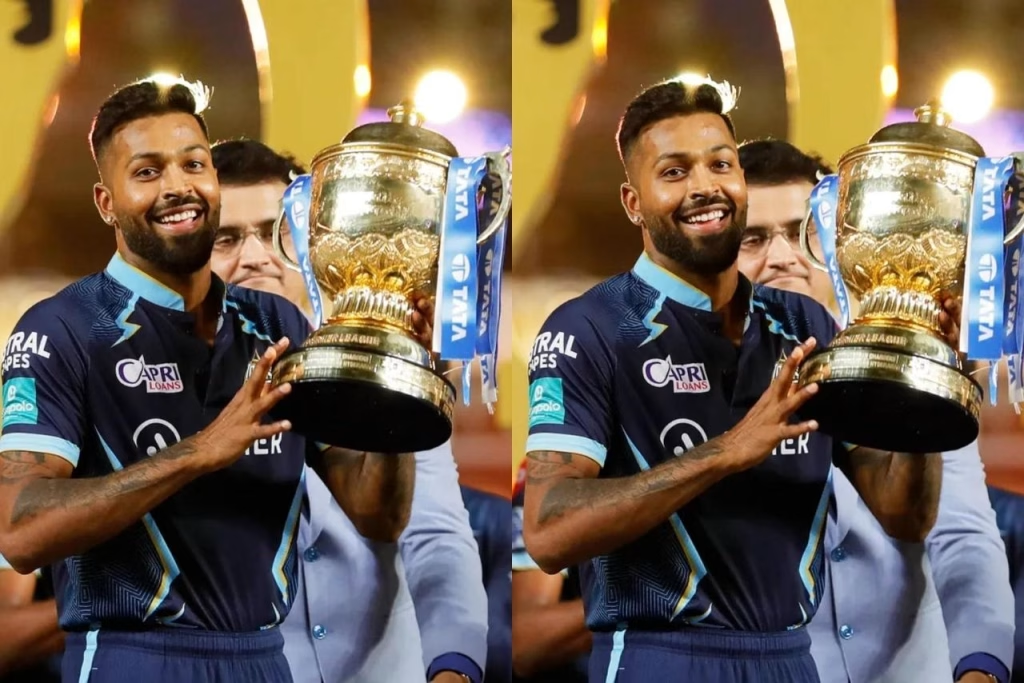
Table of Contents
Top 5 Most Expensive IPL Trade Deals
1. Cameron Green – ₹17.50 Crore (MI to RCB, 2024)
The Australian all-rounder’s transfer from Mumbai Indians to Royal Challengers Bengaluru stands as the most expensive trade in IPL history. This mammoth ₹17.5 crore deal reflected Green’s versatility and international reputation.
Performance Analysis:
- IPL 2024 with RCB: 255 runs from 13 matches (Average: 31.87)
- IPL 2023 with MI: 452 runs including one century
- 2025 Status: Missed due to back injury recovery
Despite the hefty price tag, Green’s 2024 performance didn’t quite match his exceptional 2023 season, highlighting the inherent risks in big-money trades.
2. Hardik Pandya – ₹15 Crore (GT to MI, 2024)
The Indian all-rounder’s homecoming to Mumbai Indians created massive headlines. After successfully captaining Gujarat Titans to an IPL title, Pandya returned to his former franchise for ₹15 crore, immediately becoming MI’s new captain, replacing Rohit Sharma.
Key Details:
- Previous role: Gujarat Titans captain (2022-2023)
- Achievement: Led GT to IPL championship
- New position: Mumbai Indians captain
- Impact: Marked end of Rohit Sharma’s captaincy era at MI
3. Shardul Thakur – ₹10.75 Crore (DC to KKR, 2023)
The Indian seamer’s journey through multiple franchises culminated in a ₹10.75 crore move from Delhi Capitals to Kolkata Knight Riders. However, his expensive acquisition didn’t translate to expected returns.
Career Trajectory:
- Pre-trade: Released by CSK post-2021, picked by DC
- KKR Performance (2023): 7 wickets from 11 games
- Post-KKR: Returned to CSK (2024), moved to LSG as injury replacement (2025)
4. Lockie Ferguson – ₹10 Crore (GT to KKR, 2023)
The New Zealand pace bowler’s ₹10 crore transfer from Gujarat Titans to Kolkata Knight Riders represented significant investment in overseas fast bowling talent.
Performance Summary:
- GT (2022): 12 wickets from 13 matches
- KKR (2023): Limited to 3 matches, 1 wicket
- Later career: RCB (2024) – 9 wickets, PBKS (2025) – 5 wickets
5. Avesh Khan – ₹10 Crore (RR to LSG, Trade for Devdutt Padikkal)
The Indian fast bowler’s ₹10 crore trade involved a player exchange, with Devdutt Padikkal moving in the opposite direction to Rajasthan Royals.
Performance Highlights:
- RR (2024): 19 wickets (second-best IPL performance)
- LSG Return (2024): 13 wickets from 13 games
- Successfully overcame early-season injury concerns
IPL Trade Deals: Complete Breakdown
| Rank | Player | From | To | Amount (₹ Crore) | Year | Performance Impact |
|---|---|---|---|---|---|---|
| 1 | Cameron Green | MI | RCB | 17.50 | 2024 | Moderate success |
| 2 | Hardik Pandya | GT | MI | 15.00 | 2024 | Leadership role |
| 3 | Shardul Thakur | DC | KKR | 10.75 | 2023 | Below expectations |
| 4 | Lockie Ferguson | GT | KKR | 10.00 | 2023 | Limited impact |
| 5 | Avesh Khan | RR | LSG | 10.00 | Trade | Strong performance |
Understanding IPL Trade Mechanics
What Makes a Trade Expensive?
Several factors contribute to high-value IPL trades:
Player Versatility: All-rounders like Green and Pandya command premium prices due to their dual capabilities in batting and bowling.
International Reputation: Players with strong international records attract higher valuations, as seen with Green and Ferguson.
Leadership Qualities: Pandya’s captaincy experience with GT significantly influenced his trade value.
Market Timing: Trade values often reflect team strategies and immediate needs during specific seasons.
Trade vs. Auction Dynamics
IPL trades differ from auction purchases in several ways:
- Direct Negotiation: Teams negotiate directly rather than competing in open bidding
- Strategic Fit: Trades often target specific team requirements
- Salary Cap Management: Teams use trades to balance their financial commitments
- Player Preferences: Established players may have input on preferred destinations
Impact of Mega-Money Trades on IPL
Financial Implications
These expensive trades demonstrate the IPL’s economic evolution, where player valuations have skyrocketed beyond traditional cricket economics. The willingness of franchises to invest such substantial amounts reflects:
- Brand Value: Star players bring marketing and commercial benefits beyond on-field performance
- Fan Engagement: Marquee signings generate excitement and boost viewership
- Competitive Balance: Teams use trades to address specific weaknesses quickly
Performance vs. Investment Analysis
Not all expensive trades guarantee success. The mixed results from these high-value deals illustrate important lessons:
Success Stories: Pandya’s leadership transition and Avesh Khan’s bowling performances justify their price tags.
Cautionary Tales: Green’s injury issues and Ferguson’s limited impact show how quickly investments can turn problematic.
Strategic Learning: Teams increasingly focus on comprehensive player evaluation beyond just statistics.
Future of IPL Trading
Emerging Trends
The landscape of IPL trades continues evolving, with several trends becoming apparent:
Data-Driven Decisions: Franchises invest heavily in analytics to evaluate trade prospects more accurately.
Youth Investment: Younger players with high potential increasingly command premium prices.
Specialist Roles: Teams target players for specific tactical roles rather than general ability.
Injury Management: Medical assessments play crucial roles in trade valuations.
Market Predictions
As the IPL expands and global cricket talent increases, we can expect:
- Trade values to continue rising with league revenue growth
- More strategic player exchanges based on tactical requirements
- Increased emphasis on domestic talent development
- Greater integration of performance analytics in trade decisions
Conclusion
The five most expensive IPL trade deals showcase the tournament’s transformation into a global entertainment phenomenon where player valuations reflect both cricketing ability and commercial appeal. From Cameron Green’s record ₹17.5 crore transfer to Avesh Khan’s successful ₹10 crore move, these deals illustrate how franchises balance financial investment with competitive strategy.
As teams prepare for future seasons, these landmark trades serve as reference points for market valuations and strategic planning. The success stories and cautionary tales from these expensive acquisitions provide valuable insights for franchises navigating the complex world of IPL team building.
The evolution of IPL trading continues, promising even more dramatic player movements and potentially record-breaking deals as the league expands its global footprint and commercial appeal.
Also read- Warner Overtakes Kohli: T20 Cricket’s Historic Milestone

