

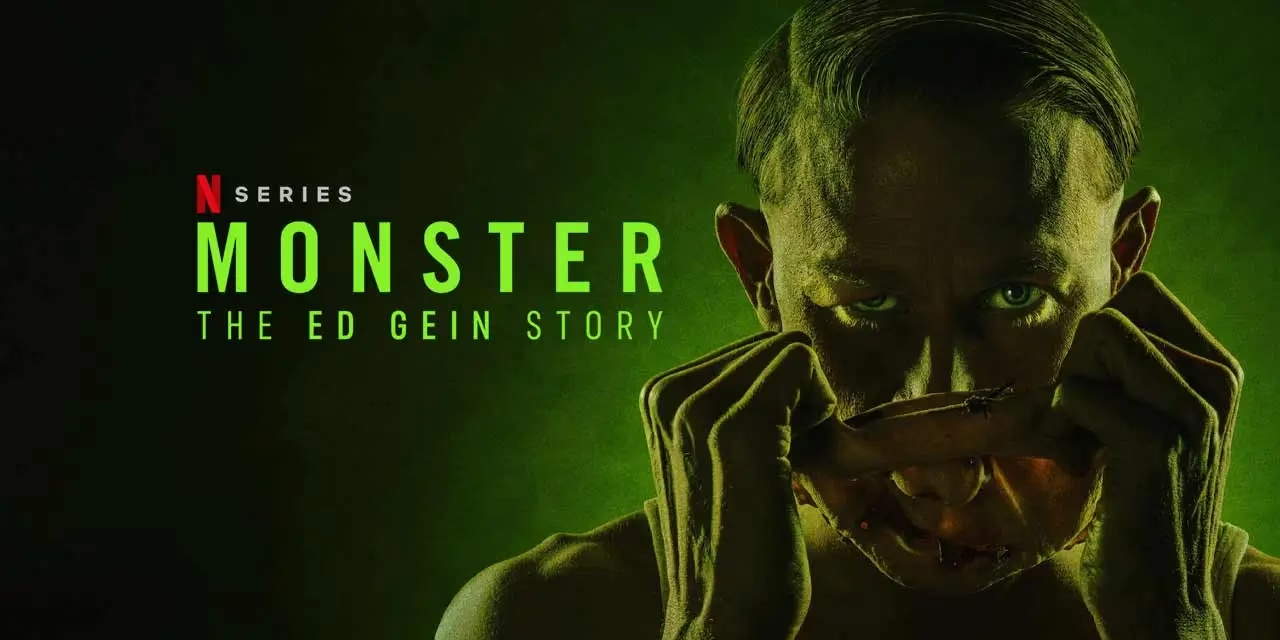

Ryan Murphy’s true crime anthology Monster returns with its third season, tackling perhaps the most infamous name in serial killer history: Ed Gein. While the series delivers Charlie Hunnam’s haunting performance and some genuinely unsettling moments, The Ed Gein Story ultimately struggles with identity crisis—caught between respecting its subject matter and exploiting it for shock value.
Monster Season 3: Quick Facts
| Detail | Information |
|---|---|
| Series | Monster: The Ed Gein Story |
| Platform | Netflix |
| Release Date | October 3, 2025 |
| Lead Actor | Charlie Hunnam (as Ed Gein) |
| Supporting Cast | Laurie Metcalf, Olivia Williams, Tom Hollander |
| Creator | Ian Brennan (sole creator/writer) |
| Episodes | Full season available |
| Debut Performance | 12.2 million views, #2 on Netflix |
| Critical Reception | Mixed to negative |
| Setting | 1950s rural Wisconsin |
The Promise: A Legendary Horror Origin Story

Ed Gein is horror royalty—the real-life inspiration behind Psycho, The Texas Chain Saw Massacre, and The Silence of the Lambs. His 1950s crimes in rural Wisconsin shocked America and fundamentally changed how we understand serial killers.
The series follows Gein as he haunted the frozen fields of Wisconsin, killing and desecrating bodies of multiple women, establishing him as what many call “the godfather of all serial killers.”
With Charlie Hunnam transforming into the disturbed killer and an A-list supporting cast including Laurie Metcalf and Olivia Williams, expectations were sky-high. The first two Monster seasons (Jeffrey Dahmer and the Menendez Brothers) captivated audiences by balancing horror with psychological depth.
What Works: Hunnam’s Haunting Transformation
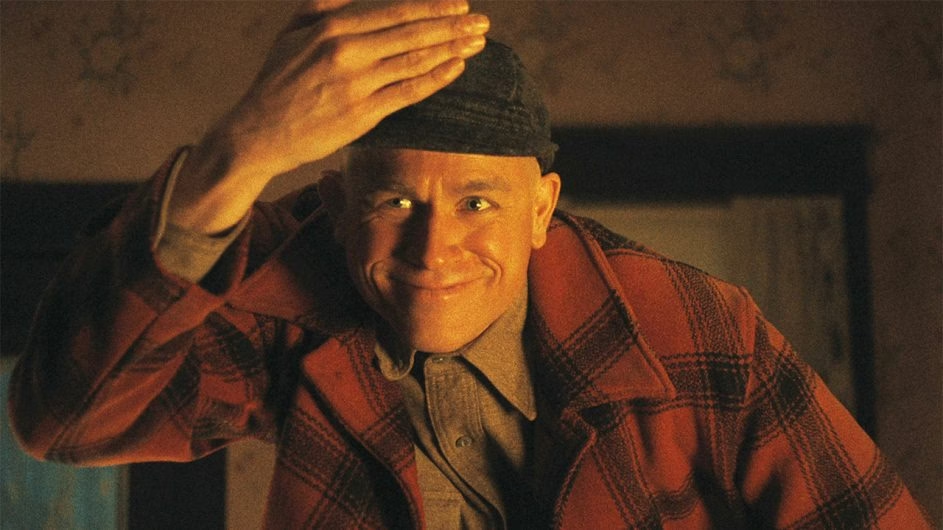
Charlie Hunnam delivers a genuinely unsettling performance, disappearing into Gein’s fractured psyche. The physical transformation alone is remarkable—gone is the charismatic action star, replaced by a hollow-eyed, stammering figure that makes your skin crawl.
The editing is exceptionally crafted, creating genuine jump scares and showing influences that may have caused the madness. Murphy’s technical excellence shines through cinematography, sound design, and atmosphere—the frozen Wisconsin landscape becomes a character itself.
The show’s exploration of Gein’s toxic relationship with his abusive, hyper-religious mother Augusta offers genuine psychological insight into how trauma breeds monstrosity.
Where It Falls Apart: Identity Crisis
The series lacks central focus, with Augusta only vaguely present after the first episode—a criminal underuse of the mother-son dynamic that drove Gein’s psychosis.
The narrative becomes increasingly unfocused, unable to decide whether it’s:
- A psychological character study
- A horror thriller
- A cultural commentary on true crime obsession
- Pure exploitation
The show recreates Psycho’s infamous shower scene with graphic violence and nudity that Hitchcock never included, raising questions about purpose—is it commentary or just provocation?
This tonal inconsistency undermines what could have been powerful. By trying to be everything, it excels at nothing.
The Exploitation Problem
The series is described as “awful, but its awfulness at least arises out of some level of thoroughly disjointed ambition”—a damning assessment that captures the fundamental issue.
Murphy seems torn between condemning true crime voyeurism and indulging in it. The result feels hypocritical—criticizing audiences for consuming sensationalized violence while delivering exactly that in graphic detail.
The incorporation of a fictional character (Adeline, played by Suzanna Son) representing the true crime fan becomes a meta-commentary that ultimately backfires, creating distance when the story needs intimacy.
Comparison to Previous Seasons
Unlike Dahmer which offered Evan Peters’ career-defining performance within a focused narrative, or The Menendez Brothers which thoughtfully examined complex family dynamics, The Ed Gein Story feels scattered.
Upon its premiere, the season received negative reviews and was deemed inferior to its predecessors, suggesting Murphy’s formula is wearing thin without fresh perspective.
The Viewing Numbers vs. Critical Response
The series debuted at #2 on Netflix with 12.2 million views, proving the true crime audience remains hungry for content. However, strong viewership doesn’t translate to quality—curiosity and brand recognition drive initial numbers, but critical consensus suggests many viewers felt disappointed.
Netflix’s official Monster page provides additional context about the series, while TechnoSports explores how streaming algorithms influence content creation in the competitive landscape.
Should You Watch?
Watch if you:
- Are Charlie Hunnam completists
- Appreciate technical filmmaking craft
- Can stomach extremely graphic content
- Enjoy meta-commentary about true crime
Skip if you:
- Want focused, coherent storytelling
- Are sensitive to exploitation of real victims
- Prefer psychological depth over shock value
- Felt satisfied by the first two Monster seasons
The Bigger Picture: True Crime Fatigue
The Ed Gein Story represents a turning point for the true crime genre. As audiences become more conscious of ethical concerns—victim exploitation, glorification of killers, and voyeuristic consumption—shows must evolve beyond simple sensationalism.
Murphy attempts to address these concerns but gets tangled in his own meta-narrative. TechnoSports examines how entertainment trends reflect societal values, and this season suggests we’re reaching peak true crime saturation.
Final Verdict: A Frustrating Missed Opportunity
Monster: The Ed Gein Story had all the ingredients for greatness—compelling subject matter, talented cast, substantial budget, and technical expertise. Yet it delivers a disjointed, exploitative mess that never commits to a coherent vision.
Hunnam’s performance and Murphy’s directorial flair create moments of genuine brilliance, but they’re drowned in questionable creative choices and tonal whiplash. It’s simultaneously too graphic and not insightful enough, too long and underdeveloped.
Rating: 2.5/5 – Watch for Hunnam’s performance, but temper expectations significantly.
FAQs
Q1: How graphic is Monster: The Ed Gein Story, and is it appropriate for all audiences?
Monster: The Ed Gein Story is extremely graphic and definitely not appropriate for all audiences. It carries a TV-MA rating with explicit content warnings for violence, gore, nudity, and disturbing material. The series includes detailed depictions of Gein’s crimes, including body mutilation, grave robbing, and murder scenes shown in visceral detail. The show recreates the famous Psycho shower scene with much more explicit violence and nudity than Hitchcock’s original, and features disturbing sequences of Gein wearing human skin and body parts. There are also uncomfortable sexual themes and depictions of extreme psychological abuse. If you’re sensitive to graphic violence, found the previous Monster seasons difficult to watch, or prefer psychological horror over explicit gore, this season will likely be too intense. The series makes no attempt to sanitize or soften Gein’s crimes, opting instead for shocking realism that many critics argue crosses into exploitation territory.
Q2: Do I need to watch the previous Monster seasons (Dahmer and Menendez Brothers) before watching The Ed Gein Story?
No, you don’t need to watch previous Monster seasons before The Ed Gein Story—each season is completely standalone with different characters, stories, and time periods. The anthology format means you can jump in anywhere without missing context. However, watching previous seasons might actually help set expectations. The Jeffrey Dahmer Story (Season 1) and The Lyle and Erik Menendez Story (Season 2) established Murphy’s approach to true crime: psychological depth, strong performances, but controversial ethical choices regarding victim portrayal. If you enjoyed those seasons’ balance of horror and character study, The Ed Gein Story might disappoint with its more scattered narrative and increased emphasis on shock value over psychology. Conversely, if you found earlier seasons too exploitative, this one doubles down on those tendencies. The Ed Gein season is generally considered the weakest of the three by critics, so starting here might give you an unfair impression of the franchise’s overall quality.

