

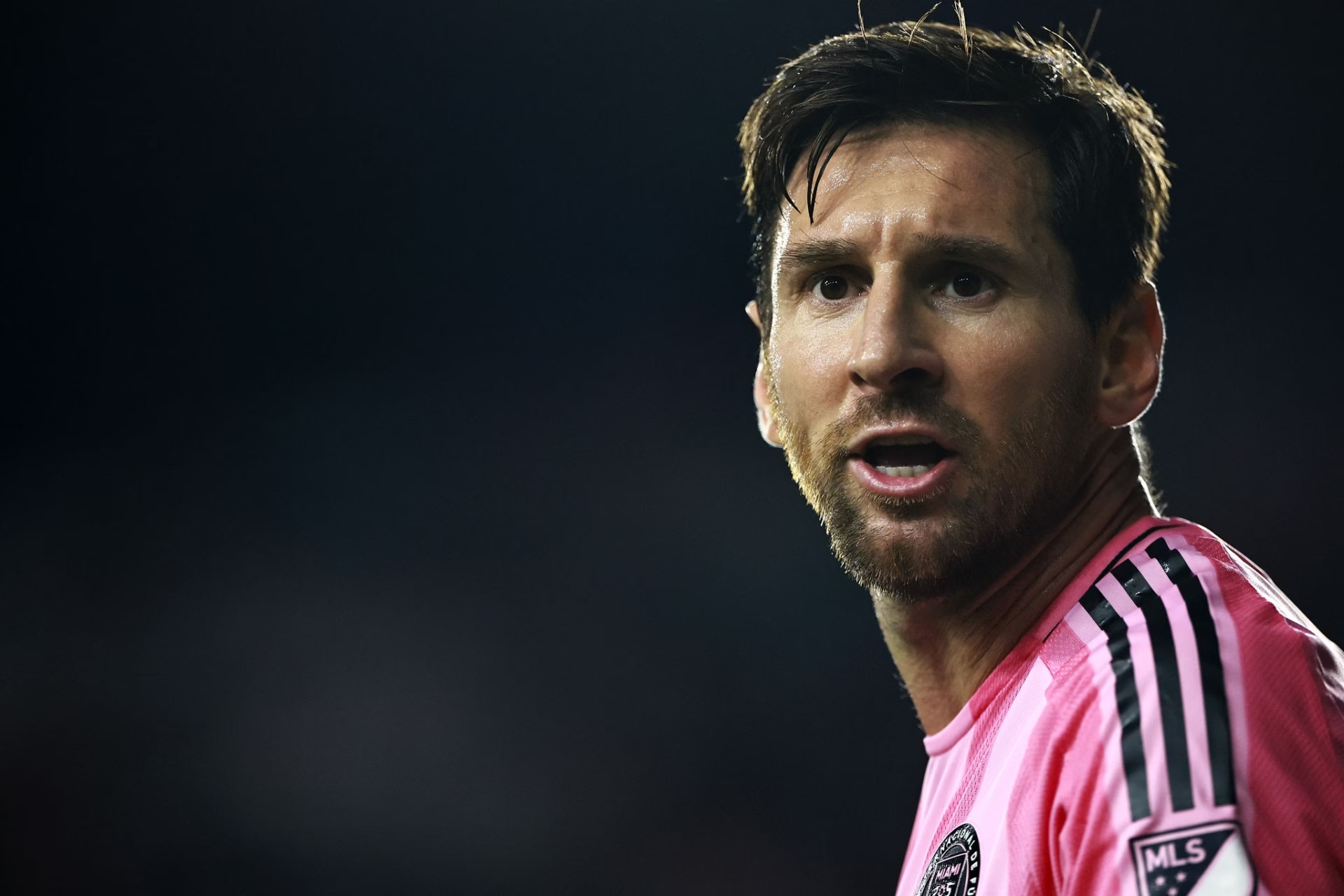

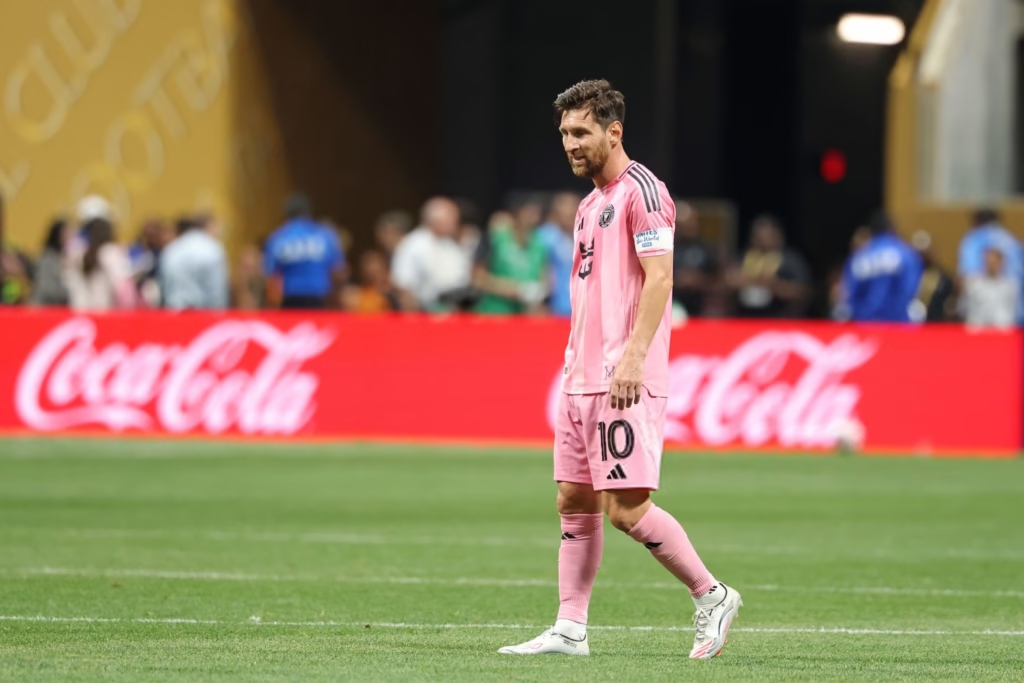
Lionel Messi has officially announced the creation of his own international youth tournament—the MESSI CUP—marking a historic moment as the Argentine legend extends his influence beyond the professional pitch into youth football development. Set to take place in Miami from December 9-14, 2025, this inaugural under-16 competition will bring together eight of the world’s most prestigious football academies, with Barcelona prominently featured among the invited clubs. Organized through Messi’s production company 525 Rosario, the Messi Cup represents more than just a tournament; it’s a comprehensive platform designed to merge sport, culture, and innovation while providing young talents with an international development stage that reflects the career journey of football’s greatest player.
The Birth of the MESSI CUP: From Vision to Reality
“Thrilled to finally share this with you — this December, Miami will host a very special youth football tournament featuring some of the top clubs from around the world,” Messi announced via Instagram on Tuesday. “The future of the game will be on full display, and it’s more than just matches — we’ve got an incredible few days planned with lots of other exciting activities. This is about the next generation.”
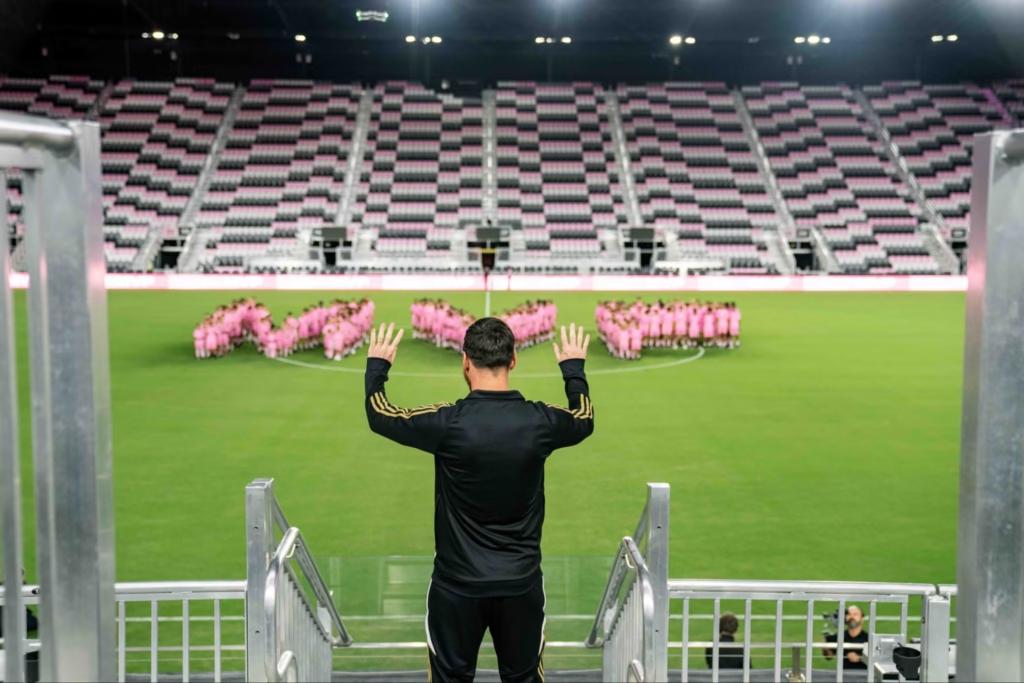
The MESSI CUP announcement arrives at a pivotal moment for youth football development in the United States, positioning Miami as a December destination for international youth competition and establishing a new benchmark for elite academy showcases. Tim Pastore, CEO of 525 Rosario, emphasized the tournament’s broader vision: “The Messi Cup is the meeting point between today’s football and tomorrow’s players.”
| MESSI CUP Tournament Overview | Details |
|---|---|
| Dates | December 9-14, 2025 |
| Location | Miami, Florida (Chase Stadium & Florida Blue Training Center) |
| Age Category | Under-16 |
| Number of Teams | 8 elite academies |
| Total Matches | 18 |
| Format | Group stage (2 groups of 4) + Playoffs + Final |
| Organizer | 525 Rosario (Messi’s production company) |
| Minimum Games per Team | 3 (guaranteed in group stage) |
| Championship Final | December 14 at Chase Stadium |
The tournament structure ensures competitive balance while providing maximum exposure for young players, scouts, and football enthusiasts eager to glimpse the next generation of stars.
Barcelona Returns: The Emotional Connection
Among the eight participating clubs, Barcelona’s inclusion carries profound emotional significance. The Catalan giants—where Messi spent two decades crafting his legacy, winning 10 La Liga titles, 4 Champions League trophies, and 6 Ballon d’Or awards—will send their prestigious La Masia academy representatives to compete in the MESSI CUP.
Barcelona’s participation symbolizes the enduring bond between Messi and the club that transformed him from a talented Argentine teenager with growth hormone deficiency into football’s greatest player. La Masia, Barcelona’s legendary youth academy, has produced countless football icons including Xavi Hernández, Andrés Iniesta, Carles Puyol, and of course, Messi himself.
The academy’s philosophy of developing technically gifted, tactically intelligent players through possession-based football aligns perfectly with the MESSI CUP’s stated mission to showcase elite performance and foster international talent exchange. For Barcelona, the tournament offers an opportunity to demonstrate La Masia’s continued excellence while honoring their greatest alumnus.
A Journey Full Circle: From La Masia Graduate to Tournament Host
Messi’s relationship with Barcelona began in 2000 when he arrived at La Masia at age 13. The club famously signed him on a paper napkin after agreeing to finance his medical treatment. Now, 25 years later, Messi reciprocates by providing Barcelona’s youth players with an elite competitive platform on American soil—expanding their international experience and exposure to diverse playing styles.
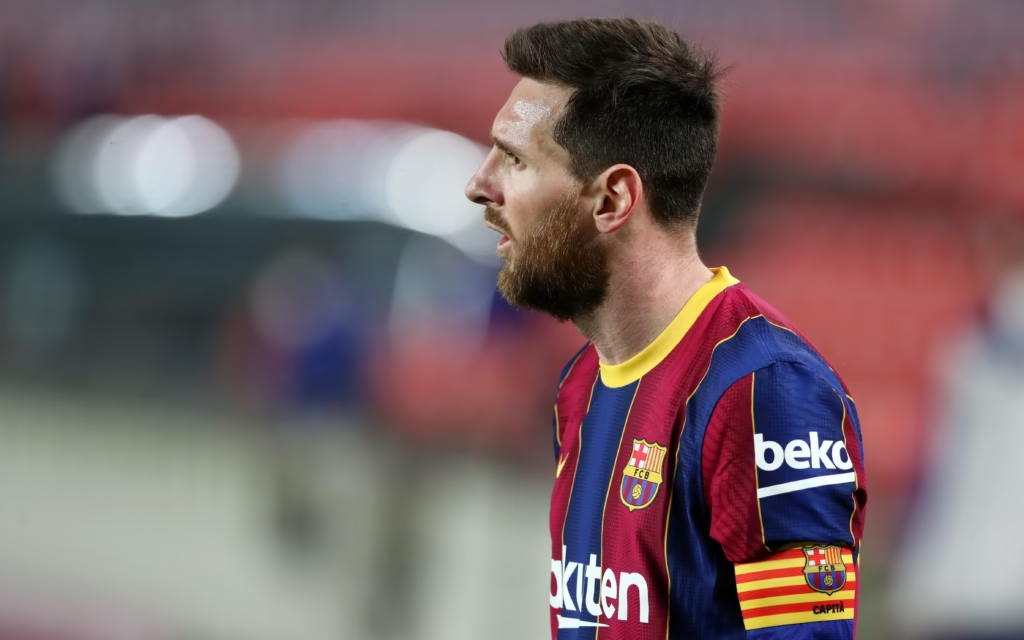
This gesture reinforces Messi’s gratitude to the institution that believed in him when others hesitated, while simultaneously promoting Barcelona’s brand in the crucial North American market where football continues its exponential growth.
The Elite Eight: Clubs Representing Messi’s Career Journey
The MESSI CUP’s participating clubs tell the story of Lionel Messi’s remarkable career trajectory, from his Argentine roots through European dominance to his current Major League Soccer chapter.
| Participating Club | Country | Messi Connection | Academy Reputation |
|---|---|---|---|
| Barcelona | Spain | Professional career (2004-2021) | La Masia – Legendary academy |
| Newell’s Old Boys | Argentina | Boyhood club (1994-2000) | Historic Rosario academy |
| Inter Miami | USA | Current club (2023-present) | Developing MLS academy |
| Manchester City | England | Never played (Guardiola connection) | Premier League elite academy |
| Atlético Madrid | Spain | Spanish rivals | Strong La Liga youth system |
| Chelsea | England | European competition rival | Premier League powerhouse academy |
| River Plate | Argentina | Argentine football royalty | Elite South American academy |
| Inter Milan | Italy | European competition history | Serie A prestigious academy |
Newell’s Old Boys holds special significance as Messi’s childhood club in Rosario, Argentina, where he developed his foundational skills before his growth hormone deficiency necessitated expensive treatment that Newell’s couldn’t afford. The club’s inclusion honors Messi’s roots and provides their academy players with invaluable international exposure.
Inter Miami, Messi’s current MLS club, hosts the tournament while competing, creating home-field advantage but also tremendous pressure to perform well in front of the tournament’s namesake and creator.
Manchester City and Chelsea represent the Premier League’s elite youth development systems, while Atlético Madrid adds Spanish league rivalry dynamics given Barcelona’s participation.
River Plate brings Argentine football’s other major academy powerhouse, representing the fierce Buenos Aires-based rivalry with Boca Juniors while showcasing South American technical development.
Inter Milan rounds out the field with Italian tactical sophistication, adding stylistic diversity to the competition.
Tournament Format: Structure Designed for Development
The MESSI CUP employs a format that balances competitive integrity with developmental objectives, ensuring every participant gains substantial match experience regardless of results.
Group Stage (December 9-11)
Eight teams will be divided into two groups of four, playing a round-robin format over the first three days. This structure guarantees each team a minimum of three competitive matches against international opposition—critical for player assessment and tactical adaptation.
Group stage matches will take place at Inter Miami’s Florida Blue Training Center, providing an intimate setting that allows coaches, scouts, and families to closely observe young talents in action.
Knockout Stage (December 12-13)
Following group play, playoff matches will determine final tournament positions, creating additional competitive fixtures while maintaining tournament momentum. This phase rewards group stage performance while offering teams opportunities to build confidence or redeem earlier disappointments.
Championship Day (December 14)
The climactic final day at Chase Stadium will feature both the third-place match and the championship final, crowning the inaugural Messi Cup champion in Messi’s home stadium before what organizers anticipate will be capacity crowds eager to witness history.
Chase Stadium, which opened in 2020 as Inter Miami’s home venue and recently hosted Argentina’s national team during the October international break, provides a professional environment that elevates the youth competition to elite status.
Beyond Football: Cultural and Business Integration
The MESSI CUP distinguishes itself from traditional youth tournaments through comprehensive programming that extends well beyond on-field competition. According to official statements, the event aims to be “more than just matches” by incorporating cultural, technological, and business elements that reflect modern football’s multifaceted nature.
Football Industry Summit
A football industry summit will be held at the prestigious Faena Forum, bringing together figures from sports, culture, and business for substantive discussions about youth development, academy economics, talent identification, and football’s evolving commercial landscape.
This summit component positions the MESSI CUP as an intellectual gathering point for football leadership, not merely a youth competition—potentially attracting federation officials, club executives, agents, and technology companies shaping football’s future.
Messi Cup Summit Party
The official Messi Cup Summit Party will take place at Pao by Paul Qui, combining football’s competitive spirit with artistic and social celebration. This networking opportunity allows participants, families, and football industry professionals to connect in informal settings that often facilitate meaningful relationships and future opportunities.
Digital Platform and Innovation
Organizers describe the Messi Cup as “a digitally-driven platform that fuses sport, culture, and innovation,” suggesting comprehensive digital content creation, livestreaming capabilities, and social media integration designed to amplify the tournament’s reach beyond physical attendees.
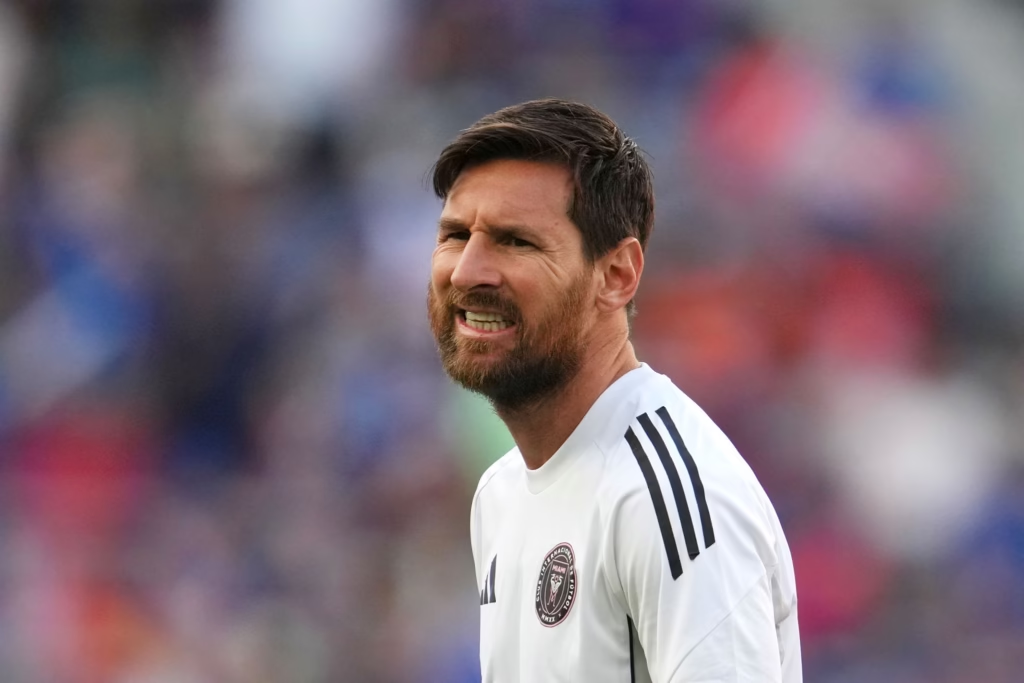
This digital emphasis reflects Messi’s understanding that modern youth development requires visibility and storytelling—helping talented players build personal brands while providing clubs with content for scouting and marketing purposes.
Ticket Access and Fan Experience
Tickets for the MESSI CUP are available through the official tournament website, with starting prices at $120 for individual tickets. Fans purchasing four or more tickets receive a 20% discount, encouraging family and group attendance that creates vibrant stadium atmosphere.
The pricing strategy positions the MESSI CUP as a premium youth football experience—significantly higher than typical youth tournament admission but justified by the participating clubs’ prestige, the tournament’s historic inaugural status, and Messi’s involvement.
For perspective, tickets starting at $120 reflect the event’s positioning as elite entertainment rather than grassroots youth football, targeting audiences willing to pay for quality youth competition featuring tomorrow’s potential stars.
Miami as Global Youth Football Hub
The MESSI CUP’s selection of Miami as host city reflects strategic thinking about football’s North American growth trajectory. South Florida has emerged as a crucial market for international football, benefiting from:
- Large Hispanic population with deep football culture
- Tourism infrastructure capable of hosting international visitors
- Year-round favorable weather conditions
- Inter Miami’s presence as MLS’s highest-profile club
- Growing youth football participation across Florida
By establishing the MESSI CUP in Miami, Messi and 525 Rosario create potential for annual editions that could become fixtures on the international youth football calendar—similar to how prestigious tournaments like the Dallas Cup or Gothia Cup have achieved institutional status.
The December timing positions the tournament during winter break for European clubs and between seasons for South American teams, facilitating participation without conflicting with domestic league schedules.
Barcelona’s Strategic Benefits from Messi Cup Participation
Barcelona’s involvement in the Messi Cup extends beyond honoring their greatest player—it represents strategic positioning in the competitive landscape of global youth development and North American market penetration.
Scouting Opportunities
The tournament provides Barcelona’s technical staff with direct assessment opportunities for talents from seven other elite academies, potentially identifying players for future La Masia recruitment or first-team signings. Youth tournaments often serve as informal scouting showcases where clubs evaluate not just individual players but entire academy programs’ methodologies.
Brand Exposure in North America
With MLS expanding and football’s popularity surging across the United States and Canada, Barcelona benefits from visibility in this crucial growth market. The MESSI CUP generates media coverage, social media content, and personal connections with North American football families—audiences increasingly important for Barcelona’s commercial operations and global fanbase expansion.
La Masia Legacy Reinforcement
Participating in Messi’s tournament reinforces narratives about La Masia’s historical excellence and ongoing relevance. By competing in the MESSI CUP, Barcelona reminds the football world that their academy produced the tournament’s creator—powerful marketing that differentiates La Masia from competitors claiming youth development supremacy.
Competitive Preparation
The Messi Cup offers Barcelona’s U-16 squad international competition against diverse tactical approaches—English physicality (Chelsea, Manchester City), Argentine technique (River Plate, Newell’s), Italian organization (Inter Milan), and Spanish intensity (Atlético Madrid). This variety provides developmental benefits impossible to replicate in domestic competition alone.
Long-Term Vision: The Messi Cup as Enduring Institution
While the December 2025 edition represents the Messi Cup’s inaugural staging, all indications suggest Messi and 525 Rosario envision this as an annual institution that grows in prestige and influence over time.
Tim Pastore’s statement that the Messi Cup aims to “generate long-term value for athletes developing their careers, for the communities that unite around a passion for sport, and for brands seeking authentic and lasting connections in the new era of football” reveals ambitions extending far beyond a one-time event.
Successful first-edition execution could establish the MESSI CUP as:
- A prestigious annual youth tournament rivaling European elite competitions
- A platform for Messi’s post-playing career involvement in football development
- A commercial vehicle connecting brands with football’s next generation
- A catalyst for Miami’s evolution into a global football destination
- A template for player-driven youth development initiatives
The tournament’s timing (December) and location (Miami) create practical advantages for annual repetition, while Messi’s involvement guarantees sustained attention and participation interest from elite clubs.
What the Messi Cup Means for Youth Football’s Future
Lionel Messi’s creation of the Messi Cup represents a significant evolution in how football legends leverage their influence post-prime career years. Rather than simply coaching, managing, or serving as ambassadors, Messi is building infrastructure—creating platforms that will impact thousands of young players long after his playing days conclude.
The tournament’s emphasis on “merging sport, culture, and innovation” suggests recognition that modern youth development requires holistic approaches addressing athletic performance, personal branding, cultural awareness, and technological adaptation simultaneously.
For participating players, the Messi Cup offers more than competitive matches—it provides:
- International exposure to scouts from multiple continents
- Experience competing under pressure in professional stadiums
- Cultural exchange with peers from different football traditions
- Proximity to Messi himself, potentially including appearances, clinics, or interactions
- Digital content showcasing their abilities to global audiences
- Memories and relationships lasting throughout their careers
These intangible benefits may ultimately prove more valuable than the championship trophy itself, shaping young players’ development trajectories and creating networks that endure throughout professional careers.
Read More: Official: Frenkie de Jong Signs New Barcelona Contract Until 2029 as Contract Saga Finally Ends
FAQs
What is the Messi Cup and when does it take place?
An international under-16 tournament created by Lionel Messi, running December 9-14, 2025 in Miami with 8 elite academies including Barcelona, Manchester City, and Chelsea.
Why is Barcelona participating in the Messi Cup?
Barcelona is Messi’s former club where he spent 20 years and developed through La Masia academy. It’s a tribute to where his legendary career flourished.
How much do Messi Cup tickets cost?
Tickets start at $120 on the official website. Groups of 4+ get 20% off. The final is December 14 at Chase Stadium.
What is the Messi Cup tournament format?
Eight teams in two groups play round-robin (Dec 9-11), then playoffs, with the championship final December 14. Each team plays at least 3 games.
Which clubs are participating in the Messi Cup?
Barcelona, Newell’s Old Boys, Inter Miami, Manchester City, Atlético Madrid, Chelsea, River Plate, and Inter Milan—representing chapters of Messi’s career journey.

