

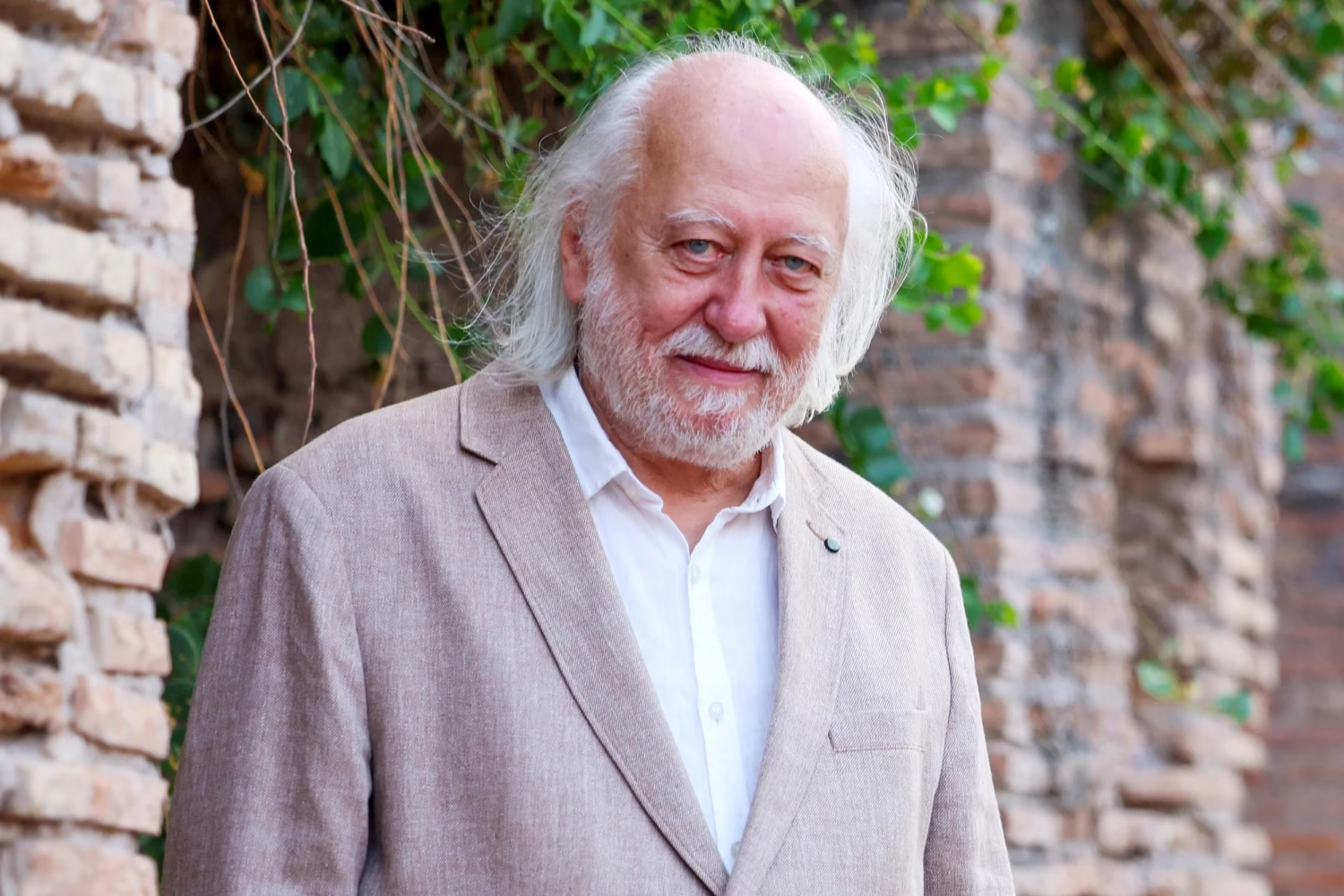

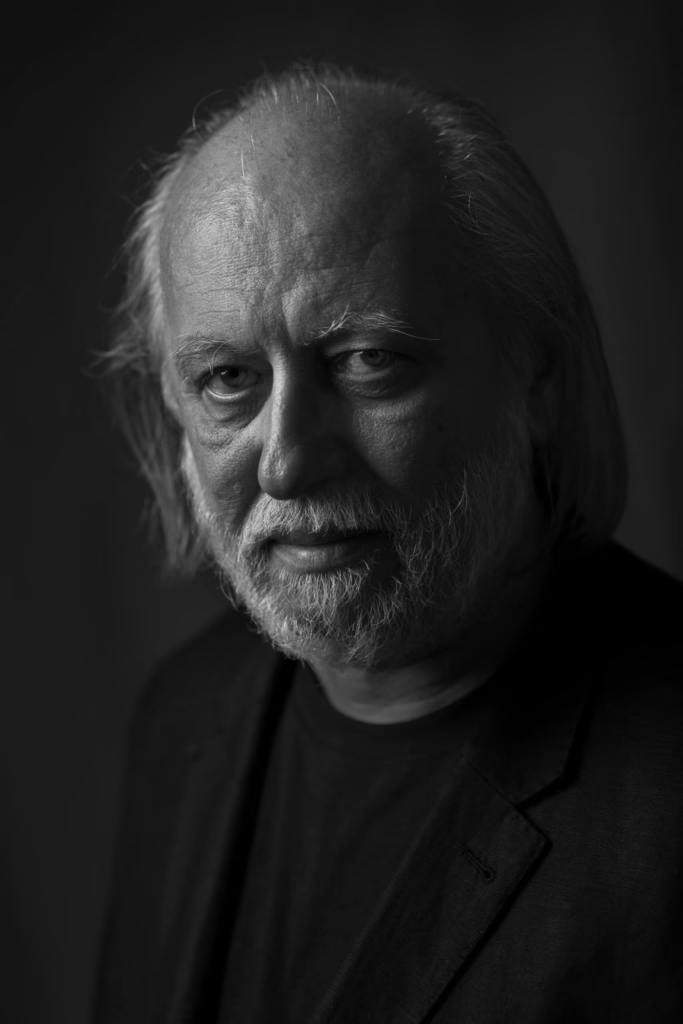
The Swedish Academy announced on Thursday, October 9, 2025, that Hungarian novelist and screenwriter László Krasznahorkai has been awarded the Nobel Prize in Literature 2025, honoring him “for his compelling and visionary oeuvre that, in the midst of apocalyptic terror, reaffirms the power of art.” The recognition marks a momentous achievement for the 71-year-old writer, whose philosophical and densely layered prose has captivated readers worldwide while exploring humanity’s darkest corners and literature’s redemptive possibilities.
The Award That Recognizes Literary Vision
Mats Malm, the Swedish Academy’s permanent secretary, announced the prestigious award at a news conference in Stockholm, praising Krasznahorkai’s “artistic gaze which is entirely free of illusion, and which sees through the fragility of the social order combined with his unwavering belief in the power of art.” The citation perfectly encapsulates what makes László Krasznahorkai one of contemporary literature’s most distinctive voices—his unflinching examination of human despair coupled with profound faith in art’s transcendent capacity.
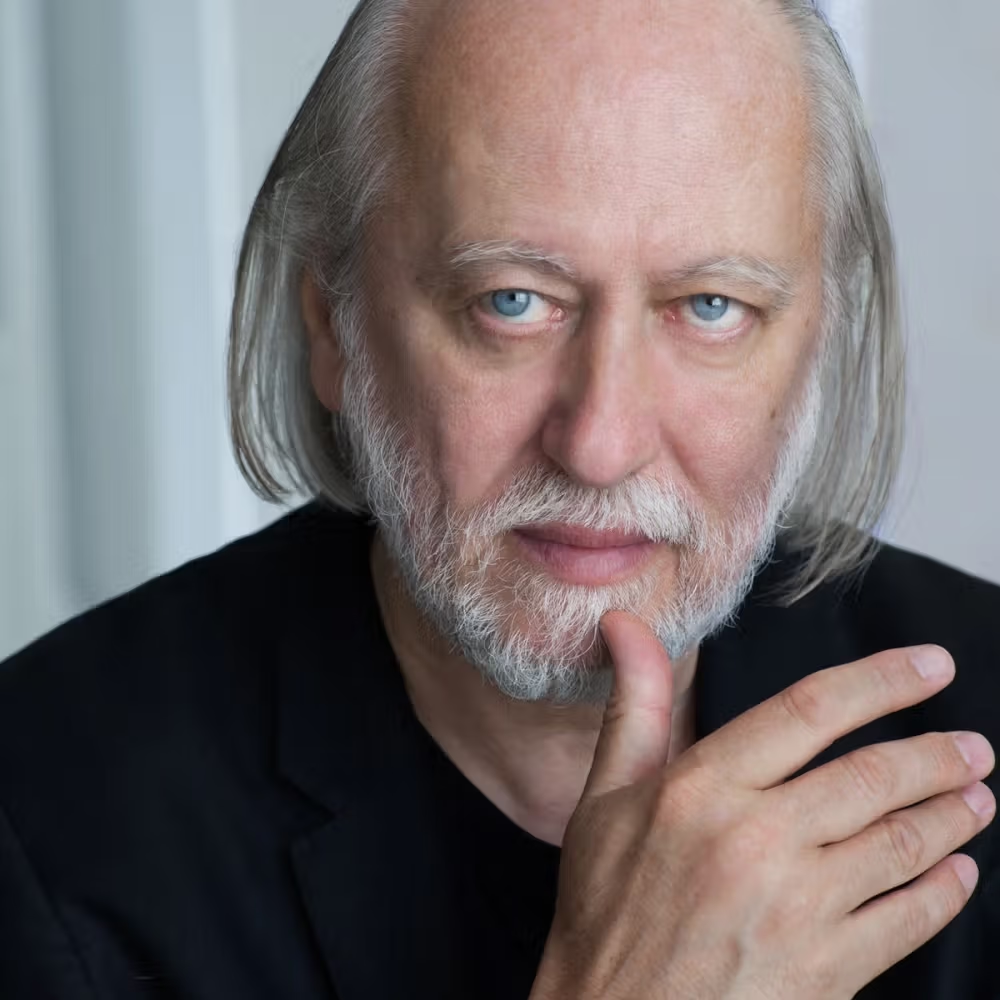
The Nobel Prize in Literature 2025 carries a monetary award of 11 million Swedish kronor (approximately $1.2 million), along with an 18-carat gold medal and diploma. These will be presented at the formal Nobel Prize ceremony in Stockholm on December 10, the anniversary of Alfred Nobel’s death.
Nobel Prize in Literature 2025: Key Details
| Aspect | Details |
|---|---|
| Laureate | László Krasznahorkai |
| Nationality | Hungarian |
| Age | 71 years old (born 1954) |
| Citation | “For his compelling and visionary oeuvre that, in the midst of apocalyptic terror, reaffirms the power of art” |
| Monetary Award | 11 million SEK (~$1.2 million) |
| Announcement Date | October 9, 2025 |
| Previous Hungarian Winner | Imre Kertész (2002) |
László Krasznahorkai becomes only the second Hungarian author to receive the Nobel Prize in Literature, following Imre Kertész who won in 2002 for his Holocaust literature. This achievement places Krasznahorkai among an illustrious roster of laureates including Ernest Hemingway, Toni Morrison, Bob Dylan, Kazuo Ishiguro, and last year’s winner, South Korean author Han Kang.
A Life Shaped by Geography and History
Born in 1954 in the small southeastern Hungarian town of Gyula, near the Romanian border, László Krasznahorkai’s origins profoundly influenced his literary sensibility. Growing up in a remote rural area under communist rule provided the atmospheric foundation for much of his fiction, where isolated communities face existential crises against backdrops of political and social collapse.
His formative years in communist Hungary instilled in him an acute awareness of ideological oppression, bureaucratic absurdity, and the grinding despair of totalitarian systems. These experiences permeate his novels, which often depict characters trapped in decaying social structures, waiting for salvation or apocalypse with equal measures of dread and resignation.
In 1987, Krasznahorkai received a fellowship to West Berlin, marking his first extended period abroad. This relocation—and subsequent travels throughout Europe, China, and Japan—broadened his literary horizons while deepening his philosophical engagement with questions of existence, meaning, and art’s role in confronting human suffering. He has lived for extended periods in Germany, where his work enjoys particular prominence, though he remains deeply connected to his Hungarian roots.
Breakthrough Works: Satantango and Beyond
László Krasznahorkai burst onto the Hungarian literary scene in 1985 with his debut novel Sátántangó (Satantango in English translation, 2012). The book became an immediate sensation in Hungary, establishing the young writer as a major new voice.
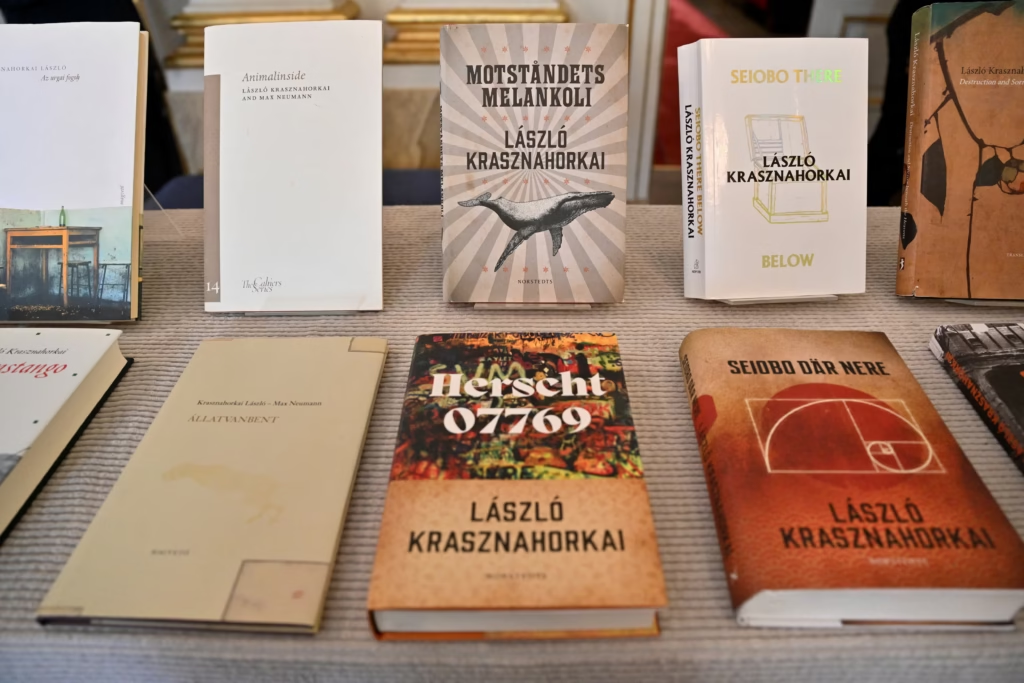
Satantango portrays a destitute group of residents on an abandoned collective farm in the Hungarian countryside during the final years before communism’s collapse. The novel captures the oppressive silence and anxious anticipation of people suspended between a discredited past and an uncertain future. When two men—Irimiás and his accomplice Petrina—suddenly appear, having been presumed dead, the desperate residents see them as either messengers of hope or harbingers of judgment.
The satanic element referenced in the title manifests through these characters’ manipulative exploitation of the residents’ slave morality. The con man Irimiás employs pretenses so effective and deceptive that nearly everyone falls under his spell, believing his promises despite mounting evidence of betrayal.
Major Literary Works by László Krasznahorkai
| Title (Original/English) | Publication Year | Themes |
|---|---|---|
| Sátántangó / Satantango | 1985 / 2012 | Collective farm collapse, manipulation, despair |
| Az ellenállás melankóliája / The Melancholy of Resistance | 1989 / 1998 | Mass hysteria, violence, dictatorship |
| Háború és háború / War & War | 1999 / 2006 | Quest for meaning, artistic preservation |
| Báró Wenckheim hazatér / Baron Wenckheim’s Homecoming | 2016 / 2019 | Return motif, literary tradition |
American literary critic Susan Sontag, after reading Krasznahorkai’s second novel Az ellenállás melankóliája (The Melancholy of Resistance, 1998), famously crowned him contemporary literature’s “master of the apocalypse.” This 1989 work intensifies the apocalyptic atmosphere of his debut, unfolding in a small Hungarian town nestled in a Carpathian valley where ominous signs abound from the opening page.
The arrival of a ghostly circus featuring the carcass of a giant whale as its main attraction sets catastrophic forces in motion. This mysterious and menacing spectacle triggers widespread violence and vandalism, while military inability to prevent anarchy creates conditions for potential dictatorial coup. The novel brilliantly dramatizes how civilized society can dissolve into chaos when underlying tensions explode.
Literary Style: The Signature Sentence
László Krasznahorkai’s prose style has evolved into one of contemporary literature’s most recognizable and challenging approaches. His mature work features extraordinarily long, winding sentences that often extend for pages without traditional punctuation breaks. These flowing, hypnotic sentences mirror the psychological states of his characters—trapped in cycles of thought, overwhelmed by existence’s weight, searching desperately for meaning or escape.
This distinctive syntax appears fully developed in Háború és háború (War & War, 2006), which follows humble archivist Korin from Budapest’s outskirts to New York City. Having discovered an exceptionally beautiful ancient epic about returning warriors, Korin undertakes this final journey hoping to share his finding with the world. The novel’s rolling, picaresque structure anticipates Krasznahorkai’s later masterwork Báró Wenckheim hazatér (Baron Wenckheim’s Homecoming, 2019), which plays lavishly with literary tradition while focusing on themes of return and homecoming.
For readers, Krasznahorkai’s style demands immersion and patience. His sentences don’t allow casual reading—they require surrender to their rhythms, trusting the prose to carry you through landscapes of despair toward moments of transcendent beauty or terrible revelation. Critics describe his writing as hypnotic, demanding, philosophical, and utterly unique.
Collaboration with Béla Tarr: Literature Becomes Cinema
László Krasznahorkai’s literary influence extends significantly into cinema through his legendary collaboration with Hungarian filmmaker Béla Tarr. Several of Krasznahorkai’s novels have been adapted into films by Tarr, creating some of world cinema’s most acclaimed and challenging works.
The most famous adaptation remains Sátántangó (1994), Tarr’s seven-hour-plus black-and-white masterpiece that translates Krasznahorkai’s apocalyptic vision into mesmerizing visual poetry. Shot with extraordinarily long takes and minimal dialogue, the film captures the novel’s atmosphere of grinding despair and desperate hope with stunning cinematic power. Upon reading the novel, Tarr immediately knew “I must make a film based on it.”
Werckmeister Harmonies (2000), based on The Melancholy of Resistance, brought Krasznahorkai and Tarr’s dark, meditative storytelling to global art-house audiences. The film’s haunting imagery—particularly sequences involving the whale carcass—creates an apocalyptic atmosphere that perfectly complements the novel’s themes.
Beyond adaptations, Krasznahorkai wrote screenplays for several Tarr films, including Damnation (1988) and most notably The Turin Horse (2011), one of Tarr’s most acclaimed works. This creative partnership demonstrates how Krasznahorkai’s literary vision translates powerfully across media, his apocalyptic themes finding visual expression through Tarr’s austere, patient cinematography.
Previous Recognition and Literary Standing
Before receiving the Nobel Prize in Literature 2025, László Krasznahorkai had accumulated significant international recognition, establishing him as one of Europe’s most important contemporary writers.
In 2015, he won the Man Booker International Prize, one of the English-speaking world’s most prestigious literary awards. The prize recognized his entire body of work rather than a single book, acknowledging his unique contribution to world literature.
He also received the 2019 National Book Award for Translated Literature in the United States, further cementing his reputation among English-language readers. These awards introduced Krasznahorkai to broader audiences beyond the German and Hungarian literary circles where he had long been celebrated.
His translator into English, poet George Szirtes, describes him as “a hypnotic writer,” while French publisher Frédéric Cambourakis of Editions Cambourakis—which has championed Krasznahorkai’s work in France—celebrated the Nobel Prize as “well-deserved” for “one of Europe’s greatest writers.”
Krasznahorkai’s Response: Literature’s Enduring Value
Upon learning of his Nobel Prize in Literature 2025, László Krasznahorkai issued a statement through his literary agency RCW that illuminates his philosophy about literature’s purpose: “I am deeply glad that I have received the Nobel Prize—above all because this award proves that literature exists in itself, beyond various non-literary expectations, and that it is still being read.”
He continued, reflecting on art’s role in desperate times: “[Literature] offers a certain hope that beauty, nobility, and the sublime still exist for their own sake. It may offer hope even to those in whom life itself only barely flickers. Trust—even if there seems to be no reason to.”
These words perfectly capture the paradox at Krasznahorkai’s literary heart—his novels depict apocalyptic terror and human despair with unflinching honesty, yet simultaneously assert art’s redemptive power. His characters inhabit worlds of decay and violence, but the literary artistry transforming their stories into profound aesthetic experiences affirms that beauty and meaning persist even amid catastrophe.
When interviewed by the Nobel Prize committee, Krasznahorkai expressed surprise at the honor and pride “to be in the line which contains so many really great writers and poets.” He revealed that he had been in Frankfurt, Germany, when he received the news, planning to “make some dinner with my friends here in Frankfurt with port wine and champagne.”
Political Dimensions and Viktor Orbán
The Nobel Prize in Literature 2025 carries political resonance given László Krasznahorkai’s complex relationship with contemporary Hungarian politics. Hungarian Prime Minister Viktor Orbán congratulated his compatriot in a brief post on X (formerly Twitter), though Krasznahorkai has been a fierce critic of Orbán’s increasingly authoritarian government.
This tension highlights a recurring pattern in Nobel Prize history—writers whose work explores totalitarian systems, social decay, and political oppression often come from countries where they’ve critiqued their own governments. Krasznahorkai’s unflinching portrayals of communist-era Hungary and his broader explorations of social collapse resonate powerfully in contemporary Hungary, where democratic norms have eroded under Orbán’s leadership.
The Swedish Academy’s recognition implicitly validates Krasznahorkai’s critical stance, honoring literature that refuses comforting illusions about social order’s stability or political systems’ permanence.
Literary Influences: The Shadow of Kafka
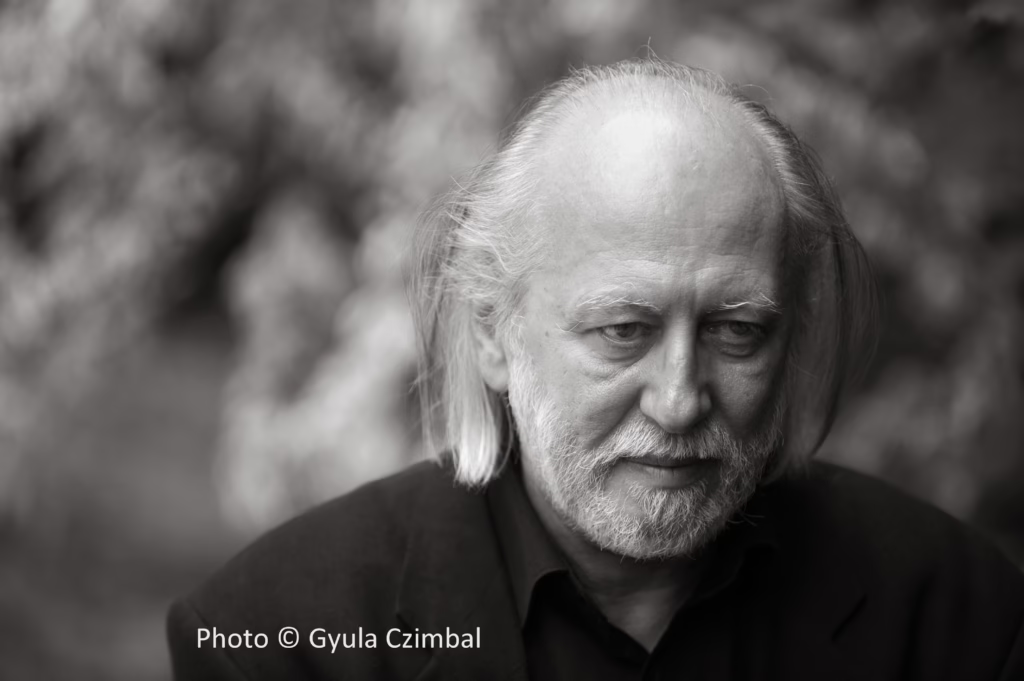
László Krasznahorkai has repeatedly cited Franz Kafka as his most profound literary influence. In a 2013 interview with the White Review, he revealed: “When I am not reading Kafka, I am thinking about Kafka. When I am not thinking about Kafka, I miss thinking about him.”
Kafka’s influence permeates Krasznahorkai’s work—the atmosphere of bureaucratic absurdity, the sense of inexplicable persecution, the transformation of everyday reality into nightmare, the characters’ futile searches for meaning or justice in incomprehensible systems. Like Kafka’s Josef K. or the surveyor in The Castle, Krasznahorkai’s protagonists navigate worlds whose rules remain perpetually elusive, seeking understanding that always recedes further into darkness.
However, Krasznahorkai extends Kafka’s vision into explicitly apocalyptic territory, portraying not just individual alienation but collective social disintegration. Where Kafka focuses on personal nightmares, Krasznahorkai envisions societal collapse, making him Kafka’s heir for an age of global catastrophe.
The Broader Context: 2025 Nobel Week
The Nobel Prize in Literature 2025 represents the fourth prize announced during the week-long Nobel Prize announcements. Earlier awards went to scientists in medicine, physics, and chemistry, recognizing groundbreaking research across disciplines.
The Nobel Peace Prize will be announced on Friday, October 10, with significant speculation about potential recipients. The final prize—the Nobel Memorial Prize in Economic Sciences—will be revealed on Monday, October 13.
All Nobel Prize winners will gather in Stockholm for the traditional award ceremony on December 10, 2025, marking the 129th anniversary of Alfred Nobel’s death. The ceremony represents one of the world’s most prestigious cultural events, celebrating human achievement across sciences, literature, and peace.
FAQs
Who is László Krasznahorkai?
László Krasznahorkai is a 71-year-old Hungarian novelist and screenwriter known for his apocalyptic, philosophical novels featuring long, winding sentences. Born in Gyula, Hungary in 1954, he gained international fame with works like Satantango and The Melancholy of Resistance, earning him the reputation as contemporary literature’s “master of the apocalypse.”
Why did László Krasznahorkai win the Nobel Prize in Literature 2025?
The Swedish Academy awarded him the prize “for his compelling and visionary oeuvre that, in the midst of apocalyptic terror, reaffirms the power of art.” The committee praised his artistic vision that sees through social order’s fragility while maintaining unwavering belief in art’s power.
What are László Krasznahorkai’s most famous works?
His most celebrated works include Sátántangó (1985), which became a seven-hour film directed by Béla Tarr; The Melancholy of Resistance (1989), crowned by Susan Sontag as work of a “master of the apocalypse”; War & War (1999); and Baron Wenckheim’s Homecoming (2016). Several have been adapted into acclaimed films.
How much is the Nobel Prize in Literature worth?
The 2025 Nobel Prize in Literature carries a monetary award of 11 million Swedish kronor, approximately $1.2 million USD. Winners also receive an 18-carat gold medal and diploma presented at the December 10 ceremony in Stockholm.
Is László Krasznahorkai the first Hungarian to win the Nobel Prize in Literature?
No, he is the second Hungarian laureate. Imre Kertész won the prize in 2002 for his Holocaust literature. However, Krasznahorkai’s win marks the first time a Hungarian author has received the award in over two decades, bringing renewed attention to Hungarian literature globally.

