

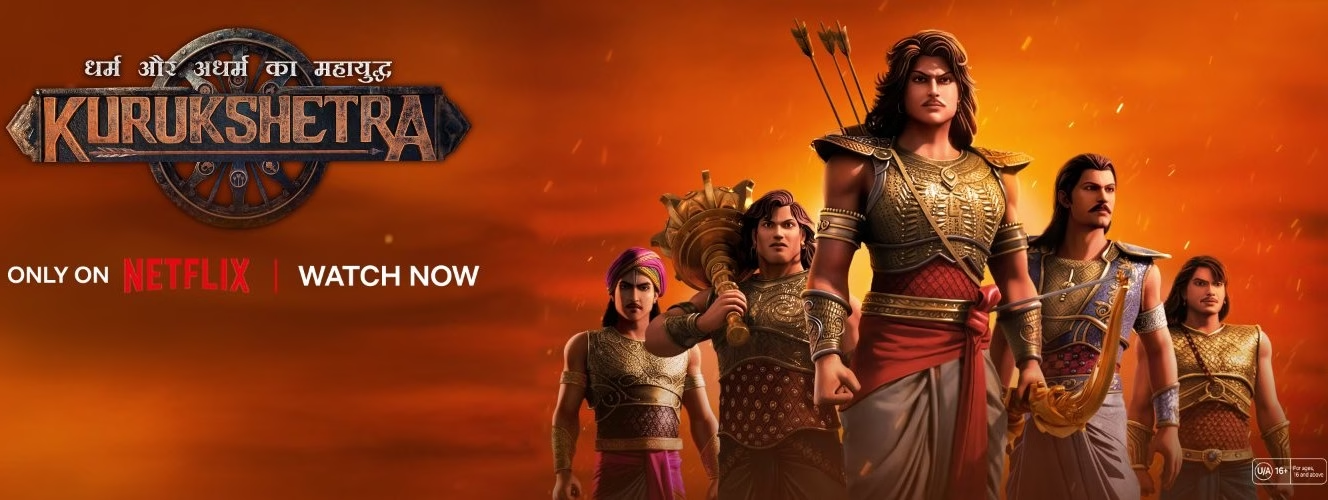

Netflix India has taken a bold leap into mythological animation with Kurukshetra, a visually ambitious series that reimagines the Mahabharata’s climactic 18-day war. Released on October 10, 2025, this groundbreaking animated epic marks Netflix’s first foray into Indian mythological storytelling, offering audiences a fresh perspective on one of humanity’s oldest tales of duty, destiny, and moral conflict.
A Revolutionary Storytelling Approach
What sets Kurukshetra Netflix apart from previous Mahabharata adaptations is its innovative narrative structure. Rather than following a linear chronology, the series unfolds through the perspectives of 18 distinct warriors, with each character representing one day of the legendary battle. This multi-dimensional approach transforms a familiar story into an intimate exploration of individual conscience, moral dilemmas, and the devastating price of war.
Series Overview and Structure
| Production Details | Information |
|---|---|
| Creator | Anu Sikka |
| Director | Ujaan Ganguly |
| Series Director | Kaushik Ganguly |
| Lyricist/Narrator | Gulzar |
| Animation Studio | Hitech Animation |
| Producer | Tipping Point (Alok Jain, Anu Sikka, Ajit Andhare) |
| Total Episodes | 18 (Split into two parts) |
| Part 1 Episodes | 9 episodes |
| Release Date | October 10, 2025 |
| Language | Hindi (with multiple audio options) |
| Platform | Netflix |
The Kurukshetra Netflix series adopts a two-part release strategy, with Part 1 introducing nine pivotal characters and their journeys, while Part 2 will complete the remaining narratives. This staggered approach builds anticipation while allowing viewers to digest the complex philosophical themes woven throughout the epic.
The Power of Gulzar’s Voice
If there’s one element that elevates Kurukshetra Netflix above conventional animated fare, it’s the haunting narration by legendary poet and lyricist Gulzar. His words don’t merely describe events; they penetrate the soul of the narrative, exploring the paradoxes of dharma and the internal battles that rage alongside the physical warfare.
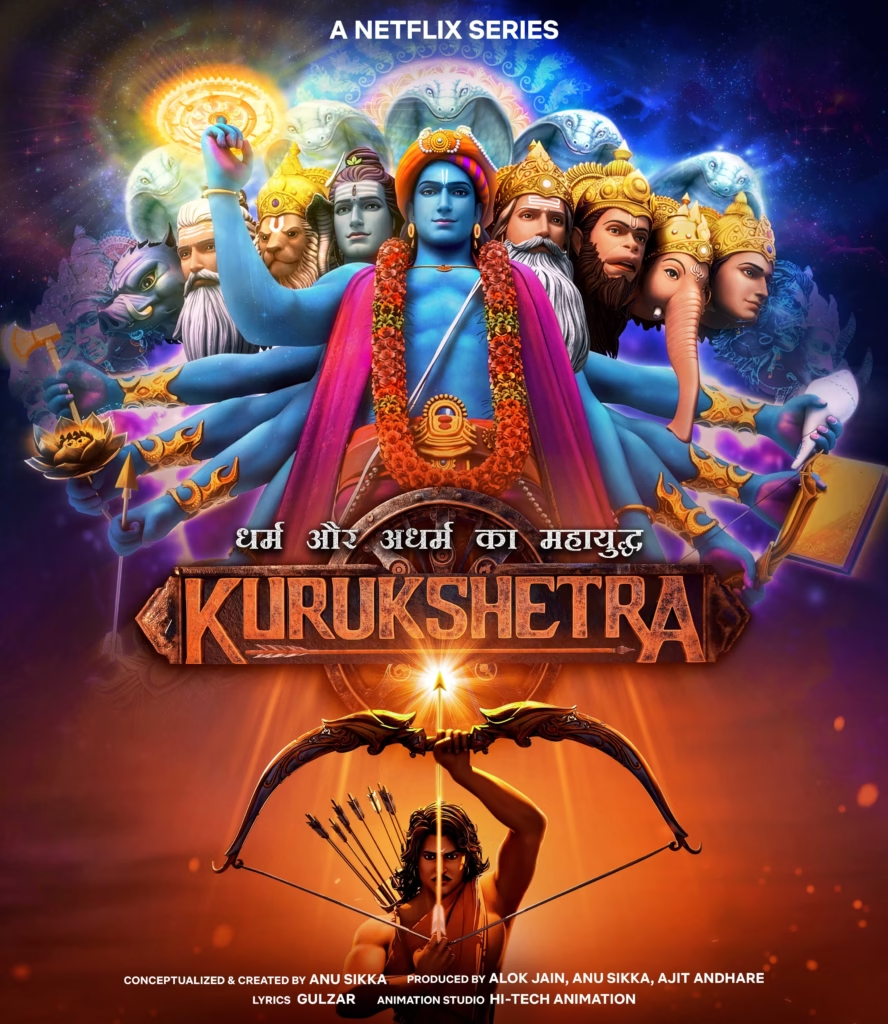
From the opening moments, Gulzar’s voice establishes that truth has many shades—a recurring theme that resonates through every episode. His poetic observations on duty, righteousness, and the futility of vengeance add gravitas to the animated spectacle, creating moments of profound reflection amidst the chaos of battle.
Critics and audiences alike have identified Gulzar’s narration as the series’ crowning achievement, with many noting that his powerful delivery often overshadows other aspects of the production. His ability to distill complex philosophical concepts from the Bhagavad Gita into accessible yet deeply moving phrases demonstrates why he remains one of India’s most revered literary figures.
Episode Breakdown: Nine Days of War
The first part of Kurukshetra Netflix focuses on nine crucial episodes, each named after a warrior whose perspective shapes that particular chapter:
Part 1 Episodes Table
| Episode | Character Focus | Key Theme |
|---|---|---|
| 1 | Sanjay | The messenger who delivers news that war is inevitable |
| 2 | Vishwaroop | Krishna reveals the Bhagavad Gita’s wisdom to Arjun |
| 3 | Bhishm | The transformation of Princess Amba and Bhishm’s destiny |
| 4 | Dronacharya | The teacher becomes commander, driven by failed ambition |
| 5 | Abhimanyu | Young warrior’s tragic death in the Chakravyuh formation |
| 6 | Jayadrath | The role of vengeance in perpetuating violence |
| 7 | Arjun | The eternal archer grapples with duty versus morality |
| 8 | Ghatotkach | Sacrifice and the cost of loyalty |
| 9 | Yudhishthir | The righteous king faces the consequences of war |
Each episode operates as a self-contained meditation on specific aspects of the war while contributing to the larger narrative mosaic. The series opens in Matsya’s kingdom, where Arjun’s son Abhimanyu prepares to marry Princess Uttara, but the looming shadow of war permeates every celebration.
Visual Spectacle and Animation Quality
The animation quality in Kurukshetra Netflix has generated mixed reactions from viewers and critics. On one hand, the battle sequences deliver impressive video game-like thrills, with arrows generating dust storms, legendary warriors levitating at will, and fantastical war elephants barreling through enemy lines. The rendering of Arjun’s celestial bow Gandiva as a lightning rod in his hands, and the intricate depiction of the Chakravyuh maze that traps Abhimanyu, showcase the animation team’s ambition.
However, the execution doesn’t consistently match this ambition. Several reviewers have noted that while the animation surpasses previous Indian mythological animations like Mahavatar Narasimha, it falls short when compared to other high-quality Netflix animated series. The color palette has been described as overly bright and garish—resembling an “ice popsicle cart”—while character designs suffer from rubbery facial expressions and robotic eyes.
The uniformity in physical attributes across characters means much of the emotional weight falls on voice acting, which unfortunately represents one of the series’ weaker elements.
The Voice Acting Dilemma
While Gulzar’s narration soars, the voice performances of other characters in Kurukshetra Netflix struggle to match the material’s epic scope. The cast includes Vinod Sharma, Sahil Vaid, Saumya Daan, Annamaya Verma, Manoj Pandey, Himanshu Rana, and others, but their performances lack the distinctive emotional range required to bring these legendary figures to life.
Critics have pointed out that essential characters like Bhishma and Dronacharya come across as one-dimensional, missing the moral complexity and internal conflict that define them in the original epic. The generic quality of most voice work weakens pivotal moments that should resonate with emotional power, leaving scenes feeling hollow despite the visual grandeur.
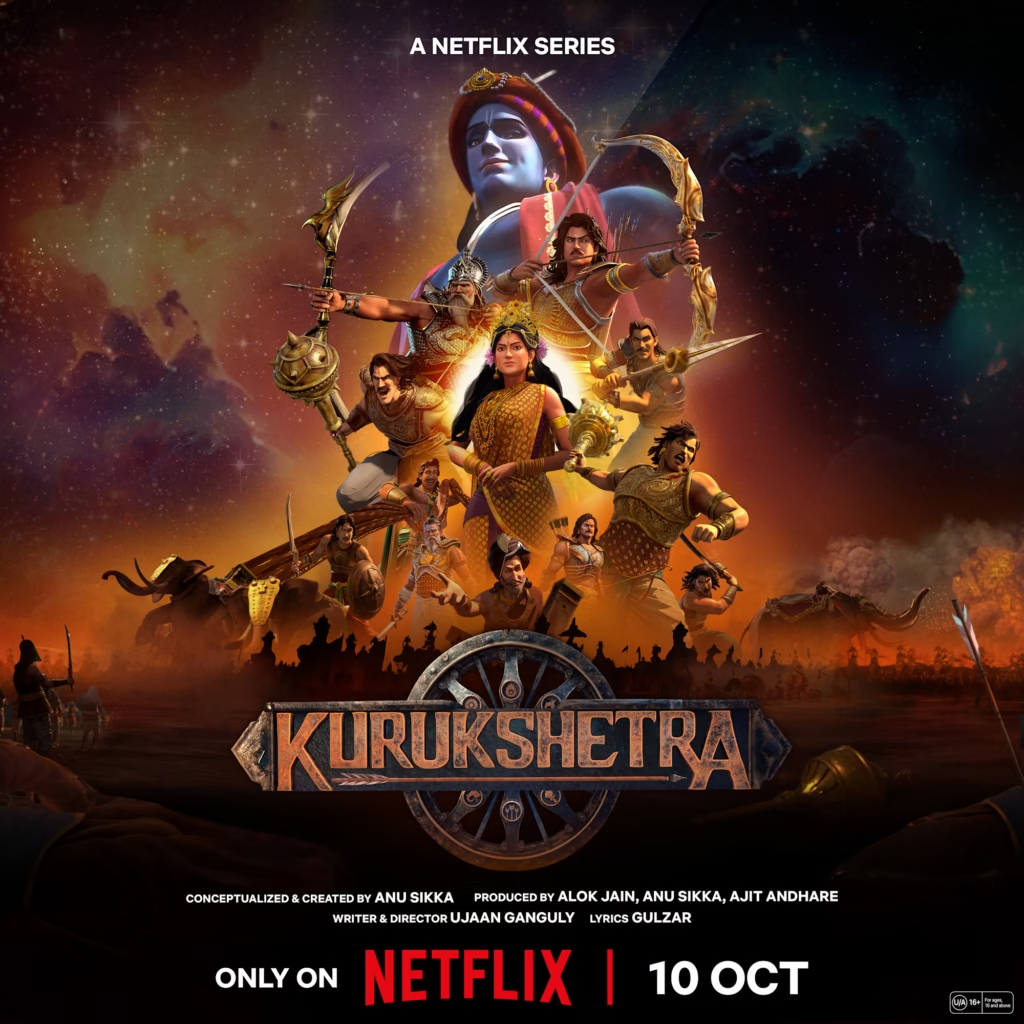
Some industry observers have suggested that casting recognizable Bollywood voices for major characters might have elevated the series, providing the star power and emotional depth needed for such an ambitious project.
Philosophical Depth and Moral Complexity
Despite its technical shortcomings, Kurukshetra Netflix succeeds in capturing the Mahabharata’s essential philosophical core. The series doesn’t shy away from the epic’s darker themes—the treatment of Draupadi, the ethical compromises made by supposedly righteous warriors, and the devastating toll of a war where families are torn apart by conflicting loyalties.
Lord Krishna’s teaching from the Bhagavad Gita forms the spiritual backbone of the series. His declaration that “this war has no friends or enemies” encapsulates the moral ambiguity that makes the Mahabharata enduringly relevant. The series explores how duty (dharma) can conflict with personal morality, forcing characters into impossible choices where victory requires abandoning the very principles they fight to uphold.
The narrative structure allows the Kurukshetra Netflix series to examine these dilemmas from multiple angles. Abhimanyu’s tragic death, Dronacharya’s transformation from revered teacher to vengeful commander, and Yudhishthir’s struggle with the consequences of righteous leadership all contribute to a layered exploration of what it means to fight a “righteous war.”
Audience Reception and Critical Response
The Kurukshetra Netflix series has generated polarized reactions across social media and review platforms. Some viewers have praised it as “magnificent” and a “well-executed war saga that delivers both visual grandeur and divine depth,” while others have expressed disappointment with the animation quality, calling it a “missed opportunity.”
Common praise focuses on:
- Gulzar’s stunning narration and lyrical contributions
- The innovative 18-warrior perspective approach
- Ambitious battle sequences and visual effects
- Respect for the source material’s philosophical depth
- Netflix India’s commitment to producing culturally significant content
Recurring criticisms include:
- Inconsistent voice acting and lack of emotional range
- Overly bright, garish color palette
- Rubbery character faces and robotic eye movements
- Jumbled timelines that confuse newcomers
- Insufficient character depth for key figures
- Animation quality below international Netflix standards
One fan on social media commented: “Animation Very Disappointed Hai, yaar Netflix itna bada platform hai or animation quality is very bad.” Meanwhile, others defended the series, arguing that its design, animation, and Gulzar’s voiceover keep viewers engaged despite imperfections.
Cultural Significance and Netflix’s Ambition
Kurukshetra Netflix represents more than just another series release; it signifies a major streaming platform’s recognition of Indian mythology’s global appeal. Tanya Bami, Netflix India’s Series Head, emphasized that “the Mahabharat has always been more than an epic; it’s a mirror to our choices and dilemmas, as relevant today as it was centuries ago.”
By investing in high-quality animated retellings of foundational Indian stories, Netflix aims to make these narratives accessible to younger generations and international audiences who might not connect with traditional live-action adaptations. The series joins a growing trend of animated mythology, following similar attempts like Mahavatar Narasimha and competing with other upcoming projects utilizing AI and advanced animation techniques.
Creator Anu Sikka, known for popular series like Motu Patlu, brings considerable animation experience to the project. Her vision of blending “eternally timeless wisdom with the power of visual storytelling” reflects an understanding that ancient epics can speak powerfully to contemporary audiences when presented in fresh formats.
Comparing with Traditional Adaptations
For decades, Indian television series like B.R. Chopra’s Mahabharat (1988-1990) set the standard for how these epics should be presented. That landmark show combined theatrical gravitas with accessible storytelling, becoming a cultural phenomenon that influenced generations.
Kurukshetra Netflix takes a radically different approach, prioritizing visual spectacle and philosophical exploration over the episodic, dialogue-heavy format of traditional adaptations. While this modernization appeals to viewers accustomed to contemporary animation styles, it also risks alienating purists who prefer more faithful, slower-paced retellings.
The animated format allows for fantastical elements—flying chariots, divine weapons with supernatural effects, and cosmic visions—to be depicted with greater visual impact than live-action productions could achieve on television budgets. However, this same format can create distance between viewers and characters, making emotional connection more dependent on voice acting quality.
Looking Ahead: Part 2 and Beyond
With Part 1 establishing the war’s foundations and introducing key characters, anticipation builds for the second installment. Part 2 will cover the remaining nine warriors and presumably deliver the conflict’s climactic resolution, including iconic moments like Karna’s death, Duryodhana’s final stand, and the war’s devastating aftermath.
While Netflix hasn’t officially announced a release date for Part 2, speculation suggests it could arrive sometime in late 2025 or 2026, possibly timed around major Indian festivals like Diwali to maximize viewership. Some reports hint at a potential staggered release of episodes rather than dropping all nine at once, which could help maintain momentum and audience engagement.
The success or failure of Kurukshetra Netflix will likely influence future investments in animated mythology. If audiences respond positively despite current criticisms, it could open doors for more ambitious projects exploring other epics like the Ramayana, regional variations of these stories, or lesser-known mythological tales from India’s vast cultural repository.
Final Verdict: Ambitious but Uneven
Kurukshetra Netflix emerges as a deeply ambitious project that succeeds in some areas while falling short in others. Gulzar’s magnificent narration and the innovative 18-warrior structure demonstrate genuine creative vision, while the philosophical depth ensures the series honors its source material’s complexity. The battle sequences deliver visceral thrills, and the overall production scale represents a significant investment in Indian animated content.
However, inconsistent voice acting, questionable animation quality, and shallow character development prevent the series from achieving greatness. Viewers seeking flawless animation and consistently powerful performances may find themselves disappointed, while those willing to overlook technical limitations can still appreciate the series’ ambition and thematic richness.
For mythology enthusiasts, philosophy students, and audiences curious about Indian epics, Kurukshetra Netflix offers enough merit to warrant viewing, especially given Gulzar’s involvement. The series works best when appreciated as an experimental stepping stone in Indian animation’s evolution rather than a definitive adaptation.
As one reviewer aptly summarized: “If you enjoy myth and fresh perspectives, Kurukshetra is for you. The design, animation, and Gulzar’s voiceover will keep you hooked. But if you expect flawless animation and powerful acting consistently, you might want to wait for Part 2.”
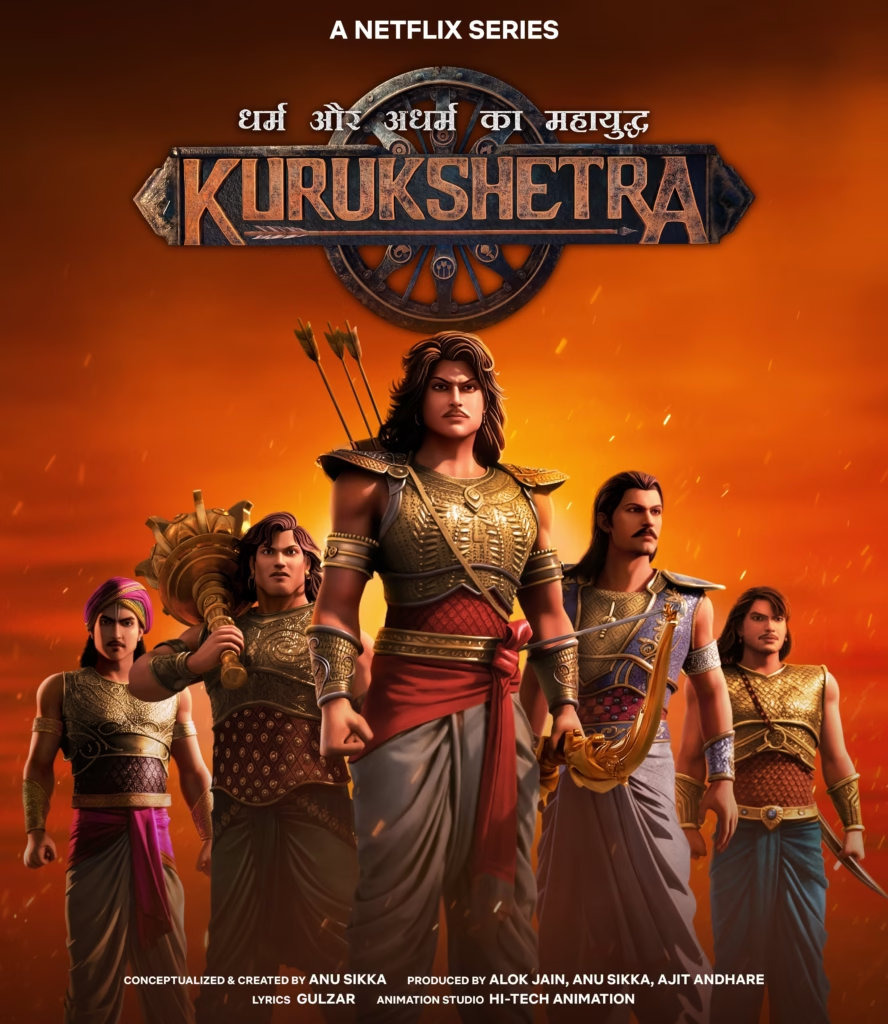
Kurukshetra Netflix proves that Indian streaming platforms are ready to invest in culturally significant animated content. With lessons learned from Part 1’s reception, Part 2 has the opportunity to refine what works and address acknowledged weaknesses, potentially delivering a more cohesive and emotionally resonant conclusion to this epic tale.
Read More: László Krasznahorkai Wins Nobel Prize in Literature 2025: Master of Apocalyptic Vision Honored
FAQs
Is Kurukshetra Netflix suitable for viewers unfamiliar with the Mahabharata?
The series works best for viewers with basic familiarity with the Mahabharata’s major characters and storyline. Newcomers might find the jumbled timelines confusing, though Gulzar’s narration helps clarify key concepts.
How many episodes are in Kurukshetra Netflix and when will Part 2 release?
Part 1 has 9 episodes (released October 10, 2025) with 9 more coming in Part 2. Netflix hasn’t announced Part 2’s release date, but speculation suggests late 2025 or 2026.
What languages is Kurukshetra Netflix available in?
The series is available in Hindi, Tamil, Telugu, Malayalam, and Kannada with multi-audio options, though Gulzar’s Hindi narration is the most impactful version.
How does Kurukshetra Netflix compare to previous Mahabharata adaptations?
It takes a different approach using animation and 18 warrior perspectives. While it features impressive battles and philosophical depth, it lacks the character development of classic adaptations like B.R. Chopra’s 1988 series.
Is Kurukshetra Netflix worth watching despite mixed reviews?
Yes, if you enjoy Indian mythology and Gulzar’s narration. However, those expecting Hollywood-quality animation may be disappointed. It’s best appreciated as an ambitious experimental project.

