

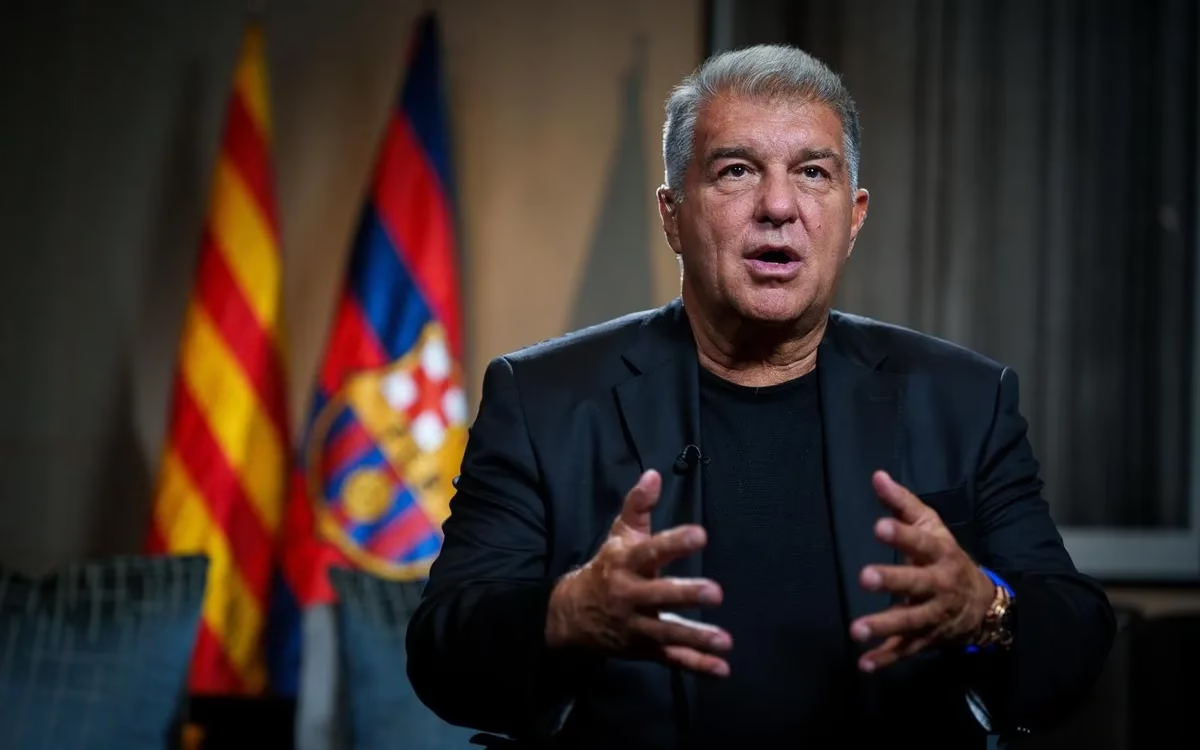

In a monumental shift that sends shockwaves through European football, Joan Laporta has confirmed Barcelona’s intention to abandon the controversial European Super League project and rebuild bridges with UEFA. The announcement represents a complete reversal from the Catalan club’s previous stance and leaves Real Madrid increasingly isolated in their pursuit of the breakaway competition.
The Historic Announcement
Speaking at multiple events this week, Joan Laporta made clear Barcelona’s new direction. “Barcelona are for the pacification of European football,” the club president stated during an interview with El Chiringuito de Jugones. “We want there to be an agreement and we go back to UEFA. This is what all the clubs want.”
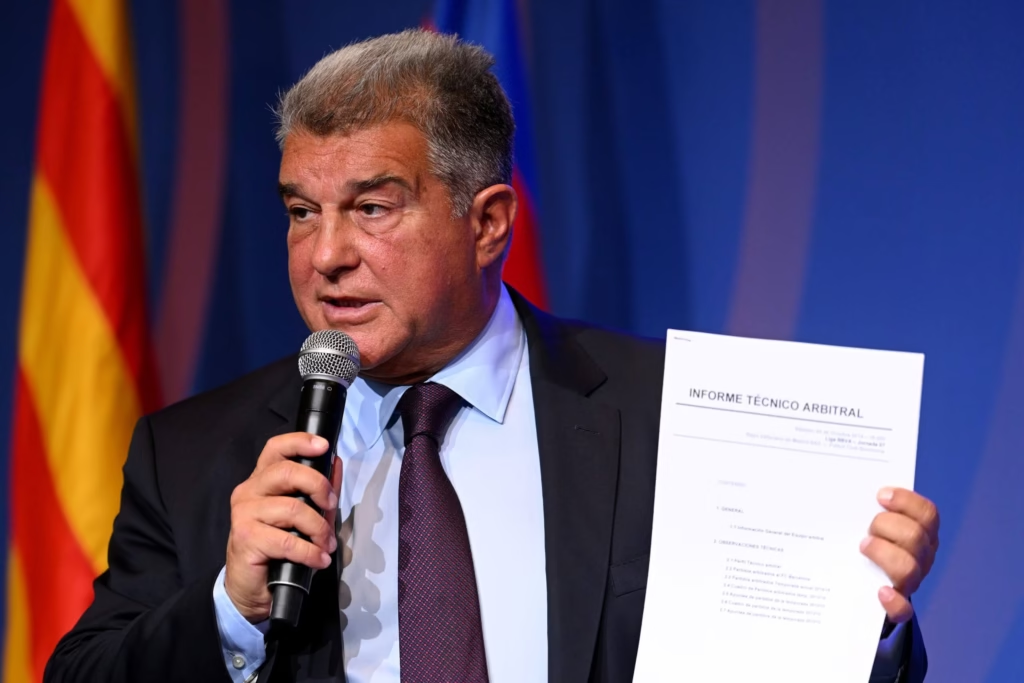
The declaration comes after Laporta attended the European Club Association General Assembly in Berlin, where he was personally welcomed by PSG president Nasser Al-Khelaifi, who chairs the organization. This public reconciliation marks a dramatic transformation from the hostility that characterized relations between Barcelona and European football’s governing bodies since 2021.
Laporta’s comments signal Barcelona’s readiness to rejoin the ECA (now rebranded as the European Football Clubs or EFC) and fully integrate back into UEFA’s ecosystem. “There is a very good relationship with Nasser,” Laporta confirmed, emphasizing the improved diplomatic ties that now exist between previously warring factions.
Understanding the Super League Saga
The 2021 Launch and Immediate Collapse
| Super League Timeline | Key Events |
|---|---|
| April 18, 2021 | 12 founding clubs announce breakaway league |
| April 20-21, 2021 | English clubs withdraw amid fan protests |
| April 2021 | Nine clubs abandon project completely |
| 2021-2023 | Barcelona, Real Madrid, Juventus continue support |
| December 2023 | European Court ruling on UEFA monopoly concerns |
| October 2025 | Laporta confirms Barcelona abandoning project |
The European Super League exploded onto the football landscape in April 2021 when twelve elite clubs announced their intention to form a breakaway competition. The founding members included six English clubs (Manchester United, Manchester City, Liverpool, Arsenal, Chelsea, Tottenham), three Spanish sides (Barcelona, Real Madrid, Atlético Madrid), and three Italian teams (Juventus, AC Milan, Inter Milan).
The reaction was immediate and ferocious. Fans across Europe, particularly in England, staged protests outside stadiums. Players, managers, and pundits condemned the proposal. Governments threatened intervention. Within 48 hours, the project began crumbling as English clubs withdrew under immense pressure.
By the end of April 2021, nine of the twelve founders had abandoned the Super League, leaving only Barcelona, Real Madrid, and Juventus standing firm. These three clubs faced potential UEFA sanctions, including possible two-year bans from European competitions, but Spanish courts intervened to prevent immediate disciplinary action.
The Core Controversy
The Super League aimed to replace UEFA’s Champions League with a closed competition where 15 founding members would have permanent places regardless of domestic league performance. Five additional teams would qualify each season, but the elite core would never face relegation or exclusion.
Critics viewed this as fundamentally undermining football’s meritocratic principles. Traditional football rewards sporting achievement—teams must earn their place in European competition through domestic success. The Super League threatened to create a permanent elite divorced from this foundational principle.
Financial motivations drove the project. Founding clubs sought greater control over broadcasting revenues and hoped to secure guaranteed participation in European football’s most lucrative competition. However, this financial security came at the cost of competitive integrity and fan sentiment.
Why Barcelona Is Changing Course
Financial and Political Pressures
| Factors Influencing Decision | Impact |
|---|---|
| UEFA relationship improvement | Access to Champions League secured |
| Fan sentiment | Strong opposition to closed competition |
| Socio member voting power | Democratic pressure from supporters |
| Financial stability needs | UEFA revenue streams essential |
| Isolation concerns | Real Madrid as only major ally remaining |
Barcelona’s shift stems from multiple converging factors. The club’s unique governance structure, where socio members hold voting rights, means public opinion carries genuine weight. Throughout the Super League saga, many Barcelona supporters expressed discomfort with the project despite initial club member approval.
Financial considerations also play a crucial role. Barcelona endured severe economic difficulties in recent years, requiring asset sales and salary reductions to comply with La Liga spending limits. The club needs UEFA competition revenues and cannot afford prolonged isolation from European football’s established structures.
Joan Laporta himself has emphasized pragmatism over ideology. While initially supporting reform of European competition, he recognized that continued Super League advocacy was becoming counterproductive. “We are committed to building bridges between the Super League and UEFA,” he explained, suggesting a desire for evolution rather than revolution.
Recent improvements in UEFA’s responsiveness to club concerns have also influenced Barcelona’s thinking. The European governing body has implemented changes to tournament formats and improved financial distributions, addressing some complaints that initially fueled Super League support.
The Diplomatic Reconciliation
Barcelona’s path back to UEFA’s embrace has involved careful diplomatic maneuvering. Laporta has met multiple times with UEFA president Aleksander Čeferin, gradually rebuilding trust destroyed by the Super League announcement.
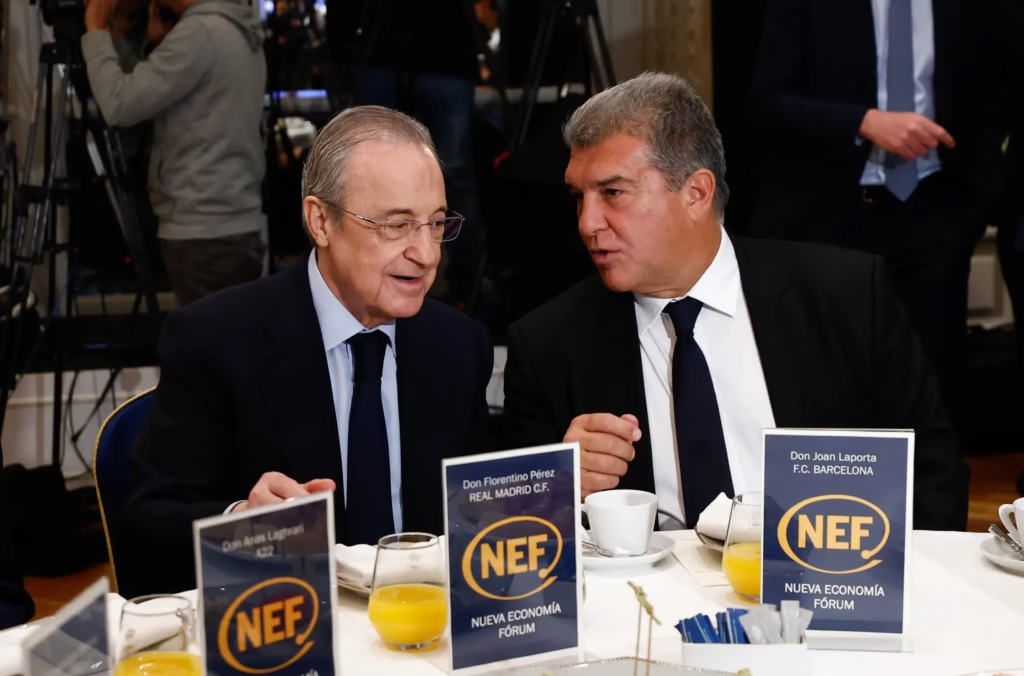
The relationship with Nasser Al-Khelaifi, who chairs the EFC and serves as PSG president, has transformed dramatically. Al-Khelaifi personally welcomed Laporta to the Berlin assembly, symbolizing Barcelona’s return to the European club community. This reconciliation required Barcelona to soften its stance on the Super League while UEFA demonstrated willingness to move past 2021’s acrimony.
Čeferin’s attendance at a Barcelona match at the Olympic Stadium further illustrated the warming relations. Such gestures of goodwill from both sides have created the political space necessary for Barcelona’s return to the established order.
Implications for European Football
Real Madrid’s Increasing Isolation
Barcelona’s withdrawal leaves Real Madrid as the Super League’s primary remaining advocate among Europe’s traditional elite. Los Blancos president Florentino Pérez has spearheaded the project from its inception and shows no signs of abandoning the cause.
Juventus, the third remaining holdout, appears less committed than previously. Barcelona’s departure increases pressure on the Italian giants to reconsider their position. Real Madrid may soon find itself virtually alone among major clubs in supporting the breakaway concept.
The Super League’s Uncertain Future
| Super League Status | Current Situation |
|---|---|
| Active supporters | Real Madrid (primary) |
| Former supporters abandoning | Barcelona (confirmed), possibly Juventus |
| English clubs position | Firmly committed to UEFA |
| Italian clubs position | AC Milan, Inter withdrawn |
| Spanish clubs position | Atlético Madrid withdrawn, Barcelona withdrawing |
| Competition viability | Severely compromised |
The European Court of Justice ruled in December 2023 that UEFA’s monopoly over European competitions could conflict with EU regulations. This legal victory for Super League proponents suggested the project might have a future. However, legal permission and practical viability are different matters.
Without Barcelona’s support, the Super League lacks critical mass. A competition without Manchester United, Liverpool, Bayern Munich, Barcelona, and most other European giants would struggle to attract broadcasters, sponsors, or fan interest at levels that justify its existence.
A22 Sports Management, the company formed to organize the Super League, has presented modified proposals attempting to address criticisms. These include more open qualification systems and free global broadcasting platforms. However, fundamental opposition from most major clubs renders these revisions largely academic.
Barcelona’s Immediate Priorities
With the Super League chapter closing, Barcelona can focus fully on immediate sporting and institutional challenges. The club is preparing for the revitalized Camp Nou’s completion, expected to provide a massive revenue boost once finished.
On the pitch, despite recent setbacks against PSG and Sevilla, Barcelona secured three major trophies last season and remains competitive across all competitions. Laporta emphasized perspective when addressing these defeats: “We have just won three important titles last season and we are on the verge of the Champions League.”
The club’s relationship with La Liga also requires attention. Barcelona’s conflict with La Liga president Javier Tebas over financial regulations has created ongoing tension. Tebas has welcomed Barcelona’s apparent Super League exit, stating he hopes Laporta “abandoned this project and became more involved in European projects.”
What This Means for Club Members
Barcelona’s socio members, who possess ultimate decision-making power through voting rights, will ultimately ratify any formal Super League withdrawal. Given widespread fan opposition to closed competitions and the desire to maintain Barcelona’s place within established European structures, member approval appears likely.
The socio model that makes Barcelona unique among elite clubs also created vulnerability to the Super League’s appeal. The club lacks a wealthy owner who can inject capital during financial difficulties. Guaranteed Super League revenues offered theoretical financial security, making the project initially attractive despite its controversial nature.
However, the same democratic structure ensures Barcelona must remain responsive to supporter sentiment. When members express clear preferences, even presidents with strong convictions must adjust course. Laporta’s announcement reflects this democratic accountability in action.
Looking Toward European Football’s Future
European football faces ongoing structural debates regardless of the Super League’s fate. Questions about competition format, revenue distribution, financial sustainability, and competitive balance persist. UEFA has implemented reforms, including the expanded Champions League format, but dissatisfaction remains among some clubs.
Barcelona’s return to UEFA doesn’t eliminate these underlying tensions. Instead, Laporta has indicated Barcelona will work within existing structures to advocate for continued evolution. “We feel very close to UEFA and the EFC,” he stated. “It is important that we are there and that we implement everything that can be improved.”
This approach represents compromise—accepting UEFA’s fundamental authority while seeking gradual reform rather than revolutionary disruption. Whether this satisfies all stakeholders remains uncertain, but it provides a framework for constructive dialogue replacing the confrontation that characterized recent years.
The Broader Context
Joan Laporta’s announcement represents more than one club changing position. It signals that European football’s traditional structures have survived their most serious challenge in generations. The Super League threatened to fundamentally restructure continental competition, potentially destroying national leagues and UEFA’s authority.
That threat has now largely dissipated. With Barcelona withdrawing, Real Madrid isolated, and widespread opposition remaining firm, the Super League lacks any realistic path to implementation in its originally proposed form. Football’s meritocratic principles, where sporting performance determines European competition access, have been preserved.
However, the forces that generated Super League support haven’t disappeared. Financial pressures on clubs, desire for competitive advantages, and concerns about sustainable business models persist. Future proposals for reforming European football will inevitably emerge, potentially causing new controversies.
For now, though, peace has broken out. Barcelona is returning to UEFA’s embrace. Real Madrid stands increasingly alone in supporting the breakaway dream. And European football continues within its established structures, weathered but intact after years of existential uncertainty.
Read More: Veteran Szczęsny Doesn’t Want to Play El Clásico, Hopes Joan García Returns
FAQs
Why did Joan Laporta decide to abandon the Super League?
Multiple factors influenced the decision, including improved UEFA relations, fan opposition to closed competitions, Barcelona’s financial needs for UEFA revenue, and the project’s lack of viability with only Real Madrid remaining as a major supporter.
When was the European Super League originally announced?
The Super League was announced on April 18, 2021, with twelve founding clubs. Within days, nine clubs withdrew after massive fan protests and pressure, leaving only Barcelona, Real Madrid, and Juventus supporting the project.
What happens to Real Madrid now that Barcelona is leaving?
Real Madrid becomes increasingly isolated as the primary remaining Super League advocate among major European clubs. President Florentino Pérez continues supporting the project, but its viability is severely compromised without broader club participation.
Will Barcelona rejoin the European Club Association?
Yes, Barcelona is moving toward rejoining the ECA (now called EFC – European Football Clubs). Joan Laporta attended their Berlin assembly and has confirmed plans to rebuild relationships with UEFA and the organization.
What was wrong with the Super League format?
Critics argued it undermined football’s meritocracy by guaranteeing 15 founding clubs permanent participation regardless of domestic performance, potentially destroying national leagues and creating a closed elite divorced from traditional competitive principles.

