

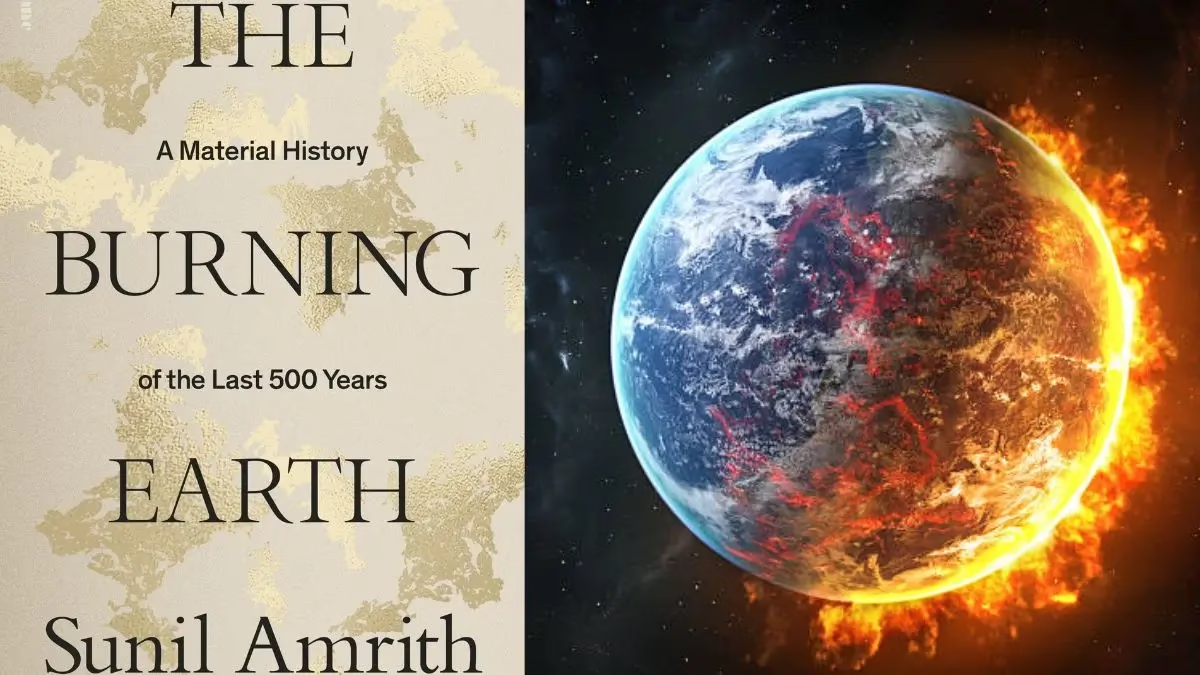

Yale University Professor Sunil Amrith has been awarded the 2025 British Academy Book Prize for his groundbreaking work The Burning Earth: An Environmental History of the Last 500 Years. The £25,000 award recognizes outstanding non-fiction books that deepen understanding of our world, cementing Amrith’s position as one of the world’s leading environmental historians.
Academy Book Prize Award Details: At a Glance
| Category | Details |
|---|---|
| Winner | Sunil Amrith |
| Book Title | The Burning Earth: An Environmental History of the Last 500 Years |
| Prize Amount | £25,000 (US$33,389) |
| Publisher | Penguin Random House / Allen Lane |
| Ceremony Date | October 22, 2025 |
| Ceremony Venue | British Academy, London |
| Author’s Current Position | Professor of History, Yale University |
| Previous Honor | MacArthur Fellowship (2017) |
Who is Sunil Amrith?
Amrith, 46, was born in Kenya to South Indian parents, grew up in Singapore, and graduated from the University of Cambridge in England. His diverse background has shaped his unique global perspective on environmental and migration histories. Currently serving as the Renu and Anand Dhawan Professor of History at Yale University, he also holds a position in the School of the Environment.
His previous accolades include the MacArthur “Genius” Fellowship in 2017, the 2024 Fukuoka Academic Prize, and the 2025 Toynbee Prize—demonstrating consistent recognition for his scholarly contributions.

What Makes ‘The Burning Earth’ Special?
The book is described as a magisterial account of the interconnections between human history and environmental transformation, vivid in detail and beautifully written. Spanning five centuries, it traces how colonization, industrialization, and shifting human settlement patterns have not only shaped the modern world but also fueled today’s climate crisis.
The narrative takes readers on an epic journey from the conquest of the Americas to British gold mining in South Africa, from the Black Death to World War II, revealing how environmental changes and human actions are inseparably linked.
Professor Rebecca Earle, chair of the judges, called it important reading for anyone seeking to understand the origins of today’s climate crisis, praising Amrith as a remarkable scholar whose global perspective reveals the bidirectional impact between environment and human history.
The Author’s Perspective
In his acceptance speech delivered via live video from the United States, Amrith addressed concerns about the book’s tone. While acknowledging the book details considerable harm and suffering—both human and environmental—he expressed hope that readers would find seeds of inspiration in the paths not taken throughout history.
“Perhaps we can find, in returning to those paths not taken, seeds of inspiration for a more hopeful and less violent way of living together on this planet,” Amrith reflected, emphasizing the importance of learning from history to shape a sustainable future.
The Shortlist: Other Outstanding Works
Each shortlisted author received £1,000 for their exceptional contributions:
- The Golden Road: How Ancient India Transformed the World by William Dalrymple
- The Baton and The Cross: Russia’s Church from Pagans to Putin by Lucy Ash
- Africonomics: A History of Western Ignorance by Bronwen Everill
- Sick of It: The Global Fight for Women’s Health by Sophie Harman
- Sound Tracks: A Musical Detective Story by Graeme Lawson

Why This Award Matters
British Academy President Susan J. Smith praised the combination of evidence-informed insight, well-honed ideas, and great writing, highlighting how the prize celebrates scholarship that is both academically rigorous and accessible to general readers.
At a time when climate change dominates global discourse, Amrith’s work provides crucial historical context, showing that environmental crises are not sudden phenomena but the result of centuries of human decisions. His interdisciplinary approach bridges history, environmental science, and social studies—offering lessons that policymakers, activists, and citizens can apply today.
For more insights on environmental issues and climate change and academic achievements by Indian-origin scholars, visit TechnoSports.
Frequently Asked Questions
Q1: What is the British Academy Book Prize and who can win it?
The British Academy Book Prize is a £25,000 annual award that celebrates outstanding non-fiction books deepening understanding of our world. Founded in 2013, it honors exceptional works in humanities and social sciences. Authors of any nationality can compete as long as their books are published in English in the UK between April 1 and March 31 of the award year. The prize recognizes research-driven writing that is both academically rigorous and accessible to general audiences.
Q2: What topics does ‘The Burning Earth’ cover and why is it relevant today?
The book spans continents and centuries, from the conquest of the Americas to British gold mining in South Africa, from the Black Death to the Second World War, offering a new perspective on humanity’s impact on the planet. It reveals how colonization, industrialization, and human settlement patterns have shaped the modern world while fueling the climate crisis. The book is particularly relevant because it provides historical context for understanding today’s environmental challenges, showing how past decisions continue to impact present realities.

