



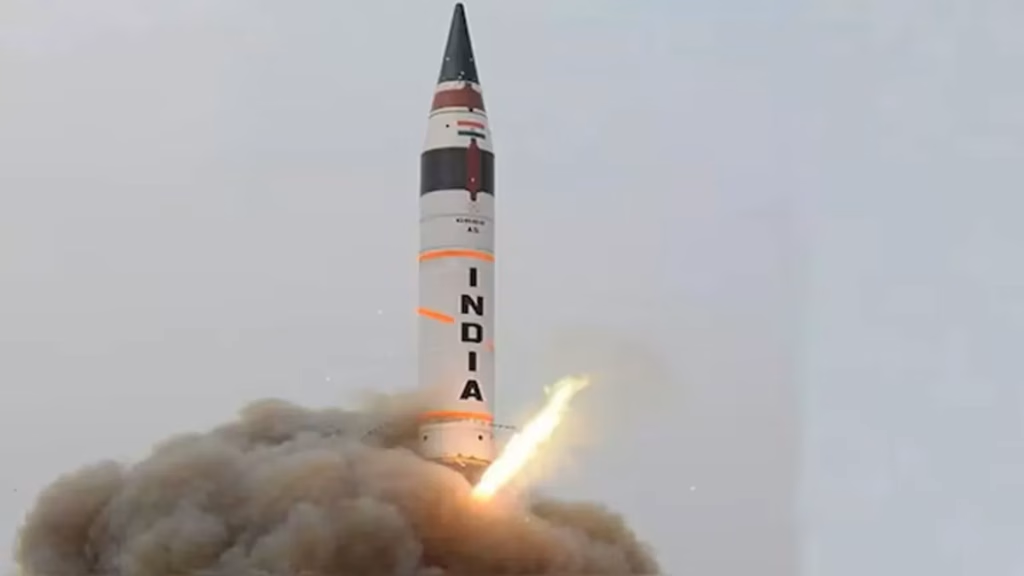
India’s Defense Research and Development Organisation (DRDO) is preparing to test its new hypersonic missile, Dhvani, by December 2025, marking a significant leap in the country’s strategic defense capabilities. Designed to travel at speeds exceeding Mach 5 (over 7,400 km/h), Dhvani poses challenges that current defense systems like Iron Dome or THAAD struggle to counter.
Hypersonic Speed Advantage
Dhvani’s defining characteristic is its extreme velocity—anything above Mach 5 qualifies as hypersonic. At these speeds, missiles become extraordinarily difficult to intercept because they provide minimal reaction time for defensive systems. The combination of speed and maneuverability makes hypersonic weapons a game-changer in modern warfare, explaining why major military powers are racing to develop them.
The missile builds upon DRDO’s earlier research and employs advanced scramjet engines. Recent scramjet tests achieved record-breaking sustained flight durations, demonstrating India’s growing mastery of this complex propulsion technology that enables hypersonic speeds.
| Specification | Details |
|---|---|
| Name | Dhvani |
| Developer | DRDO (India) |
| Speed | Above Mach 5 (7,400+ km/h) |
| Engine Type | Advanced scramjet |
| Test Timeline | End of 2025 |
| Comparison | Potentially more powerful than BrahMos |
Beyond BrahMos Capabilities
DRDO officials indicate Dhvani could surpass the capabilities of BrahMos, India’s supersonic cruise missile jointly developed with Russia. BrahMos travels at Mach 2.8-3.0, making it one of the world’s fastest cruise missiles. Dhvani’s hypersonic speeds would nearly double that velocity, providing even greater penetration capabilities against advanced air defense networks.
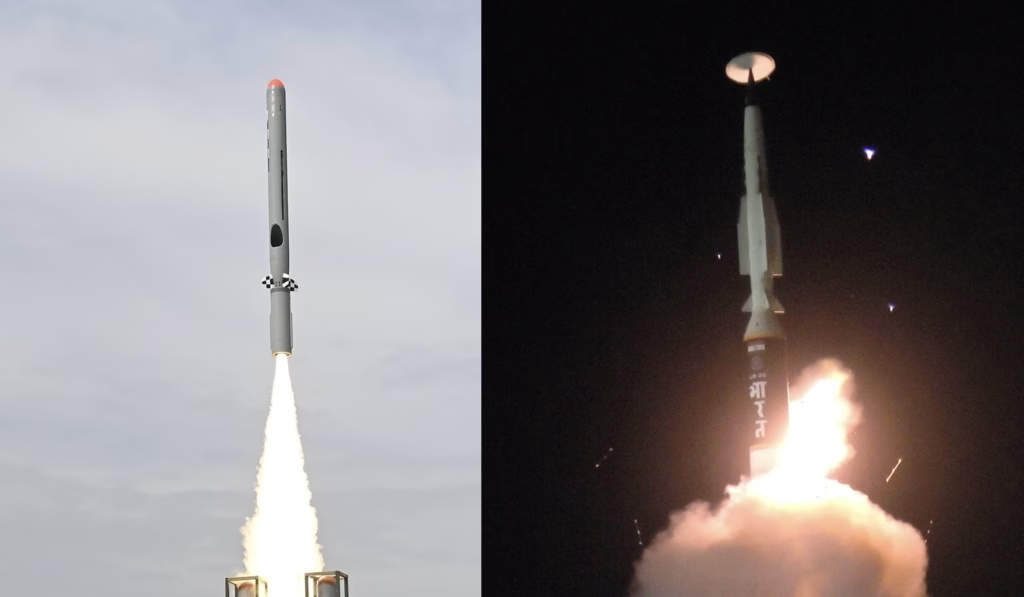
This technological advancement positions India in an exclusive club alongside the United States, Russia, and China—the only nations currently operating or actively testing hypersonic weapons systems. Entry into this elite group demonstrates India’s growing indigenous defense technology prowess.
Learn more about India’s defense innovations and explore additional technology coverage at Tech2Sports.
Strategic Regional Impact
Successful Dhvani testing would significantly enhance India’s security posture in South Asia and the Indo-Pacific region. Hypersonic missiles provide credible deterrence against potential adversaries while showcasing technological sophistication that strengthens diplomatic positioning.
The missile’s ability to evade existing defense systems creates strategic advantages in any potential conflict scenario. Defense analysts suggest Dhvani represents not just a weapons system but a statement of India’s commitment to maintaining technological parity with regional rivals.
Scramjet Technology Breakthrough
The advanced scramjet (supersonic combustion ramjet) engine powering Dhvani represents years of DRDO research. Unlike conventional rocket engines, scramjets compress incoming air at supersonic speeds without slowing it down, enabling sustained hypersonic flight with greater fuel efficiency.
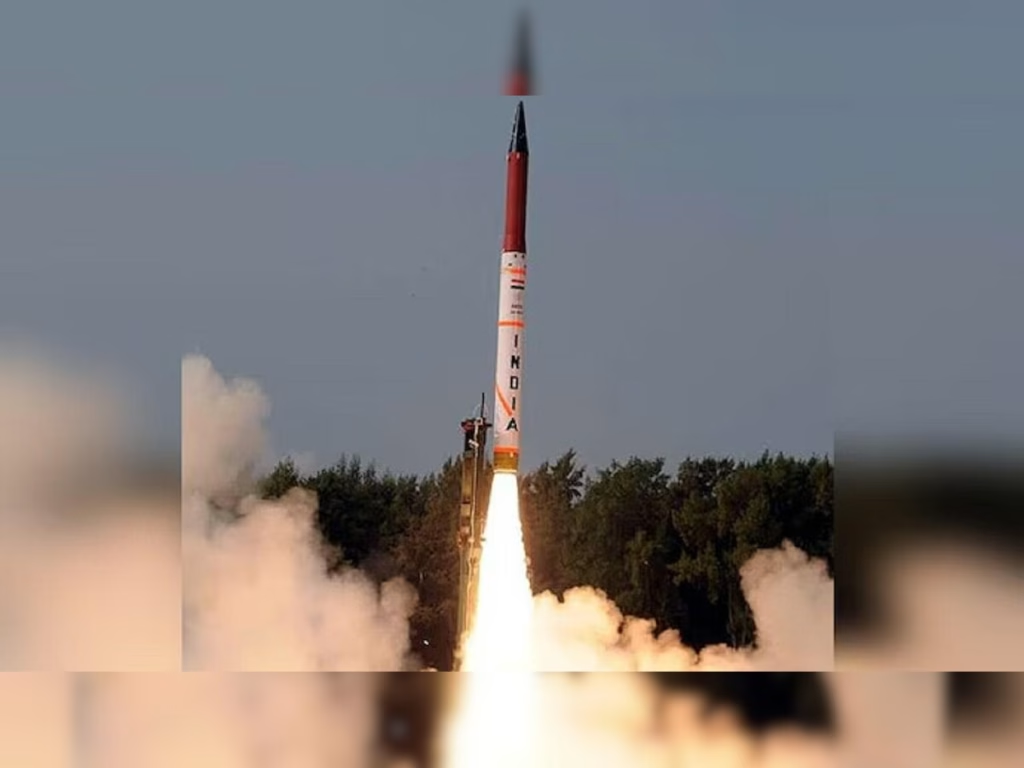
Recent successful scramjet tests achieving record sustained flight demonstrate India solved critical engineering challenges that long plagued hypersonic development. This technological maturity suggests Dhvani’s upcoming tests have strong chances of success.
If year-end 2025 testing proceeds as planned, India will cement its position as a hypersonic-capable nation, fundamentally altering regional military calculations and defense architecture for years to come.
FAQs
What makes Dhvani different from BrahMos?
Dhvani travels above Mach 5 (hypersonic) versus BrahMos’s Mach 2.8-3.0 (supersonic), making it nearly twice as fast.
When will India test the Dhvani hypersonic missile?
DRDO plans to conduct Dhvani tests by the end of 2025, likely in November or December.

