

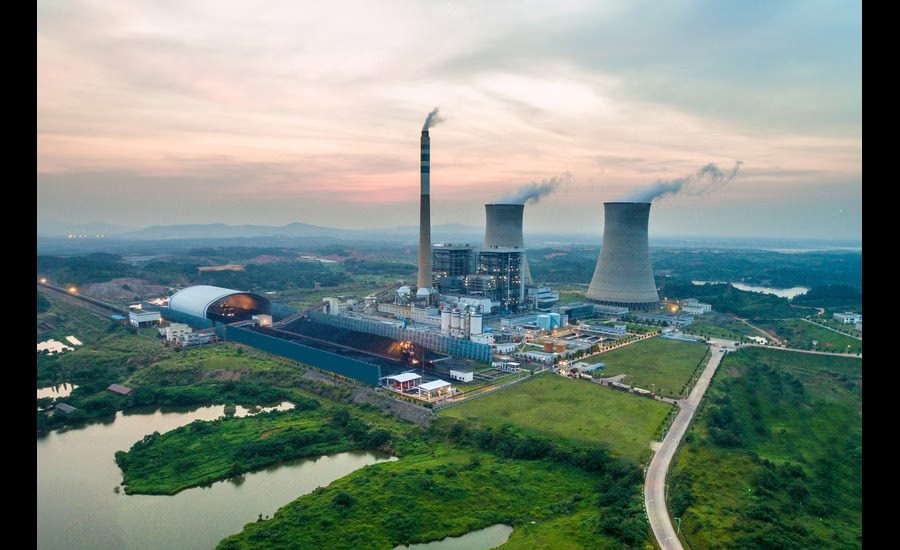

India is making a groundbreaking leap in nuclear technology by developing compact 200 MW nuclear power reactors that can be deployed on commercial ships. Scientists at the Bhabha Atomic Research Centre (BARC) are working on two reactor designs—55 MW and 200 MW—that can be installed on merchant navy vessels and at captive power plants for energy-intensive industries like cement manufacturing. This development marks a significant shift in India’s nuclear energy strategy and maritime capabilities.

India Develops Nuclear Reactors to Power Ships
These Bharat Small Modular Reactors (BSMR) are designed to be compact, safe, and flexible, allowing deployment wherever energy is needed—including on ships. A senior official explained that nuclear fission creates heat that leads to electricity production, and the reactor can be placed anywhere, even on a ship. Officials emphasized the reactors’ safety but sidestepped questions about their potential use in nuclear submarines.
| India’s Nuclear Reactor Project | Details |
|---|---|
| Reactor Capacities | 55 MW and 200 MW |
| Developing Agency | Bhabha Atomic Research Centre (BARC) |
| Reactor Type | Bharat Small Modular Reactors (BSMR) |
| Primary Use | Commercial ships, industrial captive plants |
| Current Submarine Reactors | 83 MW (INS Arihant, INS Arighaat) |
| Future Capacity Target | 100 GW by 2047 (from current 8.8 GW) |
| Policy Changes | Amendments to Atomic Energy Act, 1962 |
Strategic Implications and Industrial Applications
The BSMR project could revolutionize energy-intensive industries by providing constant, clean power without dependence on fossil fuels. Unlike solar or wind energy, nuclear power offers uninterrupted base-load electricity regardless of weather conditions. These compact reactors can be built faster, transported easily, and deployed in remote regions, islands, or industrial sites where conventional grid connectivity is challenging.
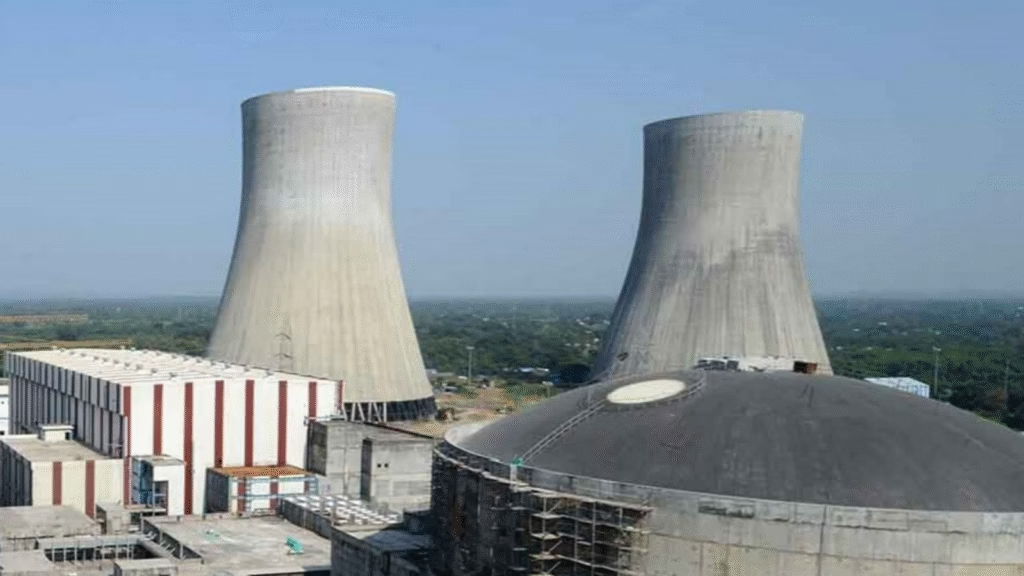
Currently, India operates two home-built nuclear submarines—INS Arihant and INS Arighaat—powered by 83 MW reactors, with a third submarine, INS Aridhaman, undergoing trials. The new 200 MW reactors represent a substantial upgrade in capacity and versatility.
Opening Nuclear Sector to Private Players
The government has announced amendments to the Atomic Energy Act (AEA), 1962, allowing private sector participation in civil nuclear operations. Private companies may soon operate nuclear power plants, manage the nuclear fuel cycle, and even procure fuel from foreign countries with provisions to return spent fuel to the country of origin.
Amendments to the Civil Liability for Nuclear Damage Act (CLND) aim to cap supplier liability for nuclear equipment as defined in contracts, making the sector more attractive for private investment.
Achieving 100 GW Nuclear Capacity by 2047
Prime Minister Narendra Modi has set an ambitious target of achieving 100 GW nuclear power capacity by 2047, a massive jump from the current 8.8 GW. Small modular reactors will play a pivotal role in this expansion, offering scalable solutions for industries, ports, data centers, and maritime operations.
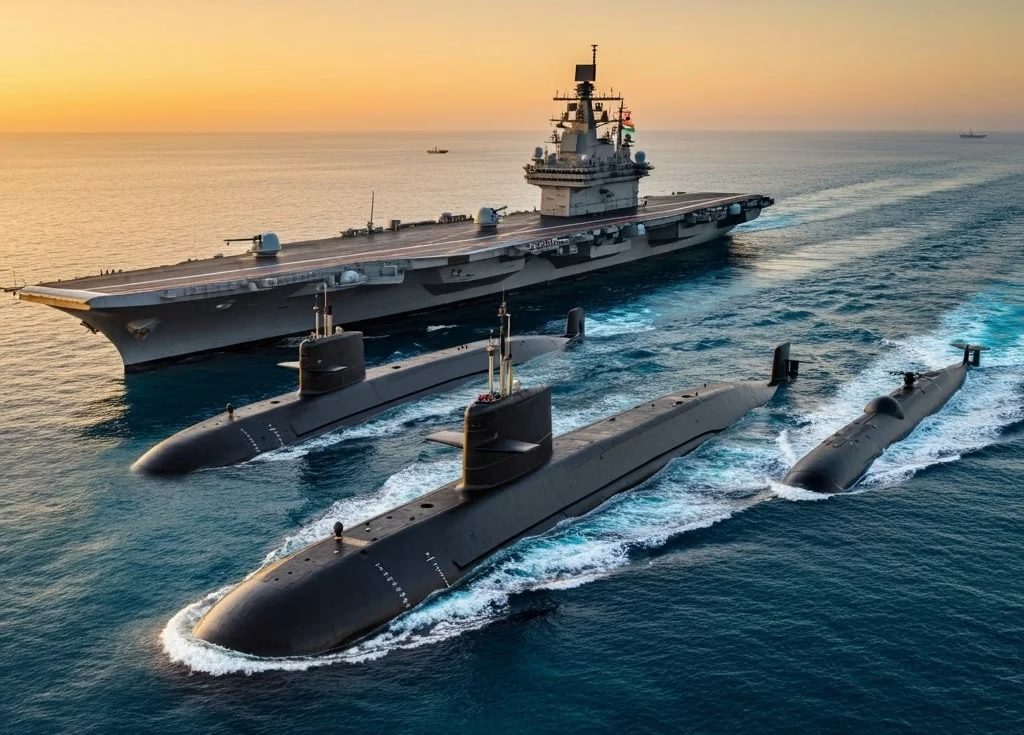
The BSMR project represents India’s strategic convergence of technology, energy independence, and maritime advancement. If successfully commercialized, these reactors could drastically reduce operational costs and emissions for merchant navy ships while providing flexible power solutions across diverse applications. Learn more about India’s nuclear program at Department of Atomic Energy’s official site and explore additional technology news on Tech2sports.
FAQs
What capacity nuclear reactors is India developing for ships?
India is developing 55 MW and 200 MW Bharat Small Modular Reactors (BSMR) for commercial ships and industrial use.
When does India plan to achieve 100 GW nuclear capacity?
Prime Minister Modi has set a target of 100 GW nuclear power capacity by 2047, up from the current 8.8 GW.

