

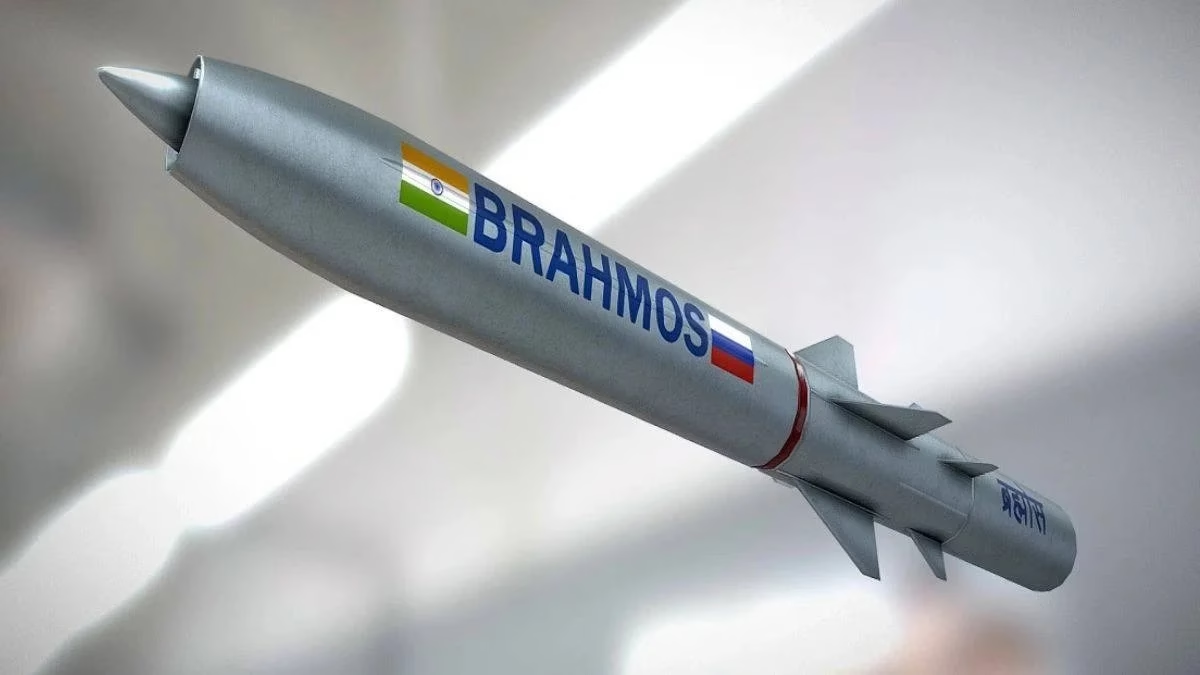

India is accelerating development of an extended-range BrahMos supersonic cruise missile capable of striking targets up to 800 kilometers away, significantly enhancing the nation’s conventional strike capabilities. The Defence Research and Development Organisation (DRDO) has confirmed ongoing trials with a modified ramjet engine, targeting full operational readiness by late 2027. This development represents nearly a threefold increase over the missile’s original 290-kilometer range.
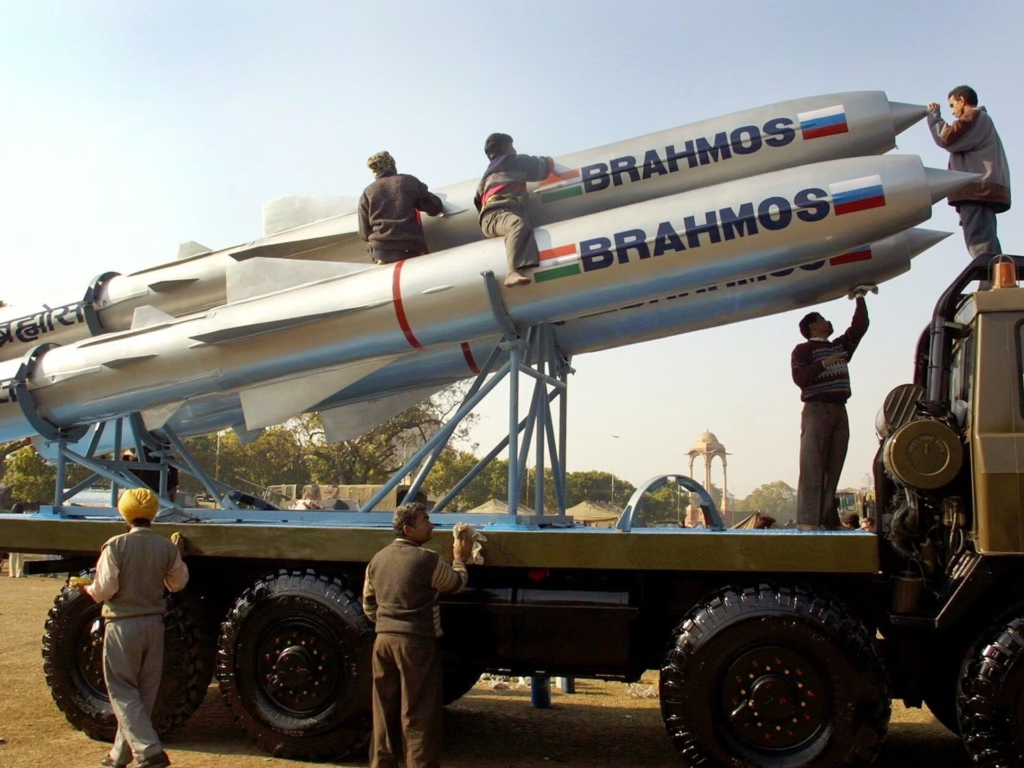
India’s 800 KM BrahMos Missile Development
The upgraded BrahMos features significant technological enhancements including a modified ramjet engine for extended range, hybrid INS-GNSS navigation for sub-meter accuracy, and indigenous active radar seekers developed by Data Patterns. Defense sources indicate the missile is “more or less developed” with only a few additional tests required to validate its navigation systems’ resilience against GPS jamming—a tactic increasingly employed by regional adversaries.
| BrahMos 800 KM Details | Information |
|---|---|
| Extended Range | 800 kilometers |
| Speed | Mach 2.8 to 3.0 (supersonic) |
| Original Range | 290 km (MTCR-restricted) |
| Current Operational Range | 450 km |
| Expected Readiness | End of 2027 |
| Engine Type | Modified ramjet |
| Navigation | Hybrid INS-GNSS system |
| Platform Compatibility | Land, air, naval launch |
Combat-Proven Effectiveness
The BrahMos demonstrated its lethal capabilities during Operation Sindoor in May 2025, following the Pahalgam terror attack. The Indian Air Force deployed approximately 15 BrahMos missiles from Sukhoi-30MKI fighters, targeting nine terrorist camps deep inside Pakistan and Pakistan-occupied Kashmir. The operation eliminated over 100 militants and destroyed critical infrastructure belonging to Jaish-e-Mohammed and Lashkar-e-Taiba with what Defense Minister Rajnath Singh praised as “pinpoint accuracy.”
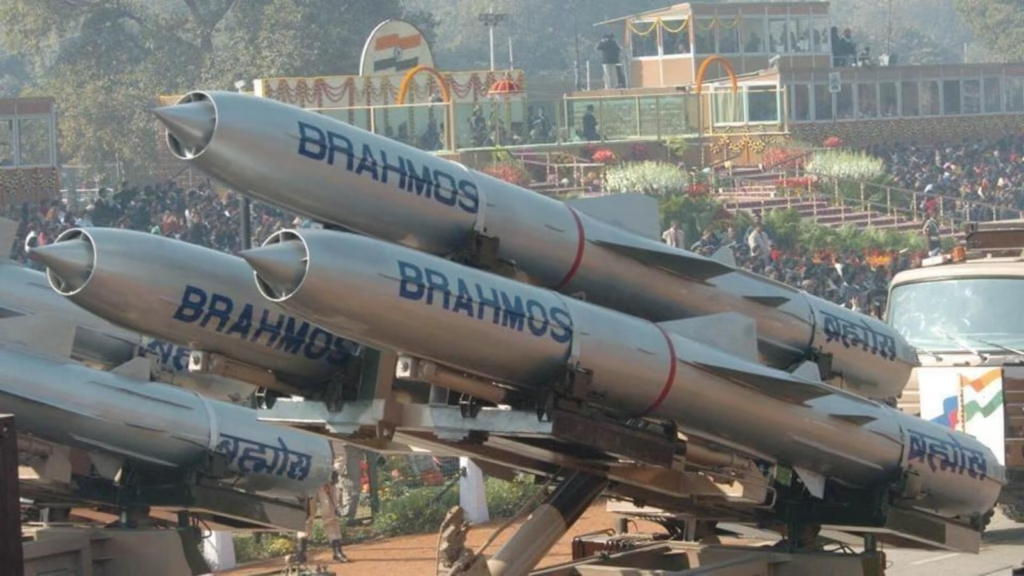
The missile’s Mach 3 speed proved nearly impossible to intercept, overwhelming Chinese-supplied HQ-9 missile batteries and YLC-18 radars deployed by Pakistan. Military experts emphasize that by the time enemy radar detects a BrahMos launch, the strike is typically already complete—providing virtually no reaction time for adversaries.
Strategic Implications and Deployment Plans
The 800-kilometer range places virtually every strategic target in Pakistan within reach, while also extending India’s maritime strike capabilities in the Indian Ocean Region. For the Indian Army, this means the ability to target assets deep within Chinese-occupied Tibet from safer positions. The Indian Navy has already ordered 220 BrahMos missiles including extended-range variants, while the Army is procuring two additional regiments with approximately 100 missiles each.
The Air Force plans to modify 20 additional Su-30MKI fighters to carry the 800-km variant, bringing the total equipped fleet to 60 aircraft. Existing 450-km range missiles already in service can potentially be retrofitted to the extended range through software updates and fire-control modifications.
Indigenous Manufacturing Push
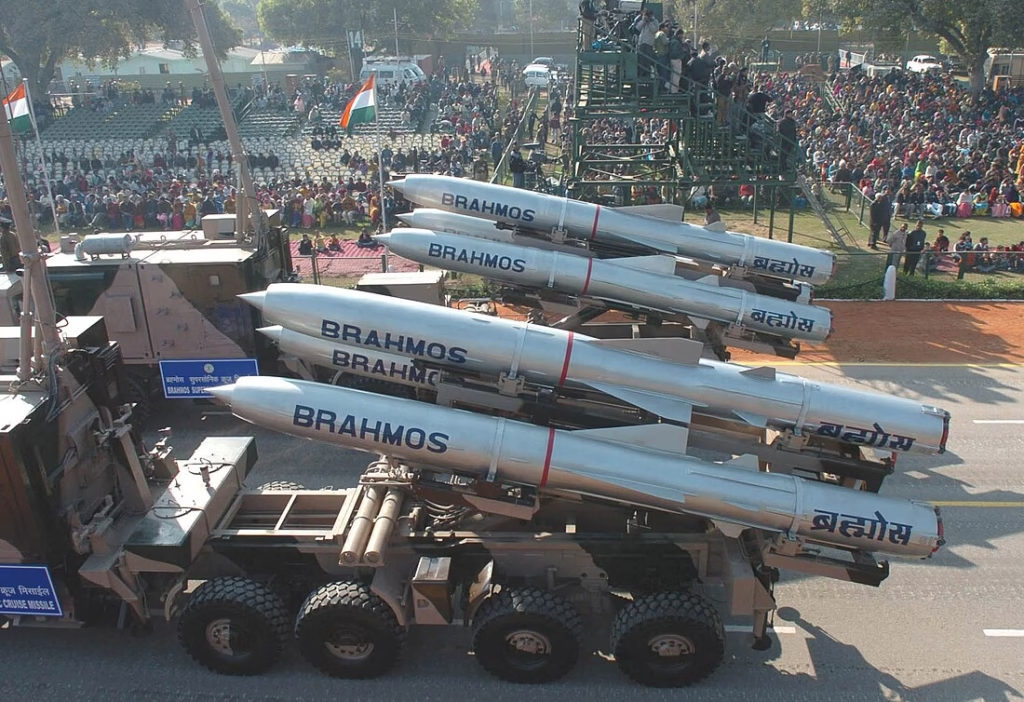
The development aligns with India’s “Make in India” initiative, incorporating domestically developed components including active radar seekers and specialized fuel stable at temperatures down to -50°C. The newly completed BrahMos Aerospace Integration and Testing Facility in Lucknow, built at a cost of ₹300 crore, will support production and testing of the 800-km variant alongside the next-generation BrahMos-NG missile.
India’s entry into the Missile Technology Control Regime (MTCR) in 2016 lifted previous range restrictions, enabling BrahMos Aerospace to progressively extend the missile’s capabilities from 290 km to 450 km and now to 800 km. With successful testing already completed in the Bay of Bengal, India has firmly positioned itself among global leaders in precision conventional strike capabilities. Learn more at BrahMos Aerospace’s official website and explore additional defense coverage on Technosports.
FAQs
When will the 800 km BrahMos be operational?
The extended-range BrahMos is expected to achieve full operational readiness by the end of 2027 after completing final trials.
What makes the BrahMos difficult to intercept?
Its Mach 2.8-3.0 supersonic speed, low radar cross-section, and “fire-and-forget” capability give adversaries almost no reaction time.

