



The biblical drama House of David delivered another gripping episode on October 12, 2025, streaming on Wonder Project via Amazon Prime Video. As King Saul’s paranoia intensifies and David’s influence grows, Episode 3 answered a burning question that’s been haunting fans: What happened to Besai the priestess? The answer is heartbreaking—and sets the stage for explosive consequences.
House of David Answer: Besai’s Tragic Death
Yes, Besai dies by the episode’s end—but not in the way viewers might expect. While commander Abner spares her life and tells her to leave Israel permanently, Joab secretly executes her from behind as she walks away. This brutal act, orchestrated by Queen Ahinoam to cover her past manipulation of religious law, creates a web of dangerous loyalties and secrets that will reshape the court.

Key Plot Developments at a Glance
| Major Event | Key Players | Consequences |
|---|---|---|
| Besai’s execution | Ahinoam, Abner, Joab | Creates two new threats to the queen |
| Royal caravan ambush | Black-robed raiders, Eshbaal, Jonathan | Dinah loses family, forced marriage inevitable |
| David’s marriage plea | David, Saul, Mirab, Mychal | Wedding postponed, sisters turn against each other |
| Adriel’s revelation | Adriel, Saul | Hints at Samuel’s anointing prophecy |
The Besai Conspiracy Unravels
Queen Ahinoam’s decision to eliminate Besai stems from a devastating secret: the priestess helped Ahinoam tamper with religious law using Saul’s thumbprint while he was ill. When this deception threatens to surface, Ahinoam orders Besai’s death to protect herself.
Commander Abner receives the execution order but finds his conscience won’t allow it. He spares Besai, instructing her to permanently leave Israel. However, Joab—silently positioned as backup—delivers the fatal blow when Besai believes she’s walking toward freedom. This twist reveals how the House of David court operates: not through law, but through whispers and knives.
The irony is brutal. Ahinoam believed eliminating Besai would erase one threat, but she’s actually created two: Abner now knows her murderous intent, and Joab’s silence binds him closer to the queen’s dark secrets. This power dynamic shift will undoubtedly fuel future conflicts.
The Mysterious Ambush Changes Everything
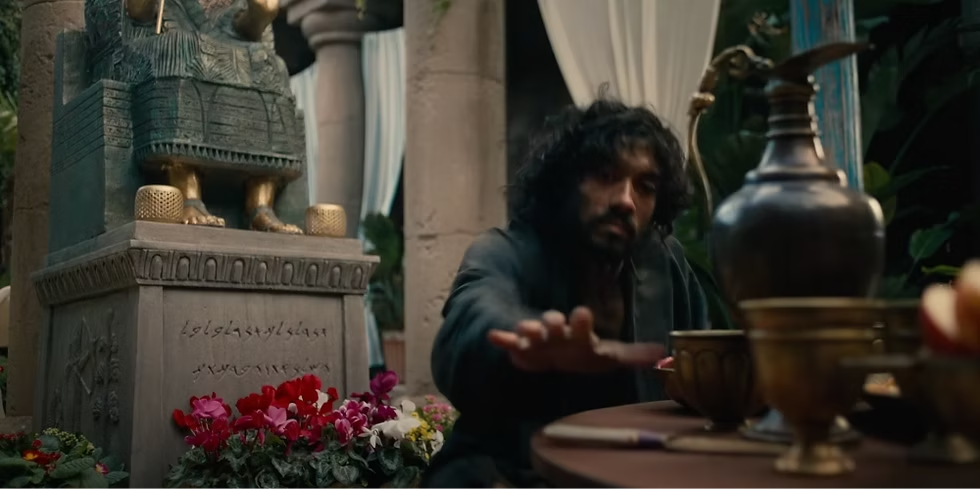
On the road from Daan, where Eshbaal traveled to marry Dinah and repair his scandal, black-robed raiders assault the royal caravan. The attack nearly kills Prince Jonathan before David intervenes heroically. The hour strongly suggests these attackers are the same hooded group that previously took Eshbaal captive.
This wasn’t random violence—it was targeted pressure with devastating results. Dinah loses her entire family in the attack, with father Yahir and kin slain. Her path now narrows toward a marriage that looks like rescue but feels like coercion. For those following biblical drama adaptations, this episode showcases how ancient political maneuvering remains chillingly relevant.
The ambush serves multiple purposes: it chains Dinah to the palace, transforms Eshbaal into a public “savior” while hiding his past rejection, and gives Saul a new mystery to investigate. Whether Eshbaal anticipated this storm remains unclear, but the outcome decidedly favors him.
Sisterhood Shattered Over David
King Saul carelessly reveals to Mychal that her sister Mirab requested to marry David. This revelation explodes into confrontation—Mychal slaps Mirab and later pointedly observes her “spilling wine while pouring,” symbolizing her desire for “more than her share.”
David himself pleads with Saul, insisting he was meant for Mychal, not Mirab. The king refuses to reverse course, reminding David that he transformed a shepherd into a commander and royal family member—gratitude, not demands, is expected. Cornered, David accepts Mirab but begs for a delay “so hearts can adjust.” Saul agrees to postpone.
This calculated patience from David reveals his strategic brilliance. Rather than revolt, he bends—temporarily. The sisterly rift becomes another fracture that enemies inside the palace can exploit.
Adriel’s Dangerous Prophecy Hint
Perhaps the episode’s most ominous moment comes when turncoat Adriel of Judah returns. Using the prophet Samuel’s visit to a Bethlehem house as evidence, he claims to know who Samuel anointed as Israel’s next king. The name remains unspoken, but the implication is explosive.
According to Amazon Prime Video’s official synopsis, this biblical epic explores the price of power and prophecy. Adriel’s hint sets up a future confrontation that will force Saul to face his greatest fear: being replaced.
Saul’s Reckoning and Kazia’s Rise
King Saul discovers through maidservant Kazia that Ahinoam manipulated religious law using his thumbprint during illness. His response? Confine the queen to the palace and elevate Kazia as the family’s escort to the tabernacle.
Saul demands no more secrets, but Besai’s death proves the cover-up persists. For fans tracking historical drama developments, this power shift from queen to maidservant demonstrates how quickly fortunes can reverse in royal courts.
Why This Episode Matters
Episode 3 expertly weaves multiple storylines into a tapestry of betrayal, ambition, and survival. Private errors cascade into public conflicts, and every character operates in moral grey areas. There are no pure heroes here—just people making impossible choices in desperate circumstances.
The episode confirms that in this world, silence is as deadly as speech, mercy can be a death sentence, and prophecy hangs over everyone like a sword waiting to fall.
Frequently Asked Questions
Q: Why did Joab kill Besai even after Abner spared her life?
Joab acted on Queen Ahinoam’s original execution order, serving as a secret backup when Abner’s conscience prevented him from killing Besai. By eliminating the priestess who knew about Ahinoam’s manipulation of religious law, Joab both protected the queen’s secret and bound himself to her through shared guilt. This murder creates dangerous new dynamics in the court, as Abner now knows about Ahinoam’s murderous intentions while Joab’s silence makes him complicit and therefore more loyal to the queen.
Q: Who were the black-robed raiders that ambushed the royal caravan?
The episode strongly suggests these attackers are the same hooded group that previously held Eshbaal captive, though their identity isn’t explicitly confirmed. The ambush appears to be targeted rather than random, serving multiple political purposes: it eliminates Dinah’s family (forcing her into marriage with Eshbaal), transforms Eshbaal into a heroic figure, and creates a new mystery for King Saul to investigate. Whether Eshbaal had foreknowledge of the attack remains ambiguous, but the outcome significantly benefits his position in the court.

