


MediaTek is shaking up the flagship chipset market with aggressive pricing for its Dimensity 9500 processor. The new chipset is expected to cost smartphone manufacturers between $180-$200 per unit, making it significantly cheaper than Qualcomm’s Snapdragon 8 Elite Gen 5, which costs around $280 per unit. This creates a price difference of more than 50 percent, potentially reshaping the premium smartphone landscape.
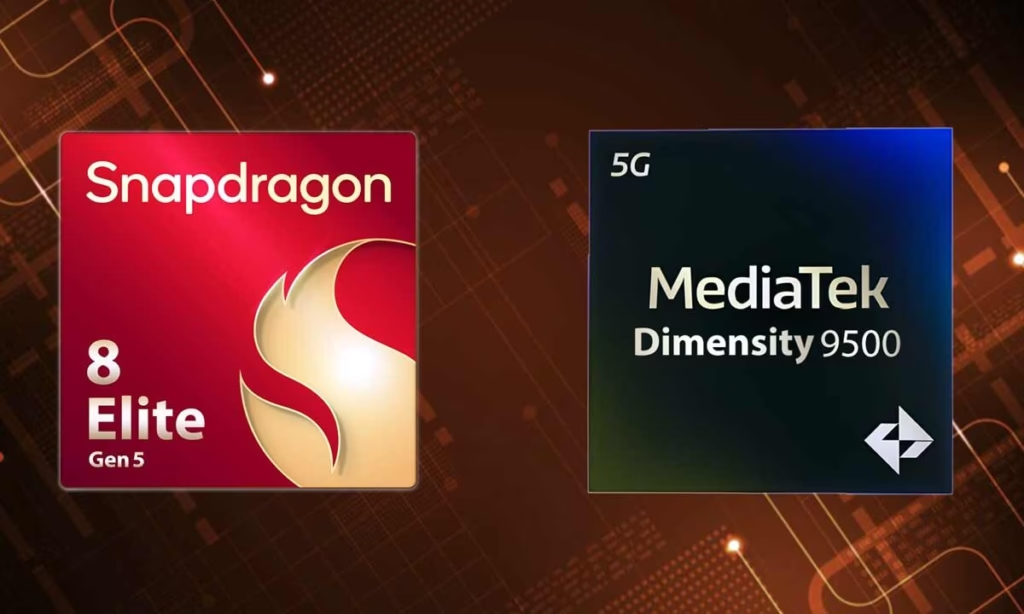
Dimensity 9500 vs Snapdragon 8 Elite Gen 5: Price Comparison
MediaTek’s upcoming Dimensity 9500 will be significantly cheaper than Qualcomm’s Snapdragon 8 Elite Gen 5, with unit pricing expected to range between $180 and $200, while Qualcomm’s latest premium SoC reportedly costs smartphone manufacturers as much as $280 per unit.
Pricing Breakdown Table
| Chipset | Price Per Unit | Manufacturing Process | CPU Architecture |
|---|---|---|---|
| Dimensity 9500 | $180-$200 | TSMC 3nm N3P | ARM Reference Cores |
| Snapdragon 8 Elite Gen 5 | $280 | TSMC 3nm N3P | Custom Oryon Cores |
| Price Difference | 50-55% cheaper | Same | Different |
Why Is Dimensity 9500 Cheaper?
The reason behind MediaTek’s lower pricing lies in its design approach, as the Dimensity 9500 continues to use ARM’s CPU and GPU reference designs, while Qualcomm has transitioned to using its in-house Oryon cores developed after acquiring Nuvia for $1.4 billion.
Qualcomm’s substantial investment in custom architecture development aims to compete directly with Apple’s silicon, but this innovation comes at a cost that’s ultimately passed on to smartphone manufacturers. MediaTek’s strategy of sticking with ARM’s proven designs helps keep expenses under control, making it an attractive option for brands focused on profit margins.
Performance Trade-offs
While the pricing advantage is clear, there are performance considerations. Benchmark data shared through Geekbench 6 comparisons shows that the Dimensity 9500 lags behind both the Snapdragon 8 Elite Gen 5 and Apple’s A19 Pro, revealing weaker multi-core performance and lower power efficiency, even though the chip is produced on TSMC’s advanced 3nm N3P process.
Despite using the same advanced manufacturing process, the Dimensity 9500 shows higher temperatures during gaming sessions compared to devices powered by Qualcomm’s latest chipset. The OnePlus 15, equipped with the Snapdragon 8 Elite Gen 5, demonstrates improved sustained performance and better thermal management.
Impact on Smartphone Market
MediaTek’s pricing strategy will likely appeal to smartphone brands that focus on value and profit margins over peak performance, with the company’s affordable pricing making it an attractive alternative, particularly for manufacturers looking to balance cost and capability in premium mid-range or flagship models.
For smartphone makers, the Dimensity 9500 offers an opportunity to either increase profit margins or create more competitively priced flagship devices. This pricing flexibility could lead to more affordable premium smartphones in 2026, especially in markets where value proposition matters more than benchmark supremacy.
Future Outlook
Looking ahead, MediaTek may need to reconsider its long-term approach, as Qualcomm and Apple continue advancing custom silicon development, and the gap in performance and efficiency could widen. For MediaTek to remain competitive in the top-tier segment long-term, developing custom cores might become necessary.
Both chipsets are expected to launch in September 2025, with devices hitting the market shortly after. For consumers, this means more choice between flagship performance from Qualcomm or value-oriented performance from MediaTek at potentially lower price points.
For more smartphone chipset updates, visit Tech2Sports for the latest tech news and analysis.
FAQs
How much cheaper is Dimensity 9500 compared to Snapdragon 8 Elite Gen 5?
The Dimensity 9500 costs $180-$200 per unit, making it 50-55% cheaper than Snapdragon 8 Elite Gen 5’s $280 price tag.
Which chipset offers better performance, Dimensity 9500 or Snapdragon 8 Elite Gen 5?
Snapdragon 8 Elite Gen 5 delivers superior multi-core performance and better thermal management despite both using TSMC’s 3nm process.

