

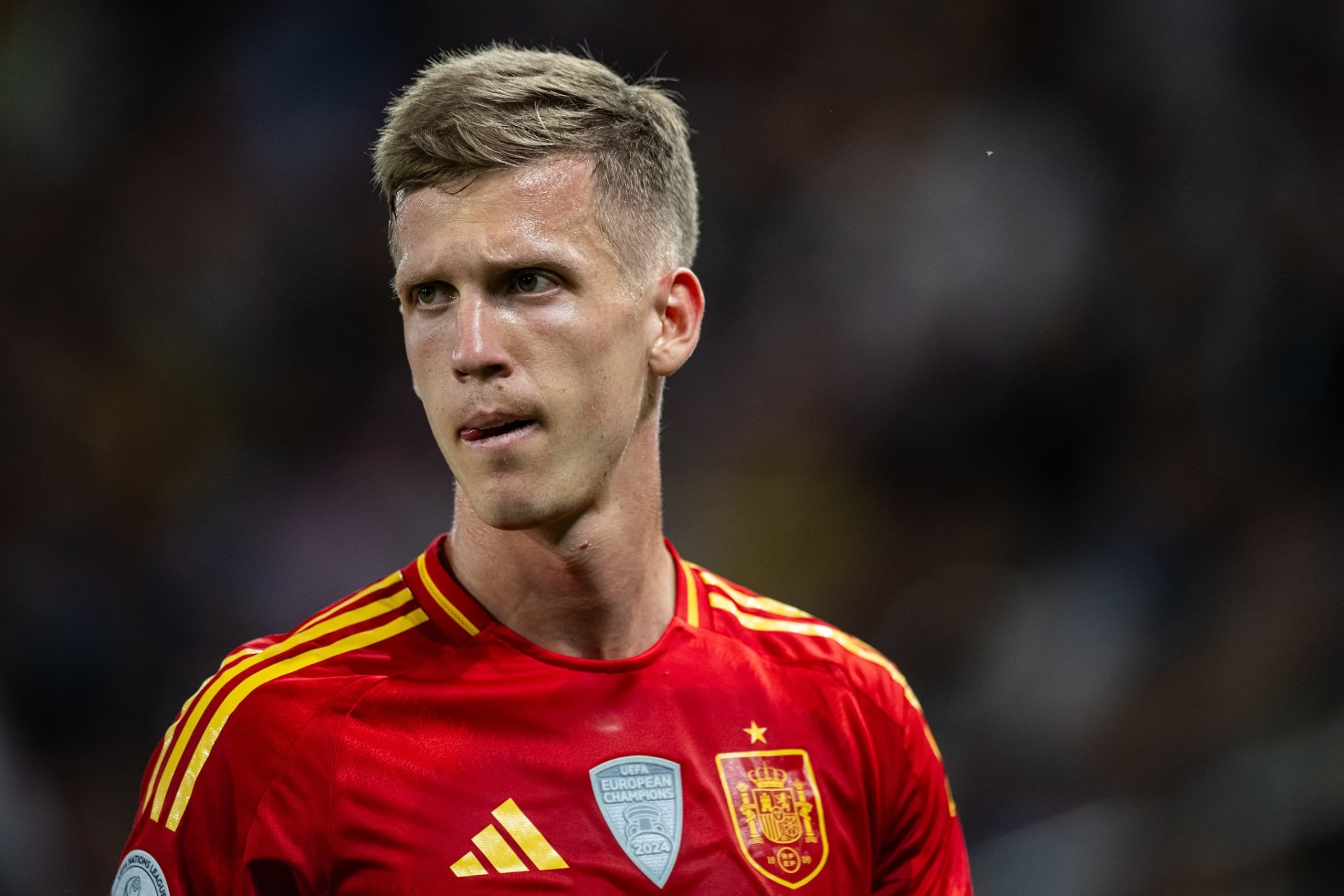

Barcelona’s Dani Olmo has been ruled out for three to four weeks after sustaining a calf muscle strain during Spain’s training camp. The 27-year-old midfielder felt discomfort in his left leg during Thursday’s session, with medical tests confirming the injury that will see him miss crucial fixtures for both club and country, including Spain’s World Cup qualifiers against Georgia and Bulgaria.
The Injury Timeline: A Pattern of Setbacks
Dani Olmo’s time at Barcelona has been marred by recurring muscular problems that have prevented him from establishing consistent rhythm on the pitch. This latest calf injury is merely the most recent in a troubling sequence that has seen the midfielder repeatedly sidelined.
| Date | Injury Type | Duration | Match Context |
|---|---|---|---|
| October 2025 | Calf strain (left leg) | 3-4 weeks | Spain training camp |
| March 2025 | Adductor injury (right leg) | 3 weeks | vs Osasuna (post-penalty) |
| January 2025 | Calf strain (right) | 10 days | Post-Getafe substitute appearance |
| September 2024 | Hamstring injury | 4-5 weeks | vs Girona (second half) |
The frequency and nature of these injuries paint a concerning picture. Muscular problems, particularly in the hamstring, adductor, and calf regions, often indicate either overuse, insufficient recovery time, or underlying conditioning issues that require careful management.
Impact on Barcelona’s Ambitions
The timing of this injury couldn’t be worse for Barcelona, who are navigating a demanding fixture schedule across multiple competitions. With Dani Olmo expected to miss crucial La Liga encounters and potentially important European fixtures, manager Hansi Flick faces a significant creative void in his midfield ranks.
Spain boss Luis de la Fuente confirmed that Olmo hadn’t trained all week, suggesting the issue was more serious than initially anticipated. For Barcelona, this means recalibrating tactical plans and redistributing creative responsibilities among the remaining fit players.
Key Fixtures Dani Olmo Will Miss
The three-to-four-week absence means Barcelona will be without their Spanish playmaker for several high-stakes matches. Olmo will definitely miss the La Liga clash against Girona on October 18, the Champions League fixture against Olympiakos on October 21, and crucially, El Clásico against Real Madrid at the Santiago Bernabéu on October 26. The club’s medical staff will be working against the clock to ensure proper rehabilitation, avoiding the trap of rushing him back prematurely—a mistake that has plagued other players with similar muscular issues.
| Date | Competition | Opponent | Venue | Significance |
|---|---|---|---|---|
| October 18 | La Liga | Girona | Away | Derby clash |
| October 21 | Champions League | Olympiakos | Home | European fixture |
| October 26 | La Liga | Real Madrid | Santiago Bernabéu | El Clásico |
| Early November | La Liga | TBD | TBD | Recovery phase |
The absence puts additional pressure on Barcelona’s squad depth, forcing fringe players into more prominent roles and potentially disrupting the tactical cohesion Flick has been building throughout the season. Missing El Clásico is particularly devastating, as these fixtures often define seasons and can swing title races.
The Medical Perspective: Understanding Calf Strains
Calf muscle injuries, while common among footballers, require meticulous management to prevent recurrence. The calf complex consists of the gastrocnemius and soleus muscles, both critical for explosive movements, jumping, and rapid direction changes—fundamental actions in modern football.
Rehabilitation Phases:
| Phase | Duration | Focus | Activities |
|---|---|---|---|
| Acute (Week 1) | Days 1-7 | Reduce inflammation | Rest, ice, compression, elevation |
| Recovery (Week 2) | Days 8-14 | Restore movement | Light stretching, pool exercises |
| Strengthening (Week 3-4) | Days 15-28 | Build capacity | Gym work, running drills, ball work |
| Integration (Week 4+) | Days 28+ | Return to play | Team training, match fitness |
The standard three-to-four-week timeline suggests Barcelona’s medical team has identified a Grade 1 or Grade 2 strain—significant enough to require complete rest but not severe enough to necessitate surgical intervention. The challenge lies in ensuring Olmo completes the full rehabilitation protocol rather than returning early and risking a more serious rupture.
Barcelona’s Injury Crisis: A Broader Context
Dani Olmo’s situation reflects a broader concern for Barcelona regarding player fitness and availability. The club has struggled with an unusually high number of muscular injuries this season, prompting questions about training methods, workload management, and medical protocols.
Several factors may contribute to this pattern:
Training Intensity: Modern pressing systems demand extreme physical output, potentially pushing players beyond optimal recovery thresholds. Barcelona’s high-intensity style under Flick requires constant sprinting, pressing, and quick transitions—movements that place enormous stress on fast-twitch muscle fibers.
Fixture Congestion: The compressed football calendar leaves minimal recovery time between matches. Elite players like Olmo often play twice weekly, accumulating microdamage in muscles that never fully heal before the next competitive fixture.
International Duty: Players returning from national team commitments frequently arrive fatigued, having trained and potentially played in different tactical systems that stress different muscle groups. Olmo’s injury occurring during Spain duty highlights this risk.
What This Means for Barcelona’s Strategy
Without Dani Olmo’s creativity and technical ability, Barcelona must adapt their approach. The Spanish midfielder has been instrumental in linking midfield to attack, providing the final pass that unlocks stubborn defenses. His absence creates a tactical puzzle Flick must solve.
Potential adjustments include:
- Formation changes: Shifting to systems that compensate for the lack of a pure attacking midfielder
- Tactical redistribution: Asking wide players to drift inside more frequently
- Youth promotion: Giving opportunities to La Masia graduates to fill the void
- Market considerations: Evaluating whether emergency reinforcements are necessary
The silver lining is that Barcelona’s squad depth has improved compared to recent seasons. Players like Fermin Lopez, Gavi (if fit), and even repositioned forwards could assume some of Olmo’s responsibilities, though none possess his exact skill set.
The Road to Recovery: What Comes Next
Barcelona’s medical staff, led by their rehabilitation specialists, will oversee Dani Olmo’s recovery with extreme caution. The club cannot afford another premature return that results in aggravation or a different compensatory injury.
The rehabilitation process will be closely monitored through regular imaging, strength assessments, and functional movement tests. Only when Olmo demonstrates full pain-free range of motion, has regained pre-injury strength levels, and can perform football-specific movements without hesitation will he be cleared for return.
Previous injury returns have shown Barcelona’s cautious approach, with the club preferring not to rush players back even when recovery progresses well. This philosophy, while frustrating for fans eager to see star players return, ultimately protects long-term fitness and career longevity.
Return Indicators:
- Complete absence of pain during explosive movements
- Symmetrical strength measurements between both legs
- Successful completion of progressively intense training sessions
- Positive psychological readiness and confidence
The psychological aspect cannot be understated. Players recovering from repeated muscular injuries often develop hesitation or movement compensation patterns, unconsciously protecting the injured area. Barcelona’s sports psychologists will work alongside physiotherapists to ensure Olmo returns not just physically healed but mentally confident.
Fan and Expert Reactions
The Barcelona faithful have expressed frustration on social media, with many questioning whether the club’s medical and conditioning programs need reassessment. Some supporters point to the pattern of muscular injuries across the squad, suggesting systemic issues rather than individual bad luck.
Football analysts have noted that Olmo’s injury history could affect his long-term value and availability. At 27, he should be entering his prime years, yet the frequency of these setbacks raises questions about durability. For Barcelona, who invested significantly to secure his services, maximizing his availability becomes paramount for both sporting and financial reasons.
Looking Ahead: Prevention and Future Planning
As Barcelona navigates this latest setback, the focus must shift toward prevention. Sports science has advanced dramatically, offering clubs sophisticated monitoring tools—GPS tracking, biochemical markers, muscle oxygenation sensors, and AI-driven fatigue prediction models.
The question is whether Barcelona is utilizing these tools optimally. Are players being pushed beyond scientifically determined safe workload thresholds? Is there adequate individualization in training programs accounting for each player’s unique physiology and injury history?
These questions will likely be scrutinized internally as the club seeks to reverse what has become an alarming injury trend. For Dani Olmo specifically, the coming weeks represent an opportunity to not just recover but to work with conditioning coaches on strengthening protocols that might prevent future occurrences.
The path forward requires patience from fans, wisdom from medical staff, and discipline from the player himself. Barcelona’s season ambitions remain intact, but achieving them will require navigating these injury challenges with intelligence and adaptability.
Read More: Joan Laporta Confirms Barcelona Will Abandon Super League and Return to UEFA
FAQs
How long will Dani Olmo be out with his calf injury?
Dani Olmo will be sidelined for three to four weeks with a calf muscle strain sustained during Spain’s training camp.
Is this Dani Olmo’s first injury at Barcelona?
No, Olmo has suffered recurring muscular problems including hamstring, adductor, and calf injuries throughout his Barcelona tenure.
Which matches will Dani Olmo miss?
He’ll miss Spain’s World Cup qualifiers, Barcelona’s La Liga clash vs Girona (Oct 18), Champions League vs Olympiakos (Oct 21), and El Clásico vs Real Madrid (Oct 26).
What type of injury does Dani Olmo have?
A calf muscle strain in his left leg affecting the gastrocnemius or soleus muscles, sustained during training with Spain.
Can Barcelona cope without Dani Olmo?
Barcelona has squad depth with players like Fermin Lopez and Gavi available, though Olmo’s creativity will be difficult to replace.

