

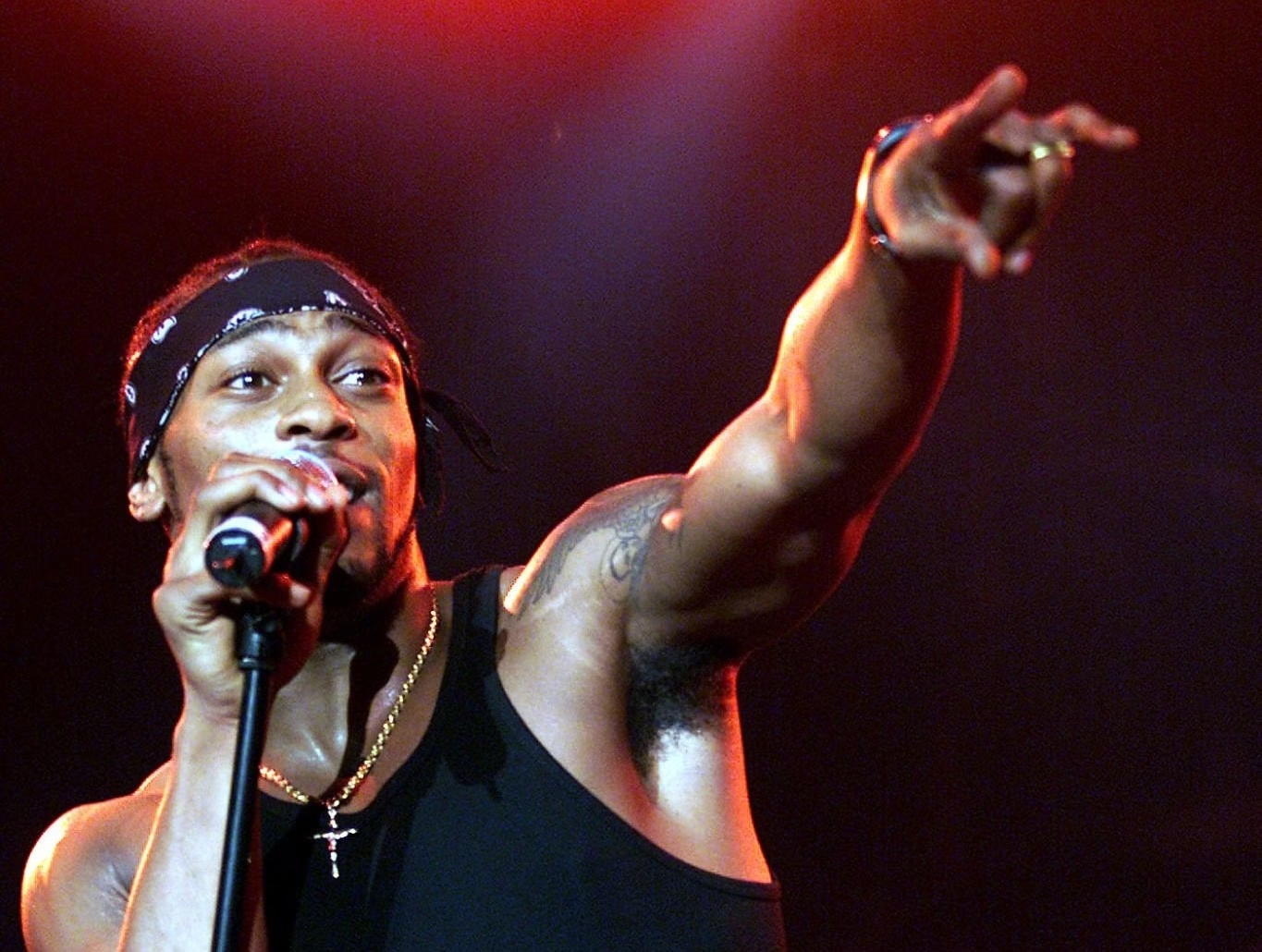

The music world mourns the loss of one of its most influential and visionary artists. Michael Eugene Archer, known globally by his stage name, passed away on Tuesday, October 14, 2025, after what his family described as “a prolonged and courageous battle with cancer.” The Richmond, Virginia-born musician was 51 years old and leaves behind a legacy that forever changed the landscape of R&B, soul, and contemporary music.
Family Confirms Death After Cancer Battle
In a heartfelt statement released Tuesday, the artist’s family announced his passing with profound sadness. “The shining star of our family has dimmed his light for us in this life,” the family wrote. “We are heartbroken to announce that Michael D’Angelo Archer, known to his fans around the world as D’Angelo, has been called home, departing this life today.”
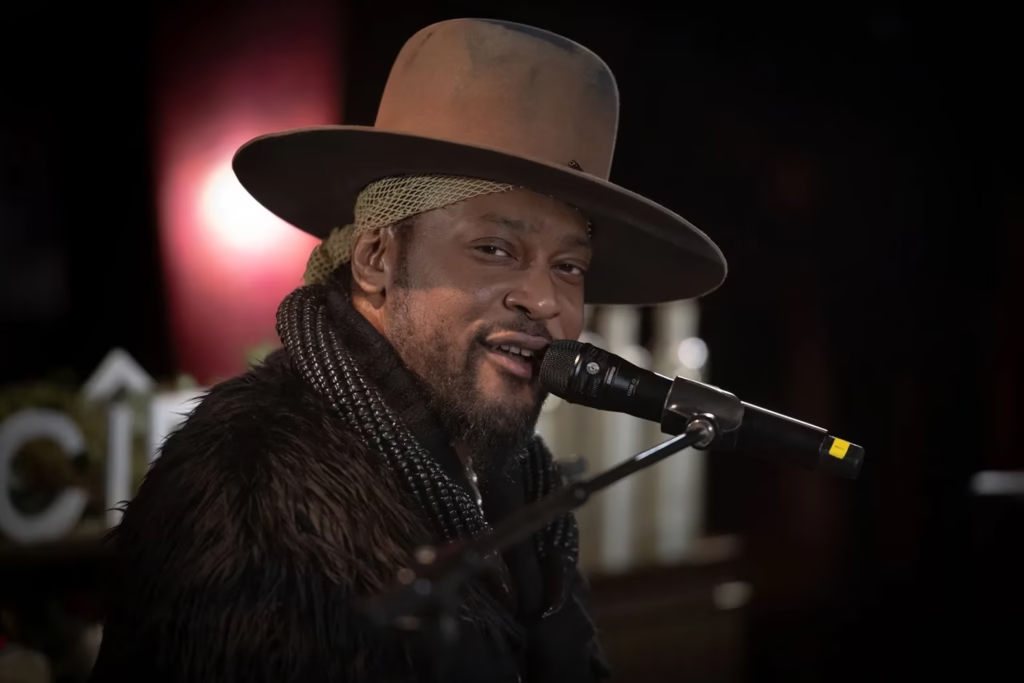
The family confirmed that the singer had been battling pancreatic cancer, a particularly aggressive form of the disease. According to sources close to the family, he spent his final two weeks in hospice care, though he had been hospitalized for months before entering end-of-life care. Throughout his illness, he was surrounded by family members who provided comfort during his final days.
D’Angelo’s Major Career Achievements
| Achievement | Year | Recognition |
|---|---|---|
| Debut Album “Brown Sugar” | 1995 | Platinum certification, 4 Grammy nominations |
| “Voodoo” Album | 2000 | #1 Billboard 200, Won Best R&B Album |
| “Untitled (How Does It Feel)” | 2000 | Grammy for Best Male R&B Vocal Performance |
| “Black Messiah” | 2014 | Won Best R&B Album, Song (“Really Love”) |
| Total Grammy Nominations | Career | 14 nominations |
| Grammy Awards Won | Career | 4 awards |
| Rolling Stone Ranking | 2023 | #75 Greatest Singers of All Time |
The family’s statement continued: “We are saddened that he can only leave dear memories with his family, but we are eternally grateful for the legacy of extraordinarily moving music he leaves behind. We ask that you respect our privacy during this difficult time but invite you all join us in mourning his passing while also celebrating the gift of song that he has left for the world.”
From Church Prodigy to Neo-Soul Visionary
Born February 11, 1974, in Richmond, Virginia, Michael Eugene Archer was the son of a Pentecostal preacher. His musical gifts manifested extraordinarily early—he began playing piano at just three years old. Growing up immersed in the church environment, he learned that music carried spiritual power equal to preaching itself.
“I learned at an early age that what we were doing in the choir was just as important as the preacher. It was a ministry in itself. We could stir the pot, you know?” the singer once reflected. “The stage is our pulpit, and you can use all of that energy and that music and the lights and the colors and the sound. But you know, you’ve got to be careful.”
His family’s deep religious roots made his eventual decision to pursue secular music professionally a weighty choice. At 16, he won the renowned “Showtime at the Apollo” amateur night competition after performing Johnny Gill’s hit “Rub You the Right Way.” This victory foreshadowed the career that would follow. By 18, he had moved to New York City with dreams of professional singing success, leaving behind the certainty of church life for the uncertain world of the music industry.
Breaking Through: The Brown Sugar Era
The artist’s initial success came not through singing but songwriting. In 1994, he co-wrote and produced “U Will Know” for Black Men United, an R&B supergroup featuring stars like Brian McKnight, Usher, Boyz II Men, and Gerald Levert. The single cracked the top 10 of R&B charts and established him as a creative force worth watching.
His 1995 debut album “Brown Sugar” marked his arrival as a solo artist and helped define what would become known as neo-soul—a subgenre blending traditional soul with contemporary R&B, jazz, hip-hop, and funk influences. Released when he was just 21 years old, the album peaked at No. 4 on the U.S. Billboard Top R&B Albums chart and achieved platinum certification within a year.
The single “Lady” from that album reached No. 10 in March 1996 and spent an impressive 20 weeks on Billboard’s Hot 100 chart. The album earned four Grammy nominations, launching a career that would influence countless artists who followed.
Voodoo and the Iconic ‘Untitled’ Moment
Five years passed before his sophomore effort arrived, but the wait proved worthwhile. “Voodoo,” released in 2000, stands as one of the finest albums in R&B history. Created in collaboration with drummer and producer Questlove and featuring the musical collective known as the Soulquarians—which included Erykah Badu, Q-Tip, J Dilla, and others—the album represented the pinnacle of the neo-soul movement.
“Voodoo” debuted at No. 1 on the Billboard 200 and won the Grammy Award for Best R&B Album. The album’s artistic success was matched by its commercial performance, establishing the artist as not just a critical darling but a mainstream force.
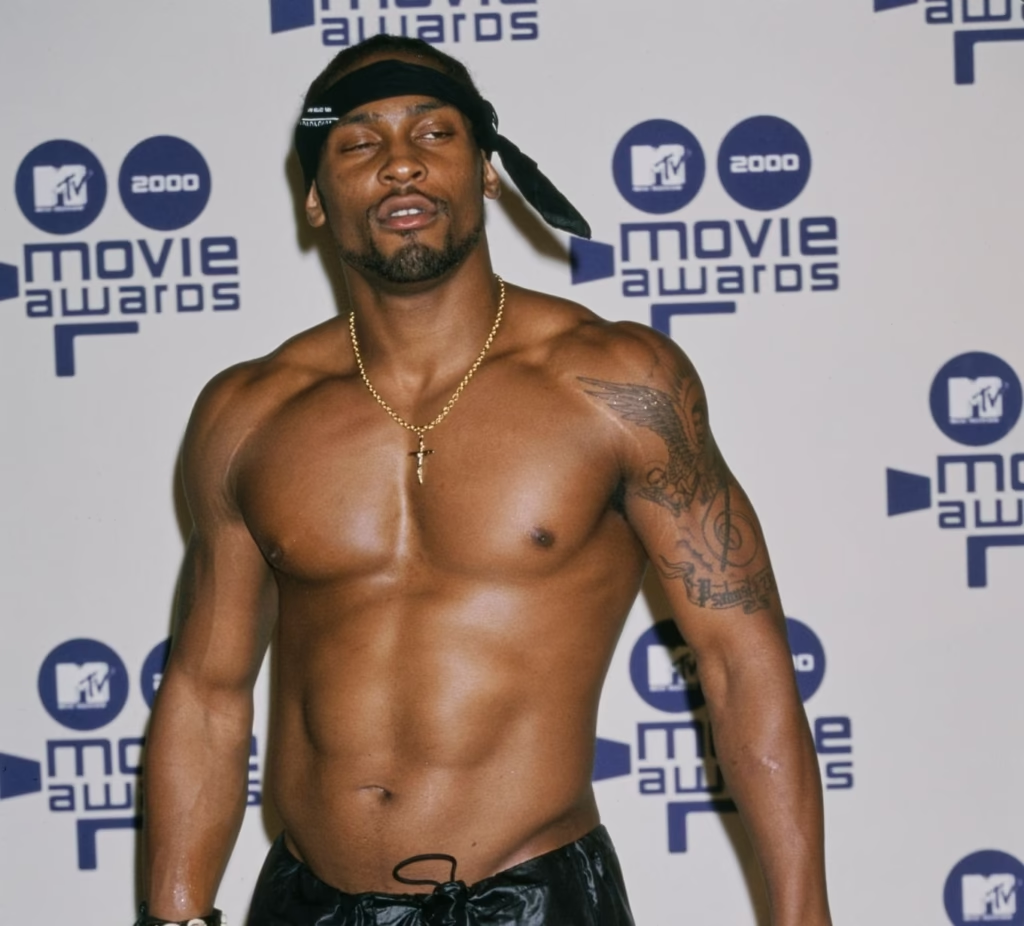
However, it was the video for the album’s single “Untitled (How Does It Feel)” that catapulted him to iconic status. Directed by Paul Hunter and Dominique Trenier, the video featured the singer topless, filmed in a single continuous take as he performed the sensual track. The striking visual, which showed him wearing only a small gold crucifix necklace (reportedly with pajama bottoms just below the frame), enjoyed heavy rotation on MTV and BET.
The video simultaneously made him a sex symbol and created complications he would struggle with for years. He had reportedly spent months working with a physical trainer to achieve the muscular physique displayed in the video—a transformation that didn’t reflect his natural body type and contributed to ongoing conflicts with body image and public perception.
The Weight of Fame and Years of Silence
Following the massive success of “Voodoo” and the “Untitled” video, the artist largely retreated from public life. The overwhelming attention, particularly focused on his physical appearance rather than his music, troubled him deeply. Sources close to him revealed that he never felt comfortable being viewed primarily as a sex symbol.
“He battled with his weight. The chiseled machismo man that people fell in love with, that wasn’t his natural aesthetic. He was naturally a bigger guy,” a source explained. “He never was comfortable being a sex symbol, but also he didn’t like people seeing him on his heavier side, so he was always really conflicted.”
This internal conflict, combined with substance abuse struggles and the pressures of fame, led to a withdrawal from the spotlight that would last over a decade. During these years, he made occasional guest appearances on other artists’ tracks but largely remained out of public view, wrestling with personal demons and the burden of his own genius.
The Black Messiah Return
In 2012, he made a stunning return to the stage at the BET Awards, performing “Untitled (How Does It Feel)” in his first television appearance in more than a decade. The performance reminded the world of his extraordinary talent and hinted at a possible comeback.
That comeback materialized in December 2014 with “Black Messiah,” credited to D’Angelo and The Vanguard. The album’s surprise release came amid the Ferguson protests and national conversations about racial justice, with the music reflecting these turbulent times. The album debuted in the Top 5 of the Billboard 200 and received universal critical acclaim.
“Black Messiah” earned him two more Grammy Awards: Best R&B Album and Best R&B Song for “Really Love,” which was also nominated for Record of the Year. The album demonstrated that his creative powers remained undiminished despite the long absence, with his perfectionist approach to crafting music still yielding extraordinary results.
D’Angelo’s Studio Albums
| Album | Year | Peak Billboard Position | Certification | Notable Singles |
|---|---|---|---|---|
| Brown Sugar | 1995 | #4 (R&B Albums) | Platinum | “Lady,” “Brown Sugar” |
| Voodoo | 2000 | #1 (Billboard 200) | Platinum | “Untitled (How Does It Feel)” |
| Black Messiah | 2014 | #5 (Billboard 200) | Gold | “Really Love,” “Sugah Daddy” |
Personal Tragedy and Final Years
The singer’s final years were marked by both creative promise and profound personal loss. His former partner, Grammy-nominated R&B singer Angie Stone, died in a car crash near Montgomery, Alabama, in March 2025. The couple had shared a son, Michael D’Angelo Archer II, who performs under the name Swayvo Twain.
Stone’s death devastated both the artist and their now-adult son, who mourned the loss of both parents within months. Four-time Grammy winner Missy Elliott paid tribute following the artist’s death, noting “it’s painful for children to see their parents go,” and sending “prayers up for his son who also lost his mom this year.”
In May 2025, he was forced to cancel a scheduled performance at the 2025 Roots Picnic in Philadelphia, citing “an unforeseen medical delay” stemming from surgery earlier in the year. His statement at the time revealed concern about his health: “I was advised by my team of specialists that the performance could further complicate matters.”
“It is nearly impossible to express how disappointed [I am] not to be able to play with my Brothers ‘The Roots,'” he wrote. “And even more disappointed to not see all of you.” These would prove to be among his final public communications.
Legacy: Redefining Modern Soul
The artist’s influence on contemporary R&B and soul music cannot be overstated. As one of the architects of neo-soul, he demonstrated that tradition and innovation could coexist, that music could be both commercially successful and artistically uncompromising. His meticulous approach to production and arrangement, his distinctive raspy yet smooth vocal style, and his ability to blend multiple genres seamlessly set standards that continue influencing artists today.
His record label RCA issued a statement honoring his legacy: “He was a peerless visionary who effortlessly blended the classic sounds of soul, funk, gospel, R&B, and jazz with a hip hop sensibility. D’Angelo’s songwriting, musicianship, and unmistakable vocal styling has endured and will continue to inspire generations of artists to come.”
Rolling Stone ranked him No. 75 on its 2023 list of the Greatest Singers of All Time, recognition of his lasting impact despite releasing only three studio albums across a 30-year career. That small but revered discography stands as testament to his perfectionism and commitment to artistic integrity over commercial productivity.
The 2019 documentary “Devil’s Pie: D’Angelo” provided insight into his meticulous creative process, showing him piecing together arrangements with extraordinary precision, audibly and percussively dictating what band members should play with his mouth, ensuring every sound matched his internal vision.
Tributes Pour In from Music Community
Following news of his death, the music community mourned collectively. Questlove, his longtime collaborator and friend, shared memories of their work together and the artist’s uncompromising artistic vision. Other musicians, producers, and fans flooded social media with tributes celebrating his contributions to music and expressing grief at his untimely passing.
His son Michael D’Angelo Archer II released a statement: “I am grateful for your thoughts and prayers during these very difficult times, as it has been a very rough and sad year for me. I ask that you please continue to keep me in your thoughts as it will not be easy, but one thing that both my parents taught me was to be strong, and I intend to do just that.”
A Light That Will Continue Shining
While the physical presence of this extraordinary artist has departed, the music he created ensures his spirit and influence will endure. From the seductive grooves of “Brown Sugar” to the funky masterpiece “Voodoo” to the politically conscious “Black Messiah,” he leaves behind a body of work that captures the complexities of love, identity, spirituality, and social consciousness with unparalleled artistry.
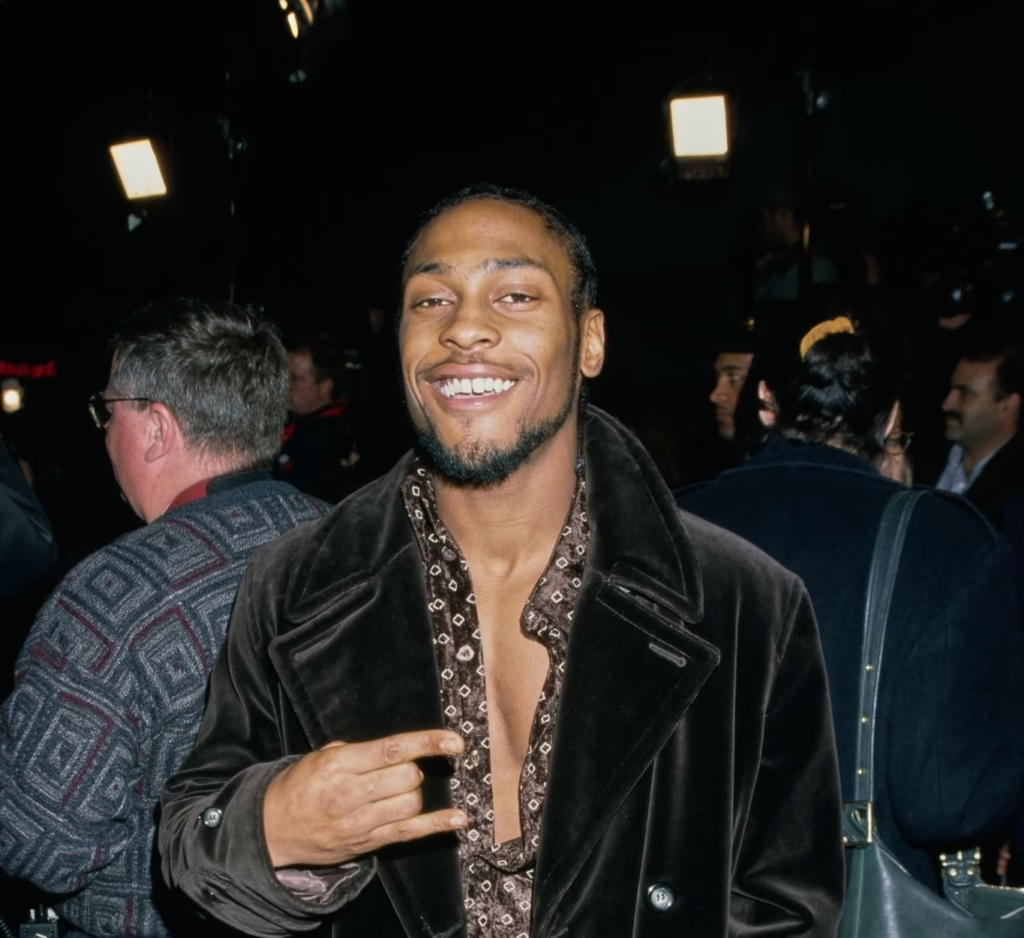
He was reported to be working on new material with longtime collaborator Raphael Saadiq before his death, music that fans may yet hear as a final gift from an artist who gave so much to the world despite his struggles with fame’s burdens.
As his family stated in their announcement, he leaves behind “a legacy of extraordinarily moving music” that will continue touching hearts and inspiring artists for generations to come. The shining star may have dimmed in this life, but its light continues illuminating the path for all who follow.
Read More: De De Pyaar De 2 Trailer: R Madhavan Takes On Son-in-Law Ajay Devgn in Hilarious Family Showdown
FAQs
What was D’Angelo’s cause of death?
D’Angelo died on October 14, 2025, after a prolonged battle with pancreatic cancer. He was 51 years old and spent his final two weeks in hospice care surrounded by family.
What were D’Angelo’s biggest hits?
His most notable songs include “Lady” and “Brown Sugar” from his debut album, and “Untitled (How Does It Feel)” from “Voodoo,” which won a Grammy Award and featured an iconic music video that made him a cultural phenomenon.
How many Grammy Awards did D’Angelo win?
D’Angelo won four Grammy Awards throughout his career from 14 nominations, including Best R&B Album awards for “Voodoo” (2001) and “Black Messiah” (2015), and Best Male R&B Vocal Performance for “Untitled (How Does It Feel).”
What is neo-soul and how did D’Angelo contribute to it?
Neo-soul is a subgenre of R&B that blends traditional soul with contemporary influences including hip-hop, jazz, and funk. D’Angelo was one of neo-soul’s primary architects alongside artists like Erykah Badu, Maxwell, and Lauryn Hill, helping define the sound in the mid-1990s.
Did D’Angelo have any children?
Yes, D’Angelo had three children, including a son, Michael D’Angelo Archer II (who performs as Swayvo Twain), with his former partner Angie Stone, who tragically died in a car accident in March 2025. He also leaves behind a daughter and another son.

