



Researchers at Fudan University in Shanghai have developed a working prototype that merges atomically thin materials with traditional silicon chips, potentially revolutionizing how future electronics are manufactured. This breakthrough could make devices faster, thinner, and dramatically more power-efficient.
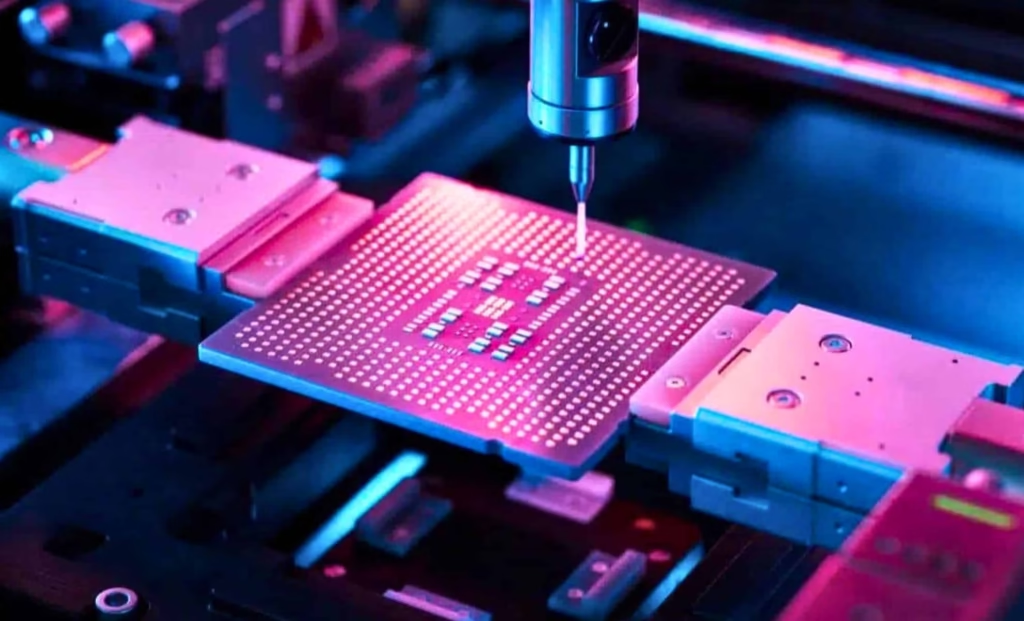
Atomic-Thin Chip: Technical Overview
| Feature | Traditional Chips | 2D Atomic Chips |
|---|---|---|
| Thickness | Multiple nanometers | Single atomic layer |
| Material | Silicon-based | 2D semiconductors |
| Power Efficiency | Standard | Significantly improved |
| Integration | Silicon only | Hybrid silicon + 2D |
What Makes This Breakthrough Special?
For the first time, scientists have successfully built a fully functional memory chip using two-dimensional materials and integrated it directly onto a conventional silicon die. Led by Professor Chunsen Liu, the team achieved what many thought impossible—seamlessly combining next-generation materials with existing chip infrastructure.
The implications are enormous. Rather than replacing silicon chips entirely, this hybrid approach allows manufacturers to gradually adopt 2D materials without overhauling entire production facilities. It’s evolution, not revolution—making adoption realistic and cost-effective.

Real-World Impact on Devices
Expect thinner smartphones, longer-lasting laptops, and more powerful wearables. The atomic-thin design reduces power consumption while boosting performance—a combination that’s been the holy grail of chip design for decades.
According to IEEE Spectrum’s coverage, similar 2D chip developments have demonstrated thousands of transistors in just three atomic layers, proving the technology’s viability.
For more insights on emerging tech, explore our semiconductor innovations guide covering the latest chip breakthroughs.
When Will We See These Chips?
This is early-stage research, but the successful integration with standard silicon chips accelerates the timeline. Expect commercial applications within 5-7 years as manufacturing processes mature and costs decrease.
China has prioritized R&D in post-silicon technologies through initiatives like the 14th Five-Year Plan and “Made in China 2025”, giving these projects substantial government backing and resources.
The Bottom Line: China’s atomic-thin chip breakthrough isn’t just impressive science—it’s a practical path toward next-generation electronics that work better and last longer. This hybrid approach could redefine device efficiency across all consumer electronics.
FAQs
Will atomic-thin chips replace silicon chips completely?
No, they’ll integrate with silicon chips to create hybrid designs for better performance.
When can consumers buy devices with these chips?
Commercial applications are expected within 5-7 years as manufacturing scales up.

