

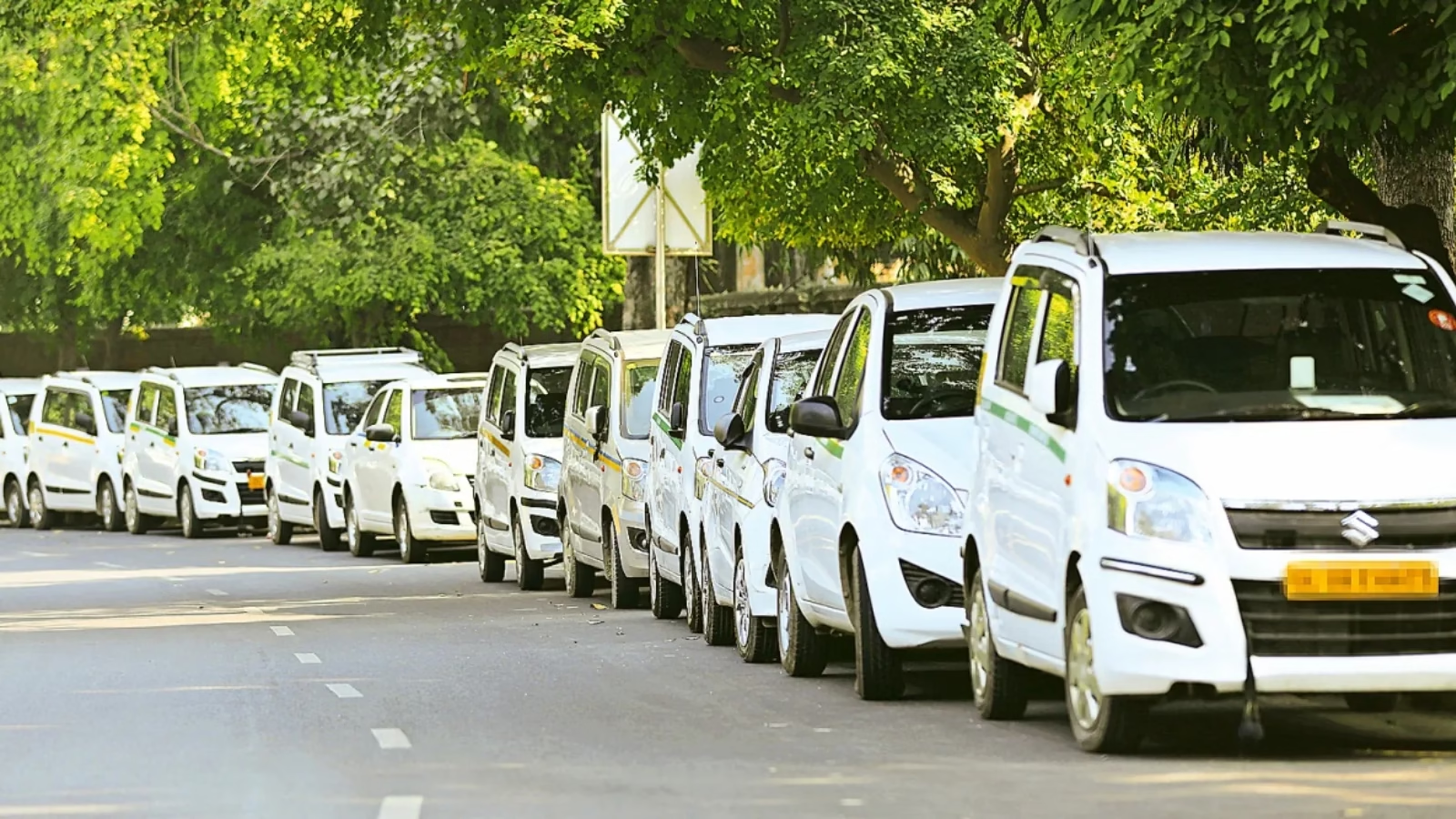

India’s ride-hailing landscape is about to witness a game-changing disruption. Bharat Taxi, the country’s first cooperative taxi service, will launch its pilot project in Delhi in November 2025 with 650 drivers before expanding to other states in December. Developed jointly by the Union Ministry of Cooperation and the National e-Governance Division, this driver-owned platform promises zero commissions, transparent fares, and an end to surge pricing—addressing long-standing grievances of both drivers and passengers.
Bharat Taxi: Quick Overview
| Category | Details |
|---|---|
| Launch Date | November 2025 (Delhi Pilot) |
| Pilot Fleet | 650 drivers in Delhi |
| 2025 Target | 5,000 vehicles across 20 cities |
| 2030 Goal | 1 lakh drivers nationwide |
| Authorized Capital | ₹300 crore |
| Initial Investment | ₹80 crore (from 8 cooperatives) |
| Operating Model | Driver-owned cooperative |
| Chairman | Jayen Mehta (Amul MD) |
| Vice Chairman | Rohit Gupta (NCDC Deputy MD) |
Revolutionary Cooperative Model
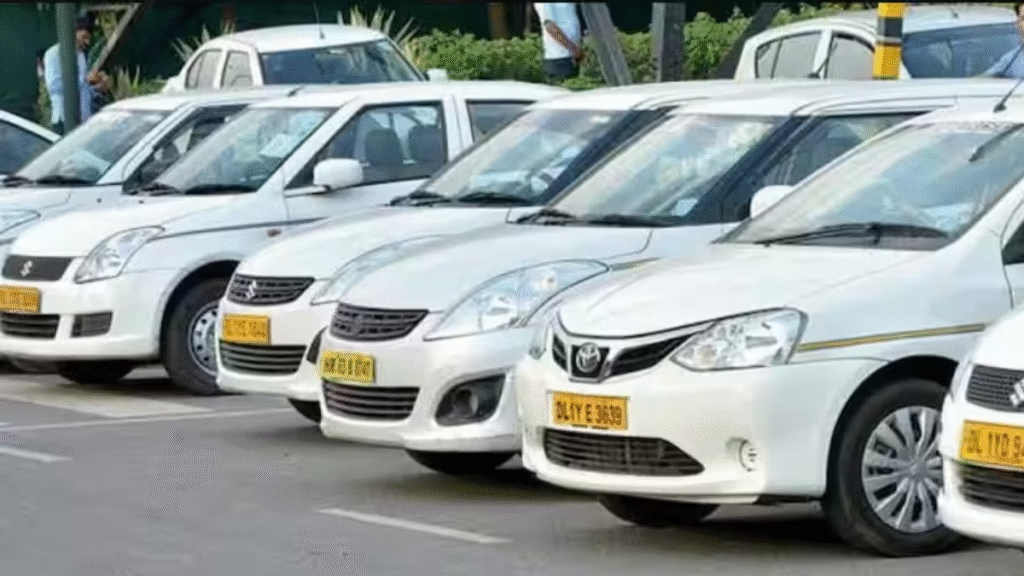
Unlike Ola and Uber which charge 20-25% commission per ride, Bharat Taxi replaces per-ride commissions with a nominal membership fee (daily, weekly, or monthly), allowing driver-owners to retain their full earnings. This fundamental shift transforms drivers from service providers to business co-owners with voting rights on critical decisions.
The service is backed by eight leading Indian cooperative institutions—NCDC, Amul, IFFCO, KRIBHCO, NABARD, NDDB, NAFED, and National Cooperative Export Limited—who have jointly committed $9 million out of an authorized capital of $34 million. This cooperative backing ensures financial stability without venture capital pressure for aggressive monetization.
How It Works: Driver & Passenger Benefits
For Drivers:
- Zero commission on rides—keep 100% of earnings
- Co-ownership with decision-making power
- Social security benefits and insurance coverage
- Dignity through entrepreneurship rather than gig employment
For Passengers:
- No surge pricing during peak hours or festivals
- Transparent, standardized fares
- Government oversight ensuring quality and safety
- Integration with DigiLocker, UMANG, and API Setu for seamless identity verification
The App Experience
Using Bharat Taxi is as easy as using the Ola or Uber app—Android users can download from Google Play Store while iPhone users get it from the Apple Store, with availability in Hindi, English, Gujarati, and Marathi. The platform offers real-time tracking, SOS features, trip sharing, UPI/card payments, and strict guardrails against arbitrary cancellations.
Expansion Roadmap
The pilot starts in Delhi in November 2025 with 650 driver-owners, expanding to 5,000 vehicles across 20 cities by 2026, including Mumbai, Pune, Bhopal, Lucknow, and Jaipur, with a long-term ambition to onboard one lakh drivers covering district headquarters and rural areas by 2030.
The cooperative’s initial area of operation spans Gujarat, Maharashtra, Delhi, and Uttar Pradesh, strategically covering India’s most populous and economically active regions.
Why This Matters for India’s Gig Economy
According to NITI Aayog’s 2022 report, India had about 7.7 million gig and platform workers in 2020-21, projected to grow to 23.5 million by 2029-30. For these workers, the biggest concern isn’t just low income but volatility and unpredictability of earnings.
Bharat Taxi represents a live experiment in cooperative digital enterprise, offering a fresh vision where platforms can be built, owned, and governed by those who power them. With India’s cooperative institutions providing both legacy and leadership, Bharat Taxi has potential to become a defining model for platform work where technology enables not only scale but also fairness, inclusion, and shared prosperity.
Can It Truly Challenge Ola & Uber?
The success hinges on execution—balancing rapid scaling with cooperative governance while maintaining competitive service quality. If successful, it could pressure incumbents to lower commissions, eliminate volatile surges, and improve compliance. For the broader mobility sector, it offers a blueprint for ethical platform capitalism where technology serves community welfare over shareholder returns.
For more insights on India’s startup ecosystem and transportation technology trends, visit TechnoSports.
Stay updated on emerging business models and India’s cooperative economy. For official information, visit Ministry of Cooperation and National e-Governance Division.
Frequently Asked Questions
Q1: How is Bharat Taxi different from Ola and Uber in terms of driver earnings?
Bharat Taxi operates on a cooperative model where drivers are co-owners, not employees. Instead of paying 20-25% commission per ride to private companies, drivers pay only a nominal membership fee (daily, weekly, or monthly) and keep 100% of their fare earnings. This significantly increases monthly income while providing drivers with decision-making power in the cooperative, social security benefits, and insurance coverage—transforming them from gig workers into entrepreneur-owners.
Q2: When and where will Bharat Taxi services be available?
The pilot launch begins in November 2025 at select Delhi airports and railway stations with 650 drivers, expanding to cover the entire National Capital Region within weeks. By December 2025, the service targets 5,000 vehicles across multiple metros. The 2026 expansion plan includes 20 cities such as Mumbai, Pune, Bhopal, Lucknow, and Jaipur. The long-term goal is onboarding one lakh drivers covering district headquarters and rural areas nationwide by 2030, making it India’s largest cooperative mobility platform.

