

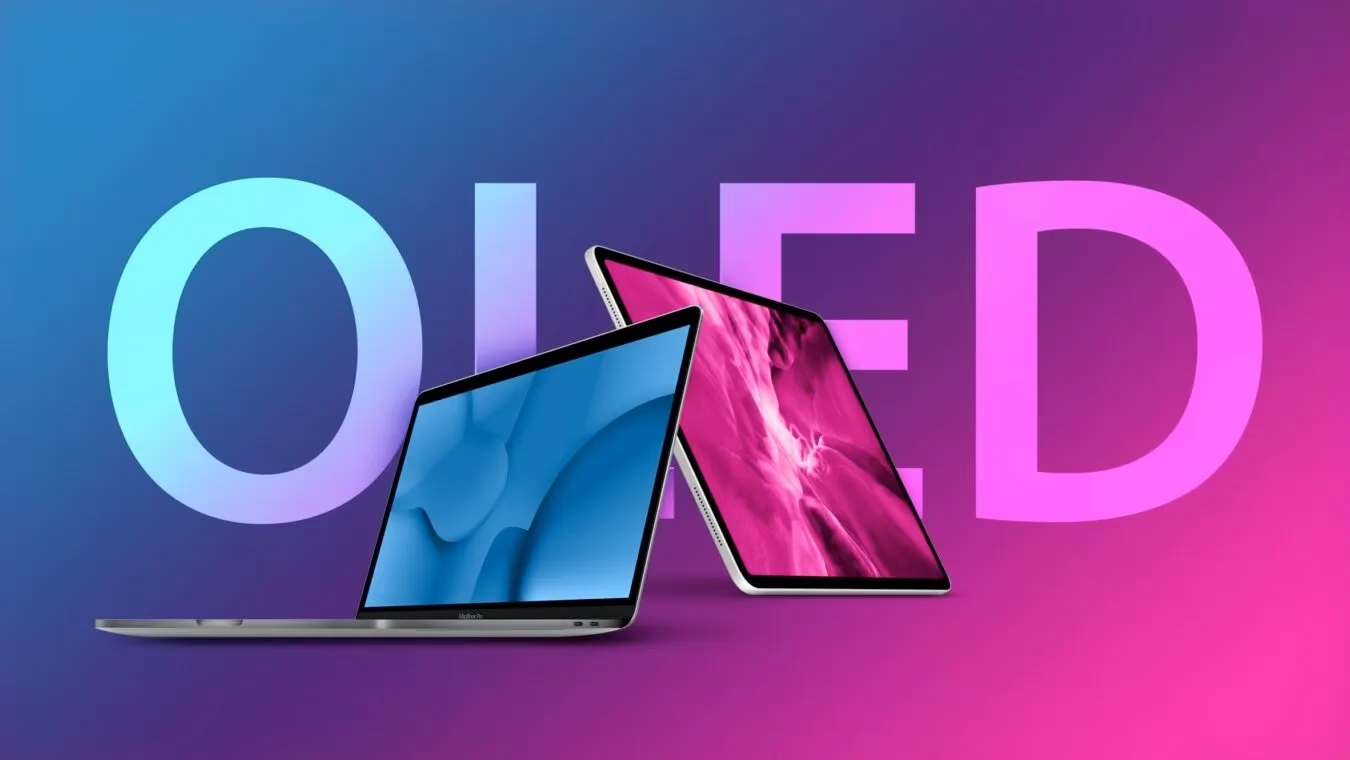

Apple is gearing up for a massive display transformation across its product lineup, with plans to bring premium OLED technology to the MacBook Air, iPad mini, and iPad Air. This strategic shift will deliver richer colors and deeper contrasts compared to current LCD displays, marking a significant upgrade that could redefine the user experience for millions of Apple enthusiasts worldwide.
What Makes Apple’s OLED Special?
OLED (Organic Light-Emitting Diode) technology represents a quantum leap from traditional LCD screens. Unlike LCDs that require backlighting, OLED pixels are self-illuminating, resulting in true blacks, exceptional contrast ratios, and vibrant color reproduction. This technology already powers Apple’s iPhone, iPad Pro, and Apple Watch, and now it’s expanding to more devices.
The benefits are substantial:
- Perfect Blacks: Individual pixels turn completely off for genuine darkness
- Energy Efficiency: Lower power consumption extends battery life
- Thinner Design: Eliminates the need for bulky backlight layers
- Superior Viewing Angles: Colors remain consistent from any perspective
Apple’s OLED Rollout Timeline
| Device | OLED Launch Timeline | Key Features | Expected Price Impact |
|---|---|---|---|
| iPad mini | 2026 (earliest) | Water-resistant casing, vibration-based speakers, codename: J510 | Up to $100 increase |
| iPad Air | 2027 or later | Still using LCD in Spring 2026 model | To be determined |
| MacBook Pro | 2026-2027 (M6 chip) | First Mac with OLED display | To be determined |
| MacBook Air | 2028 (earliest) | M5 version in Spring 2026 keeps LCD | To be determined |
| Entry-level iPad | No plans currently | Remains LCD-based | No change |
iPad Mini: First in Line for OLED
The iPad mini will likely be the first to receive the OLED upgrade as early as next year, making it an attractive option for those seeking compact computing power with premium visuals. Apple is testing an innovative redesign that includes water resistance—a feature previously exclusive to iPhones.
Revolutionary Water Resistance Approach
Apple has explored a new speaker system using vibration-related technology, allowing the company to remove speaker holes where water could enter. This differs from the iPhone’s water-resistant design, which retains holes but adds gaskets and adhesives. The vibration-based speaker system represents a fresh engineering approach that could set new industry standards.
The current iPad mini, updated in October 2024 with Apple Intelligence support, starts at approximately $499. The OLED version could cost as much as $100 more due to the pricier display technology.
MacBook Air: The Long Wait
Apple’s most popular laptop won’t see OLED until 2028 at the earliest. The M5 chip will come to the current Air design, retaining the LCD screen, in spring 2026. This phased approach allows Apple to perfect the technology for larger form factors while managing production costs.
The MacBook Pro will lead the Mac transition, receiving OLED displays with its next major redesign, likely featuring M6 Pro and M6 Max chips in 2027.
Industry Context and Competition
The industry’s shift to OLED is still in its early stages, with most tablets and notebook computers continuing to rely on LCDs. Only premium offerings like the iPad Pro and Samsung Galaxy Tab S11 currently use OLED technology.
Apple first adopted OLED with the Apple Watch in 2015, followed by the iPhone X in 2017. The company stopped selling its last non-OLED iPhone earlier this year with the iPhone SE replacement. The Vision Pro headset utilizes micro-OLED, an advanced variant offering even higher pixel density.
For more technology insights and updates, explore our tech news section and stay informed with the latest gadget reviews. For official Apple announcements, visit Apple Newsroom.
What About the Entry-Level iPad?
There are no plans to add OLED to the low-cost iPad, which makes sense given Apple’s product positioning strategy. The entry-level iPad remains an affordable gateway to the Apple ecosystem, while premium models justify higher prices with advanced display technology.
SIR 2.0: Special Voter Roll Revision Begins Across 12 States – All You Need to Know
Frequently Asked Questions
Q1: Why is Apple switching to OLED displays across its product lineup?
OLED displays are thinner and more energy-efficient, potentially leading to lighter devices with longer battery life. Beyond aesthetics, OLED technology offers self-illuminating pixels that produce true blacks, incredibly high contrast ratios, and wider color gamuts. This creates a more immersive viewing experience that’s particularly beneficial for creative professionals, content consumers, and anyone demanding superior visual quality. The technology has already proven successful in Apple’s iPhone and iPad Pro lines, driving customer satisfaction and justifying premium pricing.
Q2: Will all Apple devices eventually use OLED technology?
Not all devices will transition to OLED. Apple is strategically implementing OLED across premium and mid-range products—iPad mini (2026), iPad Air (2027+), MacBook Pro (2026-2027), and MacBook Air (2028+)—while the entry-level iPad will maintain LCD displays to preserve its affordable positioning. This tiered approach allows Apple to differentiate product lines while managing manufacturing costs and making OLED technology accessible to more customers over time. Check Bloomberg Technology for the latest industry analysis and reporting.

