

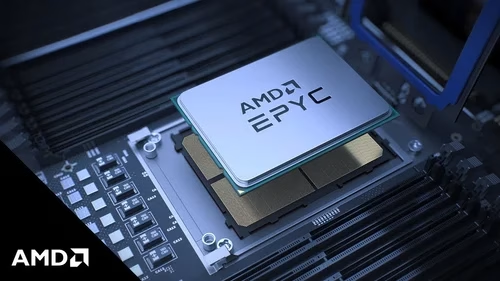

The competition in the high-performance computing (HPC) and server processor market is intensifying as AMD unveils its 5th Gen EPYC CPUs. Designed to compete directly with NVIDIA’s Grace and Intel’s Xeon processors, AMD’s latest EPYC chips promise industry-leading performance, energy efficiency, and superior AI workloads. With claims of 2.75x efficiency improvements over previous generations, AMD is setting a new benchmark in the data center and cloud computing space.
In this blog, we explore the key features, performance metrics, efficiency gains, and market implications of AMD’s 5th Gen EPYC processors.
AMD 5th Gen EPYC: Key Highlights
AMD’s EPYC 9004 series, based on the Zen 4 architecture, has already set industry standards. With the 5th Gen EPYC, AMD aims to deliver:
✅ Higher Performance – Competing with NVIDIA Grace and Intel Xeon.
✅ Better Power Efficiency – Up to 2.75x more efficient than previous generations.
✅ AI & Cloud Optimization – Enhanced support for AI, cloud, and HPC applications.
✅ Advanced Security Features – New technologies for data protection and encryption.
With these advancements, AMD is positioning itself as a dominant force in data centers, cloud computing, and enterprise workloads.
AMD vs. NVIDIA Grace & Intel Xeon: Performance Battle

AMD is taking on two of its biggest rivals – NVIDIA and Intel – in the high-performance server and AI computing markets. Here’s how AMD’s 5th Gen EPYC stacks up:
1. AMD 5th Gen EPYC vs. NVIDIA Grace
🔹 NVIDIA’s Grace CPU is optimized for AI workloads and pairs well with Hopper GPUs.
🔹 AMD’s EPYC 5th Gen chips claim to provide higher efficiency per watt, making them a cost-effective alternative for AI computing.
🔹 Advantage: AMD’s power efficiency and processing speed make it a strong competitor.
2. AMD 5th Gen EPYC vs. Intel Xeon
🔹 Intel’s Xeon CPUs dominate the data center market, but AMD has been gaining market share with EPYC’s performance advantages.
🔹 The 5th Gen EPYC chips offer 2.75x the efficiency of previous models, surpassing Intel’s Sapphire Rapids Xeon lineup.
🔹 Advantage: AMD’s superior multi-core performance and energy efficiency make it the preferred choice for cloud providers.
Power Efficiency: The 2.75x Improvement
One of the biggest selling points of AMD’s 5th Gen EPYC CPUs is their massive efficiency boost.
🔋 Energy Consumption: With up to 2.75x higher efficiency, AMD is setting a new standard in green computing.
🌍 Sustainability: Lower power consumption means reduced carbon footprint, making it an attractive choice for companies focusing on eco-friendly infrastructure.
💰 Cost Savings: Businesses can save significantly on power and cooling costs, leading to a lower total cost of ownership (TCO).
With rising energy costs and environmental concerns, AMD’s focus on efficiency makes its new EPYC lineup highly appealing for data centers and cloud computing providers.
Key Features of AMD 5th Gen EPYC CPUs
AMD’s 5th Gen EPYC processors bring cutting-edge innovations to the server market. Some of the key features include:
1. Advanced Zen 4C & Zen 5 Architecture
- Built on AMD’s Zen 4C core design, optimized for high-core-count workloads.
- Future variants may feature Zen 5 architecture, offering even greater performance gains.
2. PCIe 5.0 & CXL 1.1 Support
- Enables faster data transfer for cloud computing, AI, and enterprise workloads.
- CXL 1.1 support allows better memory pooling and resource sharing.
3. AI & Machine Learning Enhancements
- Optimized for AI inference and deep learning workloads.
- Compatible with modern AI frameworks, making it a viable choice for AI-driven data centers.
4. Enhanced Security with AMD Infinity Guard
- Advanced encryption to protect against cyber threats.
- Confidential computing features for secure cloud and enterprise applications.
5. Cloud-Optimized Performance
- Designed for hyperscale cloud providers like AWS, Microsoft Azure, and Google Cloud.
- Supports multi-tenant workloads with higher efficiency.
These features make AMD’s 5th Gen EPYC processors a game-changer in data center computing.
Impact on the Data Center & AI Market
AMD’s 5th Gen EPYC CPUs are expected to disrupt the cloud, AI, and data center markets. Here’s how:
🚀 Cloud Computing: Hyperscalers like Amazon AWS, Microsoft Azure, and Google Cloud will likely adopt AMD’s efficient server solutions.
🤖 AI & Machine Learning: Competing with NVIDIA’s Grace CPU, AMD could become a go-to choice for AI inferencing workloads.
💼 Enterprise IT: Companies looking for cost-effective, high-performance CPUs will see AMD as a viable alternative to Intel Xeon processors.
🌱 Sustainability: With lower power consumption and heat output, AMD’s new chips will be preferred by businesses focused on energy-efficient data centers.
As the industry shifts toward high-performance, energy-efficient computing, AMD’s 5th Gen EPYC CPUs could accelerate its market share growth.
Will AMD’s EPYC 5th Gen Outperform Intel & NVIDIA?
AMD has already eroded Intel’s dominance in the server CPU market, and the 5th Gen EPYC lineup could further tilt the balance.
🏆 Key Factors That Give AMD an Edge:
✔️ Superior efficiency (2.75x improvement)
✔️ Higher multi-threaded performance
✔️ Better AI optimization than previous EPYC generations
✔️ Strong presence in cloud & data center markets
However, NVIDIA’s Grace CPU and Intel’s next-gen Xeon chips will remain strong competitors. The final outcome depends on real-world benchmarks, pricing, and adoption by major cloud providers.
Final Thoughts: Is AMD the Future of Data Center Computing?
AMD’s 5th Gen EPYC CPUs mark a major leap in server performance, power efficiency, and AI computing. With a 2.75x efficiency boost, these processors could drive widespread adoption in data centers, cloud platforms, and AI-driven applications.
🌍 Key Takeaways:
🔹 AMD aims to outperform NVIDIA’s Grace and Intel’s Xeon CPUs.
🔹 2.75x efficiency boost reduces power costs & carbon footprint.
🔹 Cloud providers and AI developers could adopt EPYC for its performance & cost-effectiveness.
🔹 Future Zen 5 variants could make AMD even more competitive.
If AMD delivers on its performance and efficiency promises, the 5th Gen EPYC processors could cement its position as the top choice for modern server and AI workloads.
Read More: How AI is Revolutionizing Healthcare: The Future of Medicine
FAQs
How does AMD’s 5th Gen EPYC compare to Intel Xeon?
AMD’s 5th Gen EPYC CPUs offer higher efficiency (2.75x improvement), better multi-core performance, and lower power consumption compared to Intel’s Sapphire Rapids Xeon processors.
Will AMD’s 5th Gen EPYC CPUs be good for AI workloads?
Yes! The new EPYC processors are optimized for AI and machine learning, making them a strong competitor to NVIDIA’s Grace CPU and AI-focused Intel chips.

