

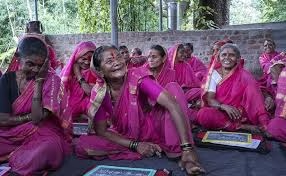

A heartwarming story from Maharashtra’s Phangane village is breaking the internet once again. A viral Instagram video showing elderly women attending “Aajibai Chi Shala” has garnered 9.3 million views, reminding us that education truly has no age limit. These determined grandmothers in their pink sarees are rewriting the rules of learning—one chalk stroke at a time.
Aajibaichi Shala Overview
| Category | Details |
|---|---|
| Location | Phangane Village, Thane District, Maharashtra |
| Founded | March 8, 2016 (International Women’s Day) |
| Founder | Yogendra Bangar (Zilla Parishad Teacher) |
| Students | 30 women aged 60-94 years |
| Class Schedule | Saturdays & Sundays (Post-COVID) |
| Uniform | Bright pink nine-yard sarees |
| Recognition | Limca Book of Records 2017, Featured on KBC |
| Cost | Completely free of charge |
The Story That Started It All
The inspiration came in 2016 when Yogendra Bangar overheard a senior woman express her wish to read holy scriptures while praying. That single moment planted a seed that blossomed into India’s first school exclusively for non-literate grandmothers.
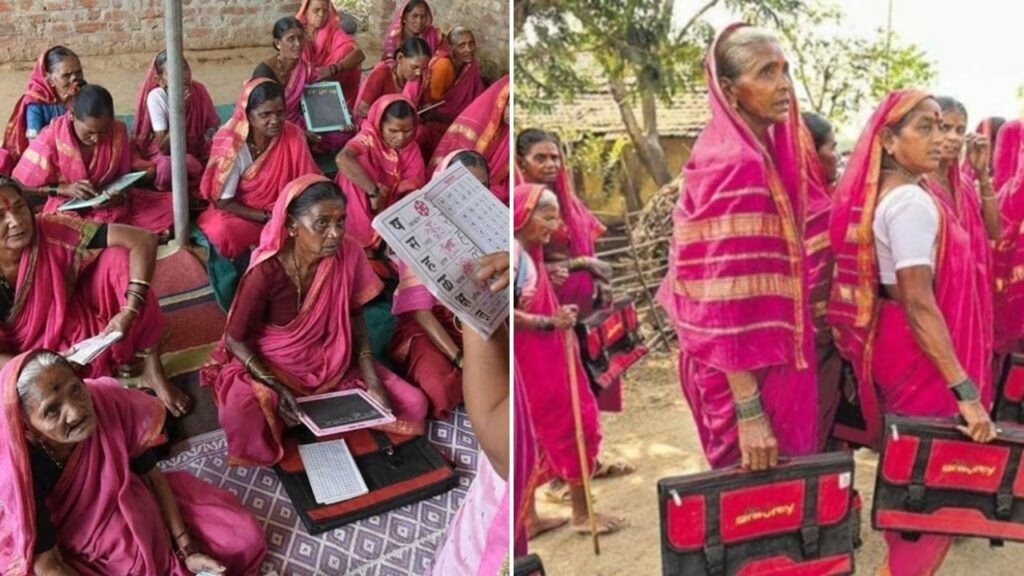
The school started in a spare room offered by a local farmer, with support from Motiram Dalal Charitable Trust providing essentials like blackboards, uniforms, bags, slates, and chalks. What began as a modest initiative has transformed into a movement celebrating lifelong learning and dignity.
A Day in the Life of These Inspiring Students
Picture this: Every afternoon at 2:00 PM, 30 elderly women dressed in bright pink nine-yard sarees head to school carrying slates and white chalk. Their enthusiasm rivals that of any young student excited for their first day.
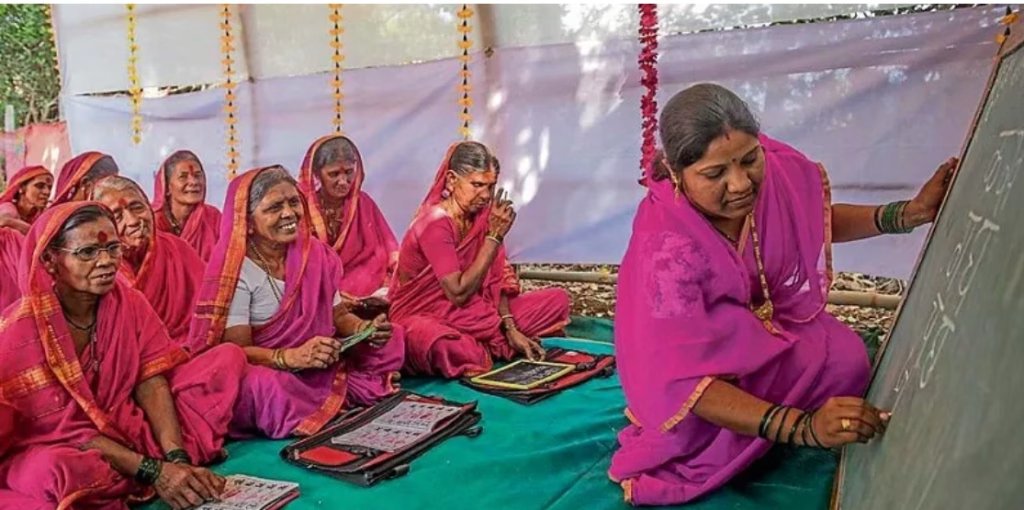
The curriculum is thoughtfully designed for practical empowerment. Students learn the alphabet, correct pronunciation, basic mathematics, and even nursery rhymes. But what makes this school special goes beyond academics—classes include playtime, allowing these grandmothers to relive the childhood they never experienced.
More Than Just Education
One elderly woman passionately declared, “I can skip food but not the school,” while another expressed her desire to be remembered as an educated woman. These statements capture the profound impact Aajibaichi Shala has had on their lives.
The transformation is remarkable. These grandmothers now actively engage in village discussions, read documents themselves, and most importantly, sign their names on paperwork instead of using thumbprints. This newfound independence has given them dignity and confidence they never imagined possible.
Discover more inspiring education stories on TechnoSports
The Ripple Effect of Literacy
Beyond personal empowerment, the students’ education has helped boost knowledge about hygiene, sanitation, and healthcare, making the village defecation-free. What started as a literacy initiative has become a catalyst for community-wide positive change.
The school’s impact hasn’t gone unnoticed globally. Aajibaichi Shala earned a place in the Limca Book of Records in 2017 and has been featured by German, American, Canadian, and French television news agencies. The students even appeared as special guests on Amitabh Bachchan’s “Kaun Banega Crorepati.”
Challenges They Overcome Daily
Despite suffering from hearing problems, weak eyesight, joint issues, and other ailments, these determined students never miss class. Their teacher, Sheetal More, adapts lessons to accommodate individual needs, spending extra time on revision since memory retention becomes challenging at this age.
Like any school, Aajibaichi Shala has its share of mischievous students who giggle, chat during lessons, and sometimes wipe their slates with their sarees instead of cloth. But unlike traditional schools, homework and exams are non-negotiable—they’re completely optional here!
A Message That Resonates Globally
The viral video’s caption perfectly summarizes the school’s philosophy: “This speaks so much about the spirit of learning that shouldn’t limit to any age or boundaries”. In a world obsessed with youth, these grandmothers remind us that growth, curiosity, and transformation know no age limits.
Their journey challenges societal perceptions about the elderly. The school’s intention is to change the thinking that elderly people are burdens to society and instead inculcate love and respect for them.
Rashmika Mandanna: 2025’s Golden Year of Success and Personal Joy
FAQs
Q1: How can someone support or replicate the Aajibaichi Shala model in other villages?
Aajibaichi Shala operates through community collaboration with support from the Motiram Dalal Charitable Trust, which provides educational materials and infrastructure. The model is simple: a dedicated teacher, basic learning materials (slates, chalk, notebooks), and most importantly, community willingness to prioritize elderly education. Those interested in replicating this initiative can reach out to local NGOs working on education and elderly welfare, or contact zilla parishad schools in their areas. The key is identifying elderly women who missed educational opportunities and creating a supportive, judgment-free learning environment.
Q2: What specific subjects do the grandmothers learn, and how long does it take them to become literate?
The curriculum includes Marathi alphabet and pronunciation, basic mathematics (including multiplication tables), nursery rhymes, and painting. The school doesn’t follow a rigid curriculum or timeline since each student learns at their own pace due to varying physical challenges like impaired hearing and eyesight. The primary goal isn’t formal literacy certification but practical empowerment—enabling them to sign their names instead of using thumbprints, read basic documents, and perform simple calculations when shopping. Most students achieve these foundational skills within several months to a year of regular attendance.

