



After six weeks of emotional ups and downs, the K-drama “A Hundred Memories” wrapped up with a finale that left viewers teary-eyed and satisfied. The series starring Kim Da Mi and Shin Ye Eun delivered a powerful message about female friendship, ambition, and finding your true self in 1980s Korea.
A Hundred Memories: Quick Overview
| Drama Details | Information |
|---|---|
| Title | A Hundred Memories |
| Lead Actresses | Kim Da Mi, Shin Ye Eun |
| Male Lead | Heo Nam Jun |
| Genre | Friendship, Coming-of-age, Drama |
| Setting | 1980s South Korea |
| Episodes | 12 |
| Central Theme | Female friendship & Miss Korea pageant |
| Where to Watch | Viki |
Jong Hee Finally Becomes Miss Korea Jin
Since childhood, Jong Hee has longed to become Miss Korea Jin, a dream stemming from a lifetime spent without love as she wanted to become someone cherished by the nation. Her journey wasn’t easy, with her adoptive mother initially refusing permission and later treating her like a doll rather than showing genuine affection.
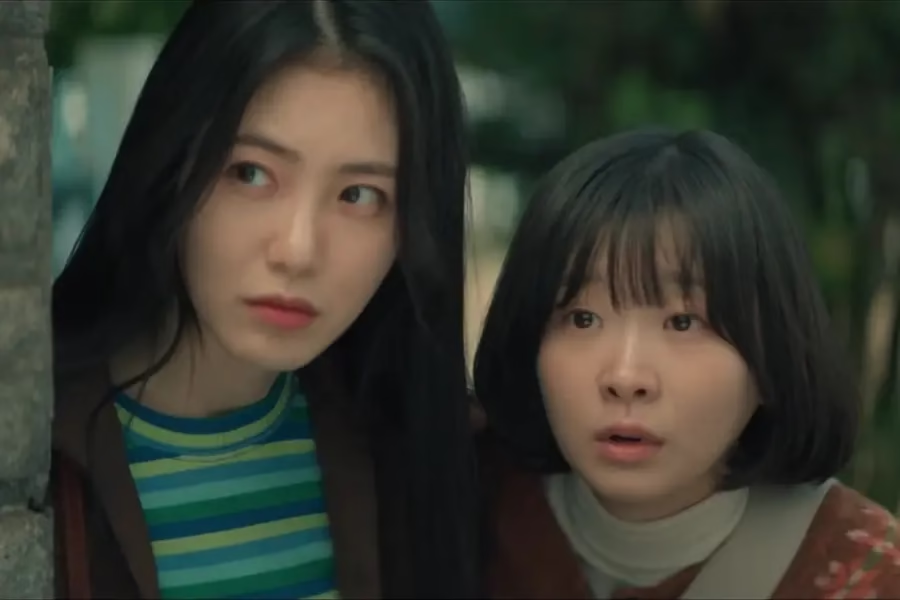
Many viewers expected Young Rye to win the crown. After all, she had already won the Miss Seoul Jin title while Jong Hee placed as first runner-up. Plus, Young Rye desperately needed the prize money for her education. But the writers made the right call.
From the start of the competition, Jong Hee is shown as passionate and determined, putting in every effort to earn bonus points and achieve the Jin title. This victory feels earned, making every hardship she endured worthwhile. It’s a moment of pure catharsis that celebrates perseverance and self-worth.
Young Rye Gets Her College Dream
Young Rye’s decision to join the pageant initially came across as selfish to some viewers, but she clarifies in the final episodes that she did not know Jong Hee would also be participating and would have withdrawn if she had known. Her motivation was simple: fund her education and help her struggling family.
As the eldest daughter, Young Rye has always prioritized duty over personal dreams. She takes crash courses “just in case,” holds back emotions, and constantly puts family needs first. Despite her dedication, her lack of pageant experience leaves her as first runner-up.
Here’s where the finale truly shines. In a touching turn of events, Jong Hee chooses to give her prize money to Young Rye, helping her realize her dream of going to college. This selfless act proves that success isn’t always about winning—it’s about lifting each other up.
Their Friendship Survives Everything
At its heart, “A Hundred Memories” is a story about female friendship and the struggles two young women face while chasing their dreams in the 1980s. The parallel journeys of these two women create a compelling narrative about different forms of struggle.
Young Rye lives a life defined by responsibility, while Jong Hee’s existence has been marked by loneliness and instability with no parents and an abusive brother. Even after reuniting years later, their struggles continue in new forms—Young Rye postponing dreams for family, Jong Hee trapped in her adoptive mother’s fantasy.
The real test comes when they compete for the same title and even the same man, Jae Pil. When Jong Hee breaks down after being slapped by her adoptive mother and lashes out at Young Rye, it feels like their friendship might end for good, but Young Rye saves Jong Hee’s life, not out of guilt or obligation, but simply because that is who she is.
Jong Hee comes to understand that Jae Pil’s heart belongs solely to Young Rye and learns to let go gracefully. This mature handling of romantic disappointment shows remarkable character growth.
What Made This Finale Special
The finale succeeded because it stayed true to the characters’ journeys. Every ending felt earned rather than convenient. While the drama had imperfections—the romance between Jae Pil and Young Rye could have been developed earlier, and Jong Hee sometimes blamed others for her choices—these flaws made the characters feel authentically human.
The 1980s setting added layers of complexity, showing how women navigated societal expectations while pursuing personal ambitions. The Miss Korea pageant served as both a literal competition and a metaphor for finding self-worth in a world that often defines women by others’ approval.

Why This Drama Resonates Today
“A Hundred Memories” reminds us that female friendships can survive rivalry, misunderstanding, and heartbreak. In an era where women are often pitted against each other, this drama celebrates solidarity over competition. Jong Hee’s gift to Young Rye symbolizes something rare: understanding that someone else’s success doesn’t diminish your own.
The message is clear—true friendship means wanting the best for each other, even when it hurts, even when you’re competing for the same dream.
More K-Drama Coverage on TechnoSports:
- Kim Da Mi: Career Highlights and Upcoming Projects
- Best Korean Friendship Dramas of 2025
- Shin Ye Eun’s Evolution as an Actress
- Top Coming-of-Age K-Dramas You Shouldn’t Miss
Watch “A Hundred Memories” with subtitles on Viki’s official streaming platform
Frequently Asked Questions
Q1: What is the main theme of “A Hundred Memories” finale?
The finale of “A Hundred Memories” centers on the enduring power of female friendship despite competition and hardship. The drama explores how Jong Hee wins Miss Korea Jin, achieving her lifelong dream, while Young Rye places as first runner-up. In a beautiful twist, Jong Hee gives her prize money to Young Rye to fund her college education, proving their friendship is stronger than rivalry. Set in 1980s Korea, the finale shows both women overcoming their different struggles—Young Rye’s familial duty and Jong Hee’s search for love—while maintaining their bond.
Q2: Does Jong Hee or Young Rye win Miss Korea in the finale?
Jong Hee wins the Miss Korea Jin title in the finale, fulfilling her childhood dream of becoming someone cherished by the nation after a lifetime without love. Young Rye places as the first runner-up despite her hard work and dedication. However, Jong Hee selflessly gives her prize money to Young Rye, enabling her best friend to attend college and pursue her educational dreams. This resolution perfectly captures the drama’s message that success can take many forms, and true victory lies in supporting each other rather than competing destructively.

