

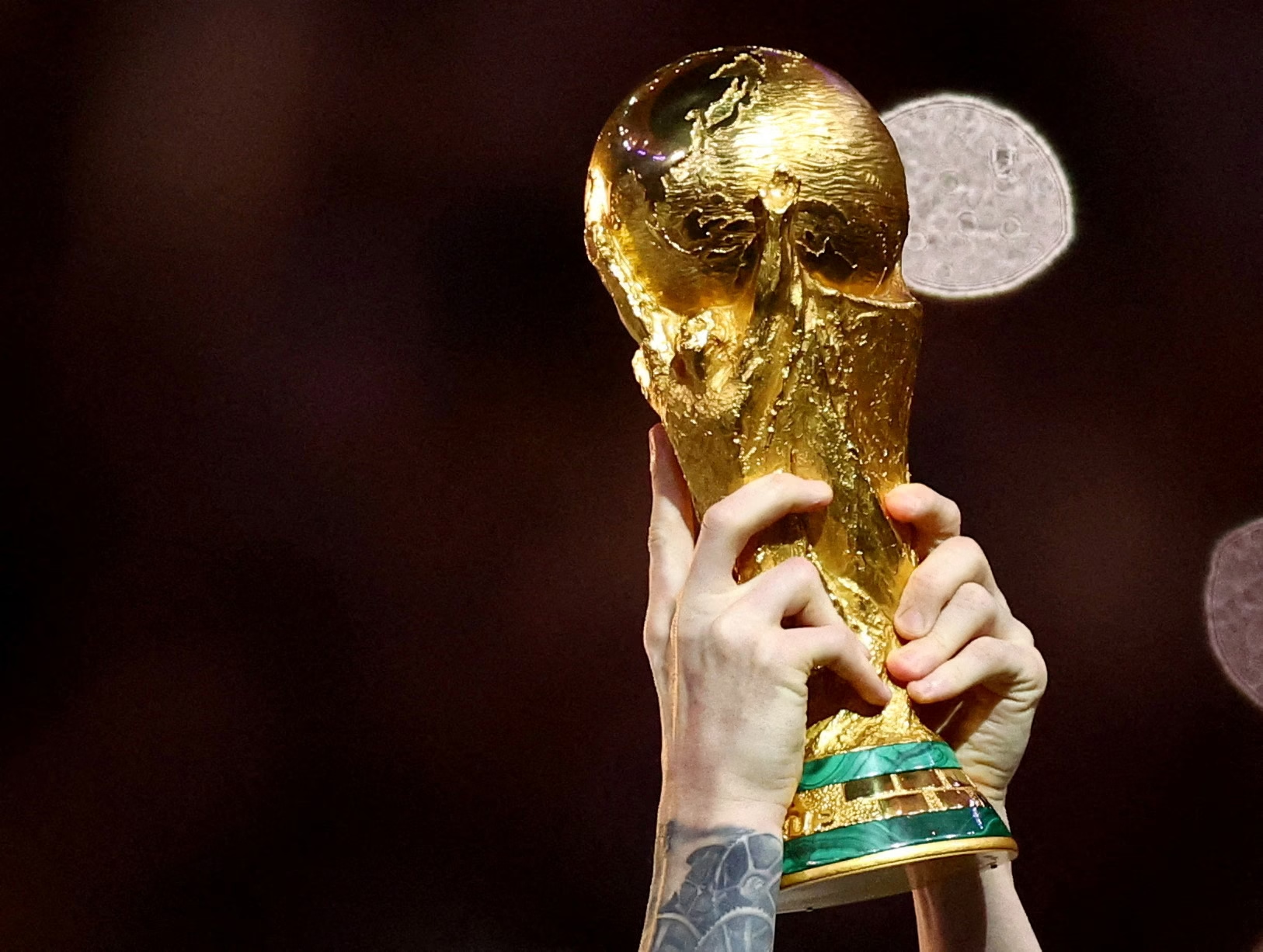

Football’s most prestigious tournament faces an unprecedented scheduling dilemma as FIFA grapples with when to stage the 2034 World Cup in Saudi Arabia. In a development that could reshape international football calendars, the tournament officially designated for 2034 may actually take place in early 2035, with religious observances and extreme climate conditions forcing organizers to rethink traditional scheduling.
The Scheduling Challenge
FIFA President Gianni Infantino has confirmed that finding appropriate dates for Saudi Arabia’s World Cup presents significant complications. Speaking at the European Club Association General Assembly, Infantino emphasized the need for “open-mindedness” regarding the international football calendar and suggested the tournament could be moved to accommodate various factors.

The primary issue centers on Ramadan, the Muslim holy month of fasting and prayer, which will be observed from approximately November 11 through December 10 in 2034. Given Saudi Arabia’s status as the birthplace of Islam and the fact that a majority of its population observes Ramadan, staging a month-long football tournament during this period would be culturally insensitive and practically challenging.
Key Scheduling Factors for 2034
| Factor | Impact on Tournament | Preferred Solution |
|---|---|---|
| Ramadan | November 11 – December 10, 2034 | Avoid this period entirely |
| Summer Heat | 33-39°C (91-102°F) temperatures | Play in cooler months (October-April) |
| Asian Games | Riyadh hosts November 29 – December 14, 2034 | Schedule around event |
| Hajj Pilgrimage | Mid-late February 2034-2035 | Consider logistics impact |
| European Seasons | Traditional August-May schedule | Coordinate disruption |
This confluence of religious, climatic, and logistical factors has led FIFA to seriously consider moving the tournament to January 2035 or potentially even later in the year. Such a decision would mark only the second time in World Cup history that the tournament deviates significantly from its traditional June-July window.
Why Winter Hosting Is Inevitable
Saudi Arabia’s climate makes summer hosting virtually impossible. During the peak months between May and September, minimum nighttime temperatures hover between 26-29°C (79-84°F), while daily mean temperatures range from 33-37°C (91-99°F). In the capital city of Riyadh, where eight of the proposed 15 stadiums will be located, summer temperatures regularly exceed 39°C (102°F).
These conditions pose serious health risks for players, officials, and the millions of fans expected to attend. FIFA learned this lesson when organizing the 2022 Qatar World Cup, which featured a similar Gulf climate. The governing body ultimately moved that tournament to November-December, marking the first winter World Cup in the competition’s history.
FIFA’s evaluation report identified “local climatic conditions” as favoring games being played between “October and April,” making a winter tournament in Saudi Arabia not just likely but necessary for player safety and tournament quality.
The Qatar 2022 Precedent
The 2022 World Cup in Qatar provided a successful template for winter hosting that FIFA can reference when planning for 2034. Despite initial concerns from European clubs and leagues about mid-season disruptions, the tournament proceeded smoothly with minimal complications.
European leagues adapted by starting their seasons earlier and extending them later into the calendar year. The winter timing actually proved beneficial for fans in warmer climates, who for the first time could comfortably watch outdoor screenings and participate in traditional World Cup viewing experiences that summer heat had previously prohibited.
One senior European football executive noted that a winter World Cup in 2034 “will not be the issue it was in 2022 because having juggled the calendar once, it has proved to be possible.”
January 2035: The Emerging Favorite
Current speculation increasingly points toward January 2035 as the most viable option for the tournament. This timing would avoid Ramadan, sidestep the Asian Games in Riyadh, and take advantage of Saudi Arabia’s cooler winter temperatures, which average around 22°C (72°F) in December and January—ideal conditions for world-class football.
However, a January tournament would create its own complications. The 2034 Winter Olympics are scheduled for Salt Lake City in February 2035, raising concerns about back-to-back major global sporting events. Nevertheless, the International Olympic Committee has signaled it won’t be opposed to consecutive major events, suggesting this potential clash may not prove prohibitive.
Potential Timeline Options
| Option | Timeframe | Advantages | Challenges |
|---|---|---|---|
| Late 2034 | October-November 2034 | Cooler weather, traditional year | Conflicts with Asian Games, Ramadan approaching |
| Winter 2034-35 | December 2034-January 2035 | Optimal temperatures | Ramadan conflict, proximity to Olympics |
| Early 2035 | January-February 2035 | Avoids Ramadan, good weather | Close to Winter Olympics, unprecedented timing |
| Late 2035 | October-November 2035 | Cooler conditions | Year-late tournament, calendar chaos |
The complexity of these options explains FIFA’s hesitation to commit to specific dates, with Saudi officials acknowledging that timing decisions ultimately rest with FIFA and require extensive consultation with stakeholders worldwide.
FIFA’s Broader Calendar Philosophy
Infantino’s comments about the 2034 World Cup extended beyond Saudi Arabia to encompass a broader rethinking of international football’s calendar. The FIFA president suggested that future tournaments might regularly consider non-traditional scheduling to accommodate global climate realities.
“If we want to play at the same time everywhere, you can play in March or in October, most likely,” Infantino explained. “Because in December you cannot play in one part of the world and in July you cannot play in another part of the world.”
This philosophy represents a fundamental shift in FIFA’s approach to tournament scheduling. Rather than maintaining rigid adherence to summer tournaments that suit European and South American climates, the governing body appears willing to adapt schedules based on host nation requirements and global weather patterns.
The implications extend beyond World Cups. If FIFA establishes precedent for flexible scheduling based on climate conditions, other international tournaments and competitions may follow suit, potentially reshaping the entire structure of global football calendars.
The 48-Team Format Complication
The 2034 World Cup will be the first single-nation tournament featuring 48 teams, adding another layer of complexity to scheduling decisions. The expanded format will likely include 104 matches—significantly more than the 64 games played in traditional 32-team tournaments.
Qatar 2022, with just 32 teams and 64 matches, lasted 29 days with minimal preparation time before kickoff. The inaugural 48-team World Cup in North America in 2026 is scheduled to span 39 days. Saudi Arabia’s tournament will need similar duration, making compact scheduling essential.
A January start could see the tournament extending into early February, creating a five-to-six-week period when domestic leagues worldwide would need to pause. While this represents significant disruption, the precedent from 2022 suggests leagues can accommodate such breaks with advance planning.
Stadium Infrastructure and Hosting Cities
Saudi Arabia’s ambitious bid proposes 15 stadiums across five cities: Riyadh (eight stadiums), Jeddah (four), and one each in Al Khobar, Abha, and the futuristic mega-project NEOM. Of these, 11 will be newly constructed, with four existing stadiums undergoing major renovations.
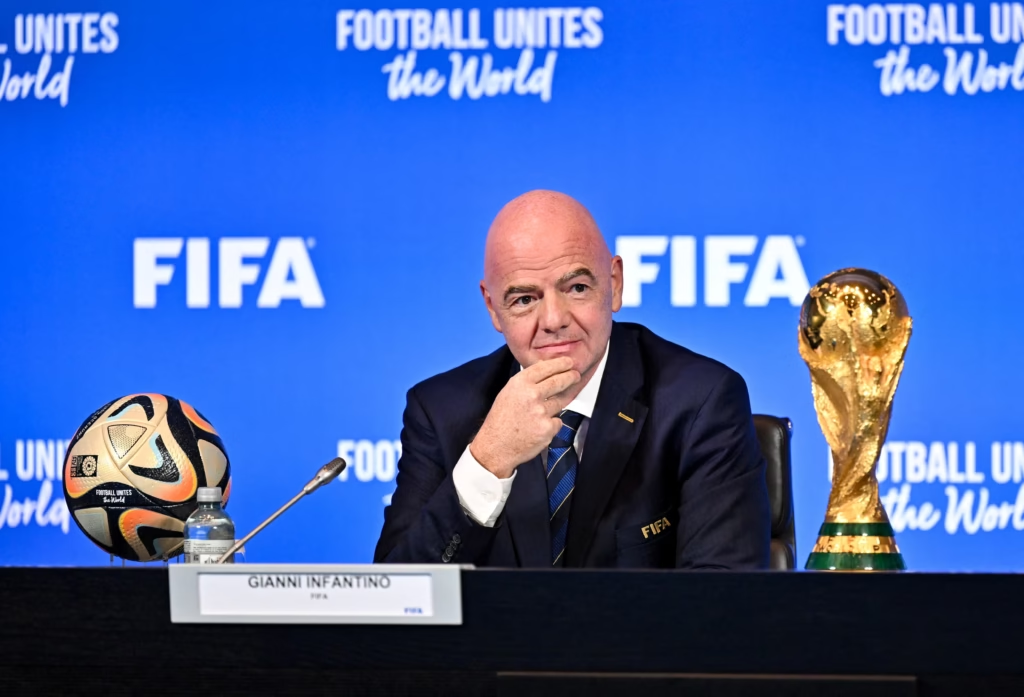
The proposed flagship venue in Riyadh would seat 92,000 spectators and host both the opening match and final. This ambitious infrastructure program represents one of the largest construction efforts in World Cup history, surpassing even Qatar’s stadium-building program.
Proposed Host Cities and Stadiums
| City | Number of Stadiums | Status | Key Features |
|---|---|---|---|
| Riyadh | 8 stadiums | Mix of new builds and renovations | 92,000-seat flagship venue for final |
| Jeddah | 4 stadiums | Primarily new construction | Red Sea coastal location |
| Al Khobar | 1 stadium | New build | Gulf coast city |
| Abha | 1 stadium | New build | Mountain location |
| NEOM | 1 stadium | New build | Futuristic mega-project |
Construction timelines for these venues add urgency to scheduling decisions. Builders and architects need confirmed tournament dates to ensure facilities are completed, tested, and operational well before kickoff. Continued uncertainty about whether the event occurs in late 2034 or early 2035 complicates this planning process.
Religious and Cultural Considerations
Saudi Arabia’s role as guardian of Islam’s two holiest sites—Mecca and Medina—means religious observances carry particular significance. Beyond Ramadan, the annual Hajj pilgrimage sees more than 1.5 million Muslims travel to Saudi Arabia from around the world.
In 2034-2035, Hajj is projected to occur in mid-to-late February, creating another potential scheduling consideration. While the pilgrimage centers on Mecca and Medina rather than World Cup host cities, the massive logistical operation required to accommodate millions of pilgrims could strain infrastructure and resources if overlapping with tournament operations.
FIFA’s evaluation report acknowledged it is “important to consider religious events in determining the timeline for the competition,” recognizing these cultural factors must shape scheduling decisions rather than being treated as mere inconveniences.
The Christmas-to-New Year period also warrants consideration, as this represents significant holiday time for many participating nations and traveling supporters. Balancing religious observances across multiple faiths while finding climatically suitable dates presents a diplomatic and logistical puzzle FIFA must solve.
Impact on Domestic Leagues
European leagues will bear the brunt of scheduling disruptions regardless of when the 2034 World Cup occurs. A winter tournament requires domestic seasons to begin earlier and conclude later, potentially extending campaigns into June—traditionally a month reserved for player rest and transfer activities.
However, the experience from 2022 proved leagues can adapt. The English Premier League, La Liga, Serie A, Bundesliga, and other top competitions successfully navigated the Qatar World Cup interruption without major incidents. Most stakeholders agree that having managed one winter World Cup, repeating the exercise in 2034 will be less daunting.
The current international match calendar extends only through 2030, meaning FIFA will develop a new framework before 2034. This provides opportunity to build a calendar from scratch that accommodates winter tournaments in Gulf nations, potentially establishing permanent structures for future events in similar climates.
The Controversy Factor
Like Qatar 2022 before it, Saudi Arabia’s selection as host has attracted significant controversy. Human rights organizations have raised concerns about labor conditions, migrant worker protections, women’s rights, LGBTQ+ rights, and freedom of expression in the kingdom.
FIFA’s evaluation report assigned these concerns a “medium risk” rating, a classification that critics argue dramatically understates serious human rights issues. The governing body maintains that hosting major tournaments in Saudi Arabia can catalyze positive social change, pointing to recent reforms in women’s rights and social liberalization as evidence of progress.
Regardless of one’s position on these debates, the timing uncertainty adds another dimension to criticism of FIFA’s decision-making process. Critics argue that awarding the tournament to Saudi Arabia without resolving fundamental questions about when it can actually be played demonstrates rushed, politicized decision-making rather than careful planning.
Looking Ahead: Decisions to Come
FIFA faces several critical decisions in the coming years regarding the 2034 World Cup. Beyond scheduling, the governing body must address:
- Final stadium selections and designs
- Fan accommodation and transportation infrastructure
- Alcohol policies (given Saudi prohibition laws)
- Broadcasting arrangements and time zones
- Worker protection standards for construction projects
- Participation criteria (including potential political complications involving Israel’s potential qualification)
Each of these issues requires resolution well before tournament kickoff, yet many remain undefined pending fundamental decisions about timing and format.
The scheduling decision carries particular urgency because it affects every other planning element. Broadcasters need to know time zones to assess viewing audiences. Sponsors require date certainty for marketing campaigns. Participating nations must plan qualification cycles and preparation schedules. Fans need confirmed dates to arrange travel and accommodations.
The Path Forward
As FIFA works toward final decisions, the most likely scenario appears to be a winter tournament beginning in January 2035. This option best balances the competing demands of climate, religious observance, other sporting events, and league schedules.
Infantino’s recent comments suggest FIFA recognizes the inevitability of non-traditional scheduling and is working to build consensus among stakeholders. “We need to consider all these elements when we speak about national team competitions, national team release, about club competitions, and see how we can make it better for the benefit of everyone,” the FIFA president stated.
Whether the tournament retains its “2034” designation while actually occurring in 2035 remains an open question. Precedent suggests FIFA will maintain the traditional four-year cycle dating, meaning it would officially be the 2034 World Cup regardless of actual calendar dates—much as the delayed 2020 Olympics retained that nomenclature despite occurring in 2021.
The coming months will prove crucial as FIFA, Saudi organizers, leagues, broadcasters, and other stakeholders work toward consensus on scheduling. Whatever dates emerge, one certainty exists: the 2034 World Cup in Saudi Arabia will be unlike any tournament before it.
Read More: Joan Laporta Confirms Joan LaportaWill Abandon Super League and Return to UEFA
FAQs
Why can’t the 2034 World Cup be held in November-December like Qatar 2022?
Ramadan will be observed from November 11 through December 10 in 2034, making it culturally inappropriate to stage the tournament during this holy month in Saudi Arabia. Additionally, Riyadh will host the Asian Games from November 29 to December 14, creating a scheduling conflict.
What temperatures can be expected in Saudi Arabia during summer months?
Summer temperatures in Saudi Arabia regularly exceed 33-39°C (91-102°F) during the day, with nighttime minimums of 26-29°C (79-84°F). These conditions are considered unsafe for professional football and uncomfortable for fans, necessitating a winter tournament.
Has a World Cup ever been held outside its designated year before?
No World Cup has been held in a different calendar year than its official designation. If the 2034 World Cup occurs in January 2035, it would be a historic first, though it would likely retain the “2034” name similar to how the 2020 Olympics kept their designation despite being held in 2021.
How many stadiums will Saudi Arabia build for the 2034 World Cup?
Saudi Arabia proposes 15 stadiums across five cities: eight in Riyadh, four in Jeddah, and one each in Al Khobar, Abha, and NEOM. Of these, 11 will be newly constructed and four are existing stadiums requiring major renovations.
When will FIFA make a final decision on the tournament dates?
No official timeline has been announced for final date confirmation. However, FIFA typically confirms specific tournament dates several years in advance to allow for proper planning. A decision is expected within the next 2-3 years as the international match calendar beyond 2030 is finalized.

